(I put this in a reply further down, but bringing it to the top)
Previously if a company has a million dollars in revenue and spends a million dollars on the salaries of software developers, this is how their taxable income might look:
Now the company must pay taxes on 800,000 of profit because "R&D salaries," which includes software devs, must be amortized over five years. Obviously the company has no wherewithal to pay, given that they made a million and spent a million. That's the problem.
There's a lot of attacking in this thread from people who haven't bothered to think about the math. It's an existential risk to some companies, and one that wasn't more widely planned for because it wasn't even believed to be intended to actually occur.
Most tax experts considered the removal a budget gimmick so that the 2017 December republican majority could quickly pass a new budget using the budget reconciliation process, which can't be used to increase the deficit after a 10-year period so they had to add a time limit to a bunch of benefits "on paper" to use the reconciliation process. There appeared to be broad support for fixing it later, but the bipartisan spending bill expected to include it fell apart because they couldn't get agreement on other parts of it.
To the best I can tell this isn't tech companies complaining about paying fair tax; it's a congressional oversight that is quadrupling the taxes of small business out of nowhere which nobody in power has bothered to fix.
I understand the arguments for it, and maybe even on net it’s beneficial because it prevents other bad things from happening, but the amount of byzantine dysfunction that’s downstream of the United States Senate Filibuster rule is really something to behold.
To the extent that the filibuster's beneficial, I'd say it's only so because of our bad electoral system that stabilizes at only two viable parties, and sometimes results in minority rule.
I dunno, it still might be pretty tricky to put together 60 votes for cloture in a 3 or 4 party system. It might even be harder!
Fractious multi-party coalitions in parliamentary systems commonly fail to scrape together bare majorities- they're not exactly known for making it easy to produce supermajorities either.
Switzerland mandates (okay not by law but an old custom) the government to be put together by all major parties whatever they are at the latest elections. Right now there are 7 persons from 4 parties and lo, it works finely. The USA and its bipartisan system is not exactly the yardstick for functioning politics and (super)majorities should definitely never become goals. As surprising as it might come, negotiations can and do work.
Can't agree more, super majority is a dangerous situation if folks laughing at democracy take helm (like it or not, Trump was a perfect definition of it within western democracies, although dictators like putin run circles with big grin around such people). 4 years is plenty to do a lot of damage if actors at power are malevolent.
The problem of using Switzerland as a yardstick is that barely any population anywhere can match up maturity and morality of them, maybe some nordics. Give a glimpse of same freedom/responsibility to otherwise mature British folks and we have brexit.
US has many fine things running for it, but politics (and healthcare, education, criminality etc) definitely ain't it and should not be taken as inspiration. The whole us-vs-them mentality that such longterm bipartisan system brings is very limiting. What if I like low taxes, while also supporting abortions and legal soft drugs? Or any other mix that would be pretty schizophrenic in US.
Maybe the maturity and morality in CH and the Nordics comes from properly funded and independent curriculum education, which probably stems from good governance, which comes from a system that rewards rough consensus and compromise. It's a virtuous circle.
> The problem of using Switzerland as a yardstick is that barely any population anywhere can match up maturity and morality of them, maybe some nordics.
I don't think that's fair, both to nordics and to British folks. People are mature because the system treats them as mature. If the system obviously has contempt for you and everyone like you, then of course you will act out like a youngest child.
> The problem of using Switzerland as a yardstick is that barely any population anywhere can match up maturity and morality of them, maybe some nordics.
GP isn't talking about direct democracy but their governing cabinet which is basically how governing cabinets in the majority of Europe are formed.
The majority of European cabinets are formed by a parliamentarian coalition which usually reached a majority. The Swiss cabinet is formed by design from all the major parties, so there's no coalition needed between them - once you get enough votes you're in. It's just when the ministers are in function they cannot publicly dissent from the governing line or they fly out (it happens) - which is forcing them to negotiate behind the scenes the governing line, of course each according to their party mandate.
Various European democracies seem to have done fine, even if it is at times the coalitions become unstable.
Australia, even with a 2 party preferred, still often has smaller parties hold the balance of power. Often this is quite beneficial since the big party has to water down their ambitions.
I sure would have liked to see the Liberal party follow through on their promise to engage in electoral reform though. It seemed to have completely slipped their minds once they found a majority.
Perhaps related, but I find minority governments to be the most aligned to how I think things should work. It's not that they can't get anything done, but rather they have to actually engage with the other parties to find common ground. Crazy idea, I know...
Agreed on both counts, with the added note though that minority government only works in multi-party systems. US-style split government is far less functional.
My understanding of what happened with the electoral reform promise is that the Liberals wanted a specific form of electoral reform: ranked choice. Unsurprising, because as the centrist party, they would stand to benefit most from that system. Which isn't to say I necessarily disagree with it; personally I think a system that encourages moderation is probably a good thing. Anyway, when the committee they put together to study the issue didn't come back with that option, they just shelved the whole thing.
Ah, very interesting! It seems like some people are making noise about the issue again, so will be watching that closely. Here in BC, there was some attempt a little while back, but it did not gain sufficient support this time around.
The US Senate is noteworthy for permitting unlimited debate. IIRC, no other legislative body has this trait.
The filibuster was a hack which has since been weaponized. It should be eliminated. If only to rationalize and normalize the Senate.
The anti-majoritarian case for maintaining the filibuster presumes that tyranny of the minority is preferable to the tyranny of the majority. Often dressed up dressed up in doublespeak slogans like "states rights" (John C. Calhoun) and "entrepreneurial freedom" (James M. Buchanan, Peter Thiel).
That can be migated. Just make a pre-negotiation round, were post vote, those parties who are below n% can give there vote share to the parties who make it over the limit, for a negotiated "goals" contract. No vote is lost..
It forces fringe, extremist and "eternal" oppossition parties to compromise and negotiate better terms and it can change elections that are really close.
If you look away from the senators and consider the people the senators represent, it was intended to be even without the filibuster.
But what should be truly opposed is the cowardly way in which the filibuster is done today.
You should make 41 people vote against the bill, on record with their names, then go back to their constituents and explain why they did it in a town hall sometime soon.
Right now a senator can rely on the fact that their re-election is five years away when killing a bill which is supported by their constituents.
41 of them cannot assume they have years for the public to forget their vote on this particular thing (like hurting small businesses by inaction too).
The senate was never meant to represent people. It was meant to represent the interested of the states as sovereign entities. The house was supposed to be the populist dumpster fire.
But then some geniuses decided that we should direct elect both and have two dumpster fires.
Sure, but so was everything else the states did at the time and they did eventually clean up their act. It's hard to say whether direct electing the senate was good or bad because it's not like there's a control country we can compare to. It certainly gave the states as entities less influence which is probably not great.
It did no such thing. It gave state legislatures less influence in Federal governance.
If you’re a big believer in the mythological principles of US government, the idea of people electing representatives shouldn’t be seen as a diminishing of the state. State power is endowed by the creator to the people.
Legislatures aren’t states. The governor is the head of state executing the laws of the people as expressed by the legislature.
The concept of a Federal government was only expanded in recent (post Commerce clause) times. Historically, the government was meant to be a thin layer uniting a bunch of States together. Within that framework, the Senate made more sense; it was meant to be more of a UN of the States than a representative body. The Constitution throughout was a balance between populist and non-populist interests as the founders had a strong distrust of purely populist rule.
If you're a believer in the somewhat more modern American ideal of a purely populist government then yes, the current Senate makes more sense, but then it doesn't make sense as to why the Senate grants equal power to each state no matter how populous.
> Historically, the government was meant to be a thin layer uniting a bunch of States together.
This has been an argument since the beginning. The thinnest layer (Confederation) was found non-viable and was replaced by a somewhat thicker layer after about six years. There was a lot of argument then, and a lot of argument after the fact, leading to thinning and thickening of the layer.
> but then it doesn't make sense as to why the Senate grants equal power to each state no matter how populous.
Or, under the previous system, why Senators were elected for 6 year terms when they would more easily represent the states' current interests with 2 year terms.
As it turns out, compared to endless war, global economic whipsaw manipulation, climate crisis, mass incarceration, widespread poverty, and heavily entrenched political corruption, the Articles of Confederation actually were pretty viable.
> As it turns out, compared to endless war, global economic whipsaw manipulation, climate crisis, mass incarceration, widespread poverty, and heavily entrenched political corruption, the Articles of Confederation actually were pretty viable.
I’m not seeing how the AoC would have prevented any of those things. (In respect to some of the global effects, they might have made it more likely the US was part of the global peripheries rather than great power in respect to them, but that doesn’t really change the global situation, just the local experience, and if you think the periphery experience of those things is better…I don’t know how to help you.)
I’ve read some interesting opinions on the internet. But I have never heard anyone advocating a pro articles of confederation position.
Had that stuck around, the US would be a dominated an expansionist New York, surrounded by some expanded British colonial entity in the west. The south would be a backwater set of post-colonial agricultural colonies.
And to be very specific on one point that is particularly salient today:
Imagine a world where a judge in a post-colonial agricultural colonies tried to tell someone in the modern western world that because the Lord of the universe was very upset about abortion drugs, they were henceforth banned. That judge would be laughed at and life in the civilized world would go on.
That would be fantastic compared to what we've got. You should look up what are today called "The Anti-Federalist Papers"; I'm quite sure they are on the internet and they argue this better than I possibly could, albeit from the a priori position.
Don't forget to read the Federalist papers as well! Get a full rendering of where the Founders were coming from.
I'd recommend hitting up the Library of Congress. I've found a lot of fraudulent versions of Founder writings online, but the Library of Congress should have digital scans of the originals.
Could you imagine growing up in America and not reading the Federalist Papers in high school. Every day I am happier that my parents moved to a town with a quality school system when I was young.
> Between 1776 and 1787 corruption in state governments increased. States where debtors gained control of the legislatures issued large quantities of paper money which depreciated rapidly in value. In Rhode Island the small farmers in the assembly adopted a Force Act requiring creditors to accept the money at original value. Creditors in other states were also discriminated against by mortgage stay laws which prevented mortgage foreclosures for indefinite periods. The problem of factions within a republic, that was supposed to be solved by keeping republics small like the states, seemed became acute as legislatures became controlled by one faction or another and those factions passed discriminatory legislation.
> There were many disputes and tensions between the states that arose over foreign and interstate commerce. The states began using their power to levy tariffs after the war when England dumped such quantities of cheap goods in America that domestic producers were threatened with ruin. As the tariffs were not uniform among the states, commerce gravitated toward such low-tariff states as Rhode Island. Other states, jealous of this trade, began levying retaliatory tariffs against the goods of those favored states. Merchants and manufacturers wanted an end to destructive interstate tariffs and commercial rivalry, as well as aid in their dealing with foreign governments. States also began to argue with each other over the control of rivers and ports so essential to foreign and interstate trade; causing more bitter disputes between the states.
I got the bookends, you can address "global economic whipsaw manipulation, climate crisis, mass incarceration, widespread poverty" if you want.
A farmers’ tax protest in Worcester was not exactly what I meant by “endless war” but I certainly appreciate how good you are at copying, and then pasting.
No, the fact that conflicts never ceased under the articles makes the war "endless". By the way, it was a 10 year war, not a 1 year war.
And would it have been preferable if any colony could, itself, decide to start a confrontation? "in 1786 the Kentucky militia launched the first major frontier military action since the end of the Revolutionary War."
It looks like, after the founding and expansion of Switzerland, they had to deal with a number of civil wars (at least one involving no conflict, though others had deaths), as well as periodic wars with surrounding great powers.
There’s a complex relationship here; the change diminished all states greatly, in favor of passing power to their citizens, but it also empowered the citizens of the big empty states in a way that the citizens of the small urban states were already empowered.
It occurs to me after typing this that when you said “as entities” you were probably alluding to this dichotomy.
I like the idea of moving back to having the Senate controlled by the States, I think it would help clean up some of the mess.
I disagree on the point that the states have cleaned up their act, what has happened is that the Federal government has taken on more power and responsibility from the States, for better and worse.
Meanwhile, people have become more disconnected from their state politics and only focus on the federal. Up to the point of blaming the federal government for not acting when it is the state's responsibility.
I did not really like how fast and loose with history you were, so I will just say that they did not clean up their act on their own, but were forced to. Many things have been forced on the states judicially, brown v board of education, baker v Carr/wesberry v sanders/reynolds v sims all forced more equitable voting schemes(ie, handling gerrymandering) etc are some easy examples I could think of for how your idea that the states figured themselves out is a misconception.
I've always thought of the House of Lords as a descriptive, rather that prescriptive, power structure. You don't intentionally design peerage into a system of government.
Rather, you've just got these people who are, at the time of the government's founding, equally powerful (at least in sum) to the government — thus, peers to the government. These people can do whatever they like; they can even have their own private standing armies et al, because your own standing army — the military — isn't powerful enough yet to prevent that.
Thus, you have to give these powerful people a seat at the table, or they'll challenge the legitimacy of your government (or maybe even just get together to overthrow it.) Maybe that's even what they were just doing, until you got them to calm down and talk to you.
One might say that the whole process of establishing a government out of a feudal or contested state, is the bringing of these "peers" to a common table, convincing them that it's in their best interests to solve their problems with the nascent government using plain in-the-open debate, rather than violence or subtle manipulation.
Whereever the peers meet to have that open debate, then, is a de-facto "House of Lords." It doesn't need any laws about it to make it so. The laws grow up over time to enshrine what would be happening regardless.
And in that light, the way "appointment to" a Westminster-system House of Lords works, makes total sense. The government isn't granting people a seat at the table just because; rather, it's tracing the transfer of political power through dynastic inheritance (and explicitly stamping whoever received it with a heritable noble title, so that there's no argument about who the government thinks received the political power.) This is also why noble titles can be extinguished — if nobody directly inherits a lump of political power, then there should no longer be a seat at the table for "the person who currently holds that lump of political power."
The ideal end to a House of Lords, AFAICT, is that eventually all the noble titles go extinct; all the seats are removed; and the House becomes obsolete. I'm not aware of that having ever happened yet anywhere, but it seems to be the intention from the start of every government.
(The American system, at first glance, is incompatible with this end; but it could in theory have approached it, if the American people had been less fans of federalism, and had instead insisted that their own states revert to territories in exchange for seats allocated in a central parliament. I think this could have even been likely, in an alternate world where any of the colonies went down a monarchic or oligarchic route with their state governments.)
> This is also why noble titles can be extinguished — if nobody directly inherits a lump of political power, then there should no longer be a seat at the table for "the person who currently holds that lump of political power."
Isn’t this “lump of power” just monetary wealth, property, social connections etc? Why does it have to be passed onto a relative instead of any other individual the current power holder chooses?
> Why does it have to be passed onto a relative instead of any other individual the current power holder chooses?
Rarely people were "adopted". But generally because any relative who might be in line to the power would also have enough power to object to the inheritance passing to another. The hundred years' war was bad enough between two states. Having it within a state is not something the state wants.
In est, your "social connections" — Grey's "keys to power" — value stability of their own powerful positions in your government (or noble house, or family-run utility company/industry monopoly, or whatever other forms lumps of power can take.)
The key-holders' own political power exists regardless, but whether it translates to active ability to affect change right this moment depends on favor of the current ruler. Who better to place their bets on, then, as a replacement for a ruler who will continue to favor them — a ruler who will ensure the stability of the previous ruler's power base — than someone the previous ruler has been grooming for that very job from birth?
But I would argue that, at least for non-totalitarian states, there's also another, more interesting and crucial influence on what makes power legitimate.
When governments and noble houses generate revenue and get things done through free people who they employ or contract — not slaves or serfs or indentured servants — then it's the opinion of those free people on who is the legitimate next ruler, that actually determines who the legitimate next ruler will be. In a non-totalitarian state, a ruler cannot rule without the will of the people. To do otherwise provokes a populist-led revolution to abolish the seat of power altogether.
Looking at how lines of succession of royal seats of power work/are calculated can be enlightening, because there's a certain point where the rules cross over from "what anyone actually a part of the current royal house would want" into "what the population thinks makes someone a legitimate heir."
(The particular thing the population thinks makes someone a legitimate ruler, is usually a result of a centuries-long propaganda campaign by those in power; but no individual who wants power can entirely overwrite that belief during a succession crisis, which is the important thing here.)
Note in the above, the people that get referred to as "royals" and have little crown icons. Those are the people that the existing ruler grooms as potential replacements, trying to get them established in the minds of their power base.
But note how there are so many other candidates to succession outside of this small group. These other candidates are there not because the royal family would rather transfer power to them, but rather because the will of the people in this case is to follow this weird rule (patrilineal primogeniture) wherever it takes them. (Which is a kind of rule-utilitarianism, in the sense that a society notoriously following this rule wherever it may lead, tends to result in the fewest wars of succession.)
If Westminster gets hit with a nuke one day, and all the current UK "royals" die — and then some con-artist pops up who was living in Morocco, and claims that they're the secret son-by-marriage-twice-removed of the Earl of Sandwich — then what that person is trying to do, is to claim legitimacy in the eyes of the people. They don't hold any of the current "keys to power"; but they think they might be able to step into those relationships and be accepted by those "keys to power", if they can first get the people who work for those key-holders seeing them as the key-holders' new legitimate boss.
This is also true when deciding who initially forms government in a feudal/contested state. Who "won" the War of the Roses, between the houses of Lancaster and York? The entirely-separate House of Tudor. The houses of Lancaster and York, through their violent conflict, ended up killing all the groomed male heirs of both houses — making them both invalid choices for succession in the eyes of the people (because patrilineal primogeniture), and in the eyes of the "keys to power" (because no established relationships left with anyone in those houses.)
And yes, this all still applies even in a country with democratic elections.
Most modern democracies are templated off the Westminster system, and so don't directly elect a president, but rather elect a legislature who in turn appoint a Prime Minister, like a corporate board of directors appointing a CEO. Guess who's getting appointed? Someone with established relationships with keys to power; perhaps hereditary ones. (Consider: Justin Trudeau.)
For countries that directly elect a president and have term limits, the choice might seem to be more in the hands of the people... and often is, at the country's founding. But you then get a primacy of political parties as noble-house-esque government-in-waiting entities, each trying to find and groom politicians into figureheads for the "party line", such that it's actually the party, and not the individual, that establishes the continuous key-holder relationships and carries them forward. The political party acts in lieu of a noble dynasty as the immortal entity conferring stability-of-power to key-holders.
The one way in which political parties aren't just noble houses, is that they will sometimes voluntarily allow outside entities who don't "toe the party line", to come in and take over for a bit — if those outsiders hold their own lumps of power. For a noble house, this would be suicide—they'd be "overwritten" by the outsider's new dynasty. But a political party will continue on just as they were afterward... but now having absorbed and digested the key-holder relationships that the outsider brought with them, into itself. (Consider: Donald Trump.) Though, note, noble houses do absorb external key-holder relationships — they do it through political marriages.
> You don't intentionally design peerage into a system of government.
Says who?
From Red Roulette:
> The struggle pitted Xi Jinping against an official named Bo Xilai. Both were sons of Communist "immortals", veterans of Mao's revolution. And both owed their careers to a Party decision made in 1981 and pushed by a high-ranking Communist named Chen Yun to establish a special office in the Party's personnel department called the Young Cadres Section. That section's purpose was to ensure that the sons and daughters of senior Party members were given good positions in the government and the Party. "If our sons and daughters succeed us," Chen Yun declared, "they won't dig up our graves."
> The Tiananmen Square crackdown of 1989 gave this work added urgency. A key lesson that the red aristocracy drew from that turmoil was that, as the saying went, "you can best depend on your own kids." Each leading family chose an heir to be groomed for political leadership. Nominated by their fathers, Xi and Bo rose through the Party ranks.
Just like modern reactionary politics isn’t good for people or popular, the biggest fear of slave owners was that free whites would figure out that slaves gutted the value of their labors.
It doesn’t take a “genius” to figure out that having state legislatures select federal legislators is foolish. Anyone suggesting that the US Senate as constituted for the last century is a populist institution may require institutional help of another kind.
While I agree that oligarchy has been the order of the day for some time, perhaps always, it is not self evident that having hierarchical elections is somehow worse than direct votes for people we see talk briefly on TV. I would actually prefer that I always get to choose between people I actually know face to face, that in turn select diminishing numbers of people. When we vote for sound bites it is simply a matter of who can comvince us they believe our own hastily formed opinions predicated on subpar government, economics, and history education combined with a complete lack of relevant work experience are in fact correct. If I select between my neighbors, it would be based on my perception of their character, and the ability to spot both expertise and bs.
The 17th amendment was passed ~50yr after the civil war, a point in time when the overwhelming majority of the electorate had no memory of overt slavery and the people who did or who's parents did were even less influential than before due to immigration waves and industrialization (which concentrated population money and power in the northeast and Midwest generally speaking). Please f right off with your revisionist history.
>Anyone suggesting that the US Senate as constituted for the last century is a populist institution may require institutional help of another kind.
This is rich coming from the guy that just said an amendment passed in the 1900s was done to placate slave owners.
Regardless of the intent of the amendment, only a complete fool would claim that making appointed positions directly elected doesn't make the body formed by those positions more subject to populist sentiments than it previously was.
I'm not entirely sold on the idea that direct electing the senate is a bad thing but it doesn't take a genius to look at the situation before and after and see that there are pros and cons to both. Like you can literally pick up a history book and look at the influences the senate was beholden to and strongly pushed around by before and after the change.
Read more carefully. The constitutional mandate for state legislators to select senators was a compromise to placate slave owners.
Electing Senators directly took a long time to move forward because constitutional amendments are hard. Senatorial elections are statewide events, they are the only federal elected officials elected by the people of a state free of gerrymandering.
>>some geniuses
A super majority of both the house and senate with 3/4 of all state legislatures in accordance with the intention of the original founders that people update things as the times change?
That's not the kind anyone means anymore, at least when it comes up in relation to the US Senate. They generally don't actually filibuster, they place a procedural hold that requires 60 members to agree to override it.
This is where the insanity really started. It used to require 8-20 senators to physically filibuster to actually kill a bill. On a major bill, the small number of senators also risked reputational harm from the sound bites of them reading their phone books.
Now anyone can start a filibuster, it largely goes unrecorded - and pressure for party unity prevents it from being killed.
Yep, during the Obama administration, Sen. Ted Cruz famously shut down the government for awhile, nearly by himself, pissing everybody on both sides off, except for the small number of people who vote in Republican primaries, who ate it up.
In an effort to provide balance, I'll point out that months before Cruz's stunt, Wendy Davis, a Texas state senator, filibustered for about 11 hours to prevent a vote on an abortion bill.
> people who vote in Republican primaries, who ate it up.
To the best of my knowledge nobody made a movie about Cruz's speech. Davis's speech, on the other hand, became the subject of a documentary debuting at SXSW:
You could have a single senator block the entire senate from delivering anything. The only back stop on this is whether a party would kick out a miss behaving senator or primary them.
"When a Senator signals the intent to filibuster, an informal cloture process starts to determine if 60 votes exist to move a measure forward in two ways. One cloture vote is to approve a motion to consider a measure; the second vote is on the actual measure. If either cloture vote fails, the measure remains in limbo. "
That is great and all, but what folks are communicating here is quite different. Filibusters in the Senate do not require you to even show up, you can simply claim a filibuster to stop a vote from happening.
You don't deserve to be downvoted for just not knowing that this isn't how the filibuster works anymore. All the well known pop culture treatments of it - Mr. Smith Goes to Washington, The West Wing, etc. - show this form of it.
The founders designed a system that was slow to act on purpose. They did not want a strong federal government.
Given how difficult it is to predict policy outcomes this is probably a good idea. Even if a collection of policies are good on the individual level there is no way to figure out if the interaction will be net positive, nor if the cost of remedy reverses the calculus.
1. The much-mythologized founders disagreed on how strong the federal government would be; the first political parties were the Federalists and Anti-Federalists (technically the Democratic-Republicans, but carrying on that same ideology).
2. Filibusters are not in the Constitution, weren't possible for decades after it was signed, weren't used for half a century after it was signed, and didn't become the "sixty votes required for anything" tool they are today until 10-15 years ago. The founders had nothing to do with it.
You're incorrect, the first filibuster was 11 years after the Constitution was ratified and have been common since 1917 and common in their current form since 1970 (that's 53 years not 10-15)
Using the filibuster the way it's used now and not actually trying to come to a compromise is definitely new. It's not something that changed about the rule itself, but about the way it's used. See the graph in this article: https://www.statista.com/chart/25929/number-of-senate-filibu...
IMO it all comes down to the insight that the opposition party has nothing to gain from cooperating. If something good gets passed, the majority party gets the credit. If nothing gets passed, the majority party gets the blame, regardless details how that outcome was achieved and what role the minority party played. So blocking everything is the best strategy. IMO, it's disgusting to have politicians put party over country, but here we are.
I wonder if there has been a change in how senators are judged by their constituents. We’re they judged on their individual records rather than party records in the past?
Prior to spending reform, the party had some broad behind-the-scenes levers to “encourage” support (read: pork). Today, power vests in subcommittee chairs which typically go to those with tenure (e.g. DiFi who can’t manage to do her job because of old age but also can’t really be kicked out by Schumer)
The legislative process changed when the baby boomers entered Congress in the 1970s and started opening up committee processes and requiring publicly recorded votes. At the same time, there was a corporate reaction to a glut of environmental and consumer safety regulation. In 1973, you see the birth of the lobbying industry as ALEC is the first of many "think-tanks" to form.
Now legislators are accountable to corporate donors, not their constituents. It's easy to track which legislators provide a good ROI. There's more to it than that, but those are the major causal events that lead to the change in legislator incentives.
> the first filibuster was 11 years after the Constitution was ratified
Sure, whatever - your citation is "wikipedia.org/wiki/Filibuster_in_the_United States_Senate" and mine is "wikipedia.org/wiki/Filibuster#Senate". The exact details don't matter: the relevant points are that it's not a mechanism created by the Constitution, was not common in the lifetime of the Constitution's drafters, and has massively different effects on the governance of the country now than it did in the 20th century, much less the 19th or 18th.
Not coincidentally, 10 to 15 years ago is around when people started viewing the "other" party as "evil." You can justify a lot of behavior when you declare yourself full of righteous indignation.
No. The media and democrats hated him. He was an amazing president that ended the Cold War. Ended inflation and kick started 20 years of economic growth.
People forget how quickly Carter screwed up the economy.
> People forget how quickly Carter screwed up the economy.
The oil shock and stagflation began under Nixon/Ford, and stagflation itself was spurred by Nixonian policy. People seem to forget this quite often. Carter was only president during the last 3 years of the 70s.
Volcker was appointed by Carter and made things really bad for a brief time, but those 20% interest rates ended stagflation, leading to Volcker's reappointment by Reagan.
Carter made mistakes. His major economic political mistake was to tell everyone that they'd have to basically take one for the team. And we had 12 years of Republican presidents after because of it.
Nixon was just a major chump in many ways. Moreso than almost any other president.
> He was an amazing president that ended the Cold War. Ended inflation and kick started 20 years of economic growth.
Even a simple look at the timeline shows that is wrong. It doesn't even stand up to a cursory look at the evidence.
Reagan massively escalated the Cold War. There is literally a heading on his wikipedia page entitled "Escalation of the Cold War".
The Soviet Union fell after Reagan left the oval office! The 1989 Revolutions all happened after Reagan left. The breakup of the Soviet Union itself happened well over a year later.
Reagan left the US in bad shape. He slowed down inflation but massively expanded public debt. He left Bush such a crappy economy that it immediately entered a recession that resulted in him losing his reelection run.
People's opinions are often formed by musicians, partisan journos, and modern documentaries/movies which they then translate to mean it was the popular perception of leaders or the bulk of the people who lived through it.
Most of the journalists who remain popular tend to be those who are more radical/on the edge of cultural which is how they remained relevant beyond their era so it's easy to assume those people are representative of the population or even the educated class.
Yes many did, but it was mainly the activists and people who follow politics closely, not the average person. The average Democrat didn't think that about Reagan, as evidenced by the re-election results and the fact that H.W. rode Reagan's coat tails.
I'm not sure that makes sense. The modern filibuster is a bipartisan agreement for inaction.
It's really a bipartisan agreement to defer to Senate Republicans on everything controversial, and to let them take both the blame and credit for it. Democrats are happy with that because when their votes don't count, they can pretend to support anything. When Democrats lose, it energizes their base. Republicans are happy to take credit for economically liberal and nationalistic legislation. And for the legislation that just rewards the wealthy for being wealthy (say, bailouts), movement right-wing and libertarian Republicans can vote against it (and they're mostly in the House) while small consistent groups of Democrats can cross over to make sure it passes anyway.
You definitely could be right. The motivations of the politicians there make perfect sense. Plus it allows them to fit in the "republicans are evil" to their base, and the republicans can fit in the "democrats are evil" to theirs. Meanwhile the politicians are working together.
Seems like a fair number of democrats probably thought Nixon was a criminal and Reagan was satan and ghwb was a liar and gwb was a warmonger and trump was a fraudster. Also seems like a fair number of republicans probably thought Clinton was a degenerate and Obama was subhuman and Biden is illegitimate, which makes 10-15 a pretty low estimate.
> Seems like a fair number of democrats probably thought Nixon was a criminal and Reagan was satan and ghwb was a liar and gwb was a warmonger and trump was a fraudster.
Yes true, but it didn't feel widespread then. It was mostly just people who follow politics closely. Now it's nearly everyone.
The fact that they founded a nation that has last as long and successfully as the USA is extremely impressive, in the same way Apple is impressive even though Steve Jobs was not a perfect person, except the USA is orders of magnitude more impactful.
Simply on the basis of accomplishments, whether for good or bad, the founders rank amongst the greatest people to ever exist.
Where not otherwise stated, the branches of government are free to decide how to conduct their own internal business. The House and the Senate, for instance, get to decide the rules on how to conduct the votes for legislation, how the bills are even made ready for voting in the first place, etc.
It can really be no other way, short of stuffing all the parliamentary rules like that into the Constitution.
The founders in 1776 were happy with things in 1788 and generally opposed the constitution. After reading the articles of confederation (yes I actually did that), there are some things that should have been cleaned up, but overall I think it was a good enough system that didn't need to be replaced.
It wasn't, then or in the 1860s, hence the strong, modern, adaptive federalism we have today that treats states as provinces and makes important things move quickly.
One could squint and say states matter today, but that's just admitting a need for glasses. They are ghosts of what they were, and increasingly need to be retired.
It will be nice when we put to pasture the policy-as-experiments across states for things that are clearly universally demanded: finance, health insurance, women's medical care, education, defense, gun control, decreased corporate control of the food supply, transportation, environmental regulation, and so forth. It's amazing how much the modern GOP has pushed folks towards this, may they continue their business Republican-led shenanigans to unite the country and encourage progress when otherwise we would be slovenly.
Why is this the case? Duplication of fixed costs are expensive.
Let's get rid of these crufty overindulgent home-owners-associations-on-steriods and federalize already.
While paragraph 3 may be in jest, the non-standization meant that some states did allow women to vote long before it was constitutionally mandated. Of course it also meant some people were enslaved long before it was explicitly constitutionally allowed.
Same with gay marriage. Methinks the GP is taking a LOT for granted about federal programs being implemented well and not subject to the same malaise of partisan gridlock that prevents them from coming into existence.
I think you have it backwards. The states should be given more power, and possibly broken up. There's no accountability once your number of constituents exceeds about 1M people.
The problem is that there are too few representatives and so they can build collations that explicitly exclude your interests while still representing you.
I think it would be much better to have some dual-system to send representatives to congress where you could either Vote or Petition to get a representative. If you Vote its basically the same as currently. But if you Petition you and ~150k other people do not get to Vote but the person you're petitioning for is your representative.
The states switched to the constitution because the confederation was too weak and didn't handle or clarify many important issues. Most of the founders were still around.
https://en.m.wikipedia.org/wiki/Confederation_period. "...could not accomplish anything independent of the states. It had no chief executive, and no court system. Congress lacked the power to levy taxes, regulate foreign or interstate commerce, or effectively negotiate with foreign powers. The weakness of Congress proved self-reinforcing, as the leading political figures of the day served in state governments or foreign posts. The failure of the national government to handle the challenges facing the United States led to calls for reform and frequent talk of secession".
The people behind the constitution were not the same people behind the articles of confederation. Yes they were around, but they were happy back on their farms and businesses and didn't even realize what was going on until the constitution was nearly a done deal. They rushed back and eventually came up with the bill of rights.
I don't think this is right. I've read a bunch of people who didn't like The Constitution, but they weren't making full throated arguments for just keeping the status quo. Can you point me to arguments from "the founders in 1776" for just keeping the Articles in their form at the time?
It doesn't matter whether slavery would have been abolished, because what wouldn't have been legally enshrined without the Constitution were the 14th, 15th, and 24th amendments (and later civil rights laws that finally gave power to these amendments), and possibly the 19th amendment.
Well, yes, this is effectively restating my point. Barring the constitution, there was little conceivable way for slavery to be abolished under the Articles of Confederation because there would’ve been insufficient authority to impose that on the states, nor likely the justification to enforce the wholeness of their union.
It would have ended because the Industrial Revolution made slave labor un-economic, in the worst case.
Modern capitalists prefer seasonal labor for agriculture. They don't have to feed/clothe/house people year round, and have no personal investment. Seasonal migrant agriculture labor cheap and easily exploited, with little legal protection. Slaves, like domestic a nimals (reprehensible as that simily is), must be treated well enough to keep working productively. There is no such need with migrant labor. If they are abused or killed it is easy to sweep under the rug. There'll be new migrants available next year.
NOTE: I'm not saying slavery is good, or even better than migrant labor. They are both highly unethical if you consider how corporations treat migrant labor today.
Go read a few slave narratives — Fredrick Douglass’s autobiography for one is great, extremely readable, and pretty short.
And just notice how often the writers mention not having enough food, or basic clothing. Then get back to us on the idea that slave owners would have taken even minimal care of slaves.
You’ve written how you think it ought to have worked. But that’s not how it actually worked.
Does it make logical sense to abuse and weaken your own property?
If they were too harsh with slaves they'd spend a lot more time and energy managing their behavior. Even in prison privileges are given so they can be taken away. Slave owners probably treated their slaves well enough, in aggregate, that they were capable to work productively and did not have immediate cause for revolt. The slave owners had to live in close proximity to their slaves after all.
The Hollywood portrayals of slavery as essentially unrelenting cruelty and sadism don't make sense, except for on TV. Any farmer would have known that you don't get the best work out of your horses or mules by abusing and starving them. There's a knee point of optimal treatment for all labor arrangements. The EVIL fact that slaves were property of their masters does not change this.
Many types of slaves existed and still exist in the history of humanity.
The slaves around Julias Ceasar probably had a different life than the average native Columbus slave (they where almost all quickly worked to death genocide style and he was a total sadist).
There is a different between enough food and feeling full. Most people want to eat enough to get fat. A slave would be given cheap food, enough that they can work. Starving a slave to death isn't a good use of them. However feeding them so much they get fat isn't economic as well.
Fredrick Douglas didn't have motivation to treat slavery fairly either. (few writers of the day did - thus making it hard for historians to figure out the truth, though in this area there is a lot more data than historians studying something of several thousand years ago).
> A slave would be given cheap food, enough that they can work. Starving a slave to death isn't a good use of them
You might want to check on accounts from e.g. Haiti where slaves' lives were considered very cheap and that's precisely why they were used for the dangerous labour around sugar production.
> Fredrick Douglas didn't have motivation to treat slavery fairly either. (few writers of the day did - thus making it hard for historians to figure out the truth, though in this area there is a lot more data than historians studying something of several thousand years ago).
How does an ex-slave treat slavery "fairly"? He lived that shit, he knows how despicable it is. What other side is there to present? The economic interests of the slaveowners?
There were lots of different slaves, with lots of different treatment. You cannot count a few examples and extrapolate to all slaves.
>How does an ex-slave treat slavery "fairly"? He lived that shit, he knows how despicable it is.
He can exaggerate how bad it was for one thing. It is well known that people's memories are not exact to what happened, and it is likely he would remember dramatic incidents and not the day to day reality.
Try reading "uncle tom's Cabin" - a book that was written with the intent to start the civil war to end slavery. Despite that intent to presents a picture of slavery that was in general much nicer for the slave owners.
Don't take anything of the above as statement that slavery was good. Only that it wasn't in general as bad as what you see on TV.
The industrial revolution radically increased slavery.
Read the history of the cotton gin and then how steam power made larger transportation easier and expanded populations to consume cotton and tobacco. Industrially produced guns and other tools helped "manage" slaves and later prisoners.
Post-civil war, industrial prison system instituted chain gangs to recreate "legal" slavery and forced prison labor still exists in many states.
Not really. It increased some types of slavery as before steam power those parts you name were not economical. However slaves were a major way to grow food prior to the industrial revolution. Industry created machine that needed only a few trained crew to operate. That you only needed a few meant that the slave master could do all the work without having to watch the slaves (who did tend to rebel or not work hard if you didn't watch them closely). You couldn't have a lone slave run a machine in general because the slave not being watched would find it easy to run away - possibly with the machine.
The US south ended slavery with the civil war, but most places in the world had a peaceful end. It wouldn't have been peaceful if it was economical as the rich would have fought to keep it.
No citation but in times of inflation the reasoning makes sense to me: a slave would not earn a wage, but the owner would have to provide a roof/bed/food + pay for whatever transportation was needed to/from work + pay for healthcare in case the return on investment would be worth it (probably would?).
An (immigrant) worker gets none of that and might barely be able to get by even without counting the healthcare (in the US).
Sounds to me like a slave might indeed be cheaper in some/many situations than a minimum wage worker. I'm not convinced either way.
A migrant is more expensive when you have work to do. However a migrant is free when you have no work - they go elsewhere. A slave you need to feed year round, even when it is raining and thus you cannot work.
A slave also needs more management. Migrants and free workers will get themselves to the job and in general work. A slave has no motivation to work harder so you need some form of "slave driver" to keep them working. If you try to move your slaves around like migrants move, then you need a manager to go with the slaves to keep them working - migrants manage themselves.
A slave is cheaper if you have a lot of repetitive, low-skill, year round work that must be done by hand. However most of that type of labor is easy for the industrial revolution to automate.
You added a note to try to cover yourself but no, slavery is not comparable, not the same as migratory workers. Migratory workers have it very hard & it's to the shame of America how we treat those vulnerable people at our borders. For migratory workers, generally no one kidnaps their children, rapes them as part of their job, forces them to carry their children to term, murders them, sold them off. It's basically one step away from the classic "black people had it better as slaves" comment.
> It would have ended because the Industrial Revolution made slave labor un-economic, in the worst case.
…except slavery still exists all over the place in industrialized countries? There’s nothing incompatible between industrialization and slavery, as myriad historic and contemporary examples have shown.
1) in the USA slavery would have eventually ended due to the economics. Steam engines are cheap compared to human manual labor.
2) Migrant labor is the replacement for slave labor in the USA. These are workers who do not legally exist and thus are subject to the worst of exploitations by employers and criminal concerns.
3) Human beings of all races have a pretty bad record of how they may treat other races/tribes/outgroups. Genghis Kahn killed and raped so many people that he altered the genetic profile of humans. African tribes routinely enslaved each other. Arabs took white slaves. People can be dicks. The list goes on and on: cruelty is a part of the universal human condition.
As bad as the USA, it's the only country to go to civil war to free slaves of another race, even if that wasn't the complete reason for the Civil war.
> As bad as the USA, it's the only country to go to civil war to free slaves of another race
"free slaves of another race"? Some of those going to war were people of that race. On both sides.
This is also a bit ahistorical as Lincoln was willing to allow slavery in order to keep the union. It was really the south who chose to go to war in order to guarantee slavery would stay; the north chose to go to war in order to keep the union. The slavery issue was used by the north, initially, to keep the anti-slavery UK from siding with the south.
Eh, the US went to a civil war because half of the country (the south) started attacking national (i.e. union) armories/forts.
Of course there was some lead up to that but the actual flashpoint is that the south started it and they didn't do so to free northern slaves. Northern congressmen were not pushing for any bills that removed slavery from the south and etc; there wasn't an imminent (i.e. during Lincoln's presidency) existential threat that the North would end slavery in the South except the one the South manufactured.
Not in a form that could replace slaves. The first traction engines were not until around the civil war time, and those were not practical for many tasks that slaves did. Steam trains did exist, but the idea of running a train engine off of tracks didn't really come around until the 1850s - just before the war - and those were very limited machines that couldn't work most soils.
Even at that, the steam engine was in the process of replacing slaves for many tasks. There were just a lot of tasks left that the steam engine wasn't yet practical to replace slaves - but that would have happened anyway.
The industrial revolution predated the abolition of slavery in the US by decades. Indeed, one of the (not very high minded!) gripes of the northern states was that their industrial economies had to compete on an uneven playing field, against states with free labor.
>But the writers of the constitution in 1788 wanted a strong one because the existing weak one sucked.
The founders wrote reams upon reams discussing exactly what they wanted to do with the constitution and how they intended each and every bit of the constitution to work toward that goal. The intent was basically "we need just a little more centralization in order to deal with the truly national issues."
The government they created to replace the articles of confederation was weak by the standards of the time let alone modern ones.
The size is less a problem than our system stabilizing at two viable parties, both of which would stand to lose a great deal of power if they actually fixed some of the core problems with the Constitution.
It's not that the government is "large". It's that the representatives from different parties are unable to work together to get stuff done. I think it's mostly the way the media cover politics - they can't be seen to be weak.
"Starve the beast" is a political strategy employed by American conservatives to limit government spending by cutting taxes, to deprive the federal government of revenue in a deliberate effort to force it to reduce spending.
The most dangerous, murderous things in history are powerful central governments. They are like the Ring of Power, everyone thinks they can wield it for good, but it doesn't work out that way.
That’s a nice general principle but you didn’t provide evidence of specific harm. I think arguing past each other from first principles is exactly why the US is in this mess in the first place.
The fact is that all these government agencies are preventing specific harms. Throwing them out because of some vague “big government is bad because it might turn into a tyrrany later” isn’t an argument that the harms being prevented don’t exist. It’s a non-sequitor, like saying the sky is blue when someone complains about airplane noise.
I dont live in USA so I dont know. But here the ruling party is losing in local elections in town, so they cut the amount of taxes aplocated to muncipialities while at the same time they ask them to deal with more issues. So muncipialities are forced to degrade the quality of their services - since they dont have enough money. Then the ruling party claims that the local politicians cannot rule properly. What is just a lie. But this lie works.
I believe it is possible it is happening at some municipal levels but my question was more directed towards your statement
>employed by American conservatives ... to deprive the federal government of revenue
which appears to refer to federal level. The general trend of federal receipts have been fairly flat above 15% for decades (except during great recession circa 2009), and the spending slightly different rising a bit above and funded by debt and/or inflationary effects.
My takeaway is here the beast has not been starved, although the beast is spending more of our children's future incomes in the form of increasing debt.
"The founders" did not create the filibuster. They actively debated whether it should require more than a simple majority to pass legislation, and decided that was a bad idea. They had already designed a system with a ton of friction in it. It didn't need one more hurdle.
The founders added a bunch of checks and balances but not the filibuster.
The fillibuster was more of a gentlemanly agreement until the 1970s and it wasn't until the Obama era that it was regularly used on almost every single vote.
> The founders designed a system that was slow to act on purpose. They did not want a strong federal government.
Spot on. Yet we continue to insist on using the system in a way (i.e., overly strong fed gov) that it's not good for. This isn't a Dem or Republican issue. It's history.
And the more taxes Uncle Sam collects, the stronger and more bloated he gets. At some level we need to come to terms with the fact that we're using a screwdriver as a hammer. That doesn't work well. Ever.
The founders also designed a system that a very few people got to vote, and with the assumption it would take days for representatives to hear from their constituents.
Yet nobody seems to be saying the answer is going back to horses and written mail in the name of making our government fit our lives better.
It's all in the name: The United States. States is the key word.
No one is suggesting horses or written email.
It's a simple understanding of history, and a practical and honest observation of how dysfunctional things continue to be. Yet we keep pushing that the answer is more of the same? That's naive. That's not sustainable.
I am not convinced in the "go back to the way it was designed" argument, since you either have to cherry pick the aspects you like, or advocate for reversing women's suffrage, emancipation of slaves, etc.
As soon as we agree that the founders got some things right and some things wrong, there is no more argument that they were prescient and we should revert to their designs.
IMO better to take stock of the current situation and seek changes based on their merits today, independently of whether they align to the ideas of 250 years ago.
Are they really - or are they pretty obvious to anyone who casually glances at the headline of the policy, but the consequences are a problem after the next election. If you win you can always just blame the other side and if you lose you can blame the other side as well.
Quite the opposite! Scalia had a great speech[0] where he argued that our Constitution is weak compared to other nations of history but had outlived those nations because of its slow nature to act. The point being, it doesn't matter how great your constitution is if your country is dead.
> it doesn't matter how great your constitution is if your country is dead.
Why is the longevity of a nation more important than the values it stands for (as laid down in its constitution)? One could argue that it's better to have a great constitution that treats its citizens equally and fairly, even if the nation is short-lived and eventually disintegrates into smaller nations.
The interpersonal equivalent of this would be "It doesn't matter how great your relationship is if your marriage is dead". I'm not sure many would agree with keeping a marriage alive at any cost.
The long-term risk usually isn't disintegrating into smaller nations, it's being conquered by a larger nation. And that's exactly why it matters if your country is dead - you could have the greatest constitution in the world, but if everybody lives under the totalitarian dictatorship next door, it's not doing you much good. Realistic governance needs to be a balance between quality of life for citizens and the continued survival of the state and independence from conquering powers. Arguably many Native American tribes were a lot happier before the white man came, but that doesn't do you much good when you get genocided.
Relatedly, I'm not sure if the GP's Scalia speech actually gets the causality right. I think we could make a good case that the United State's dominance and longevity comes from two oceans, fertile cropland, and advanced technology, and form of governance is a mostly-irrelevant sideshow. You could plop a different government down in North America, and as long as it had adequate incentives for individual innovation, it'd still end up a superpower.
Several features of or accidents-resulting-from the US constitution amount to that. With the added "fun" that they also create a system in which fixing any of them is unlikely, from within the system.
There's a reason even we don't tend to push a US-style system on fledgling democracies, when setting them up. It's got well-known, grave, fundamental, and avoidable flaws.
The big problem is that neither party in power wants to change the system. After all, they're beneficiaries and creators of the status quo. This could only change if somehow a new party emerged, which is quite unlikely.
Right, that's why, despite its being about as close to a dull, settled fact in policy-wonk and poli-sci circles as anything is, that the US system sucks in about a dozen important ways that other modern democratic systems do not, we cannot fix it.
The system is broken in ways that prevent fixing that very brokenness. We know exactly what's wrong, but can't do anything about it. You'd have to get a whole bunch of people whose personal power is tied up with the status quo, to, all at the same time, vote to weaken that power and the power of the organizations that put them where they are. Or you'd have to get at least some of the states that benefit from the brokenness to agree to weaken themselves. Neither is likely to ever happen—short of some very risky and probably-bad-rather-than-good developments that are more likely to end in authoritarianism than an improved democracy.
Well theoretically you could, it's just that the big states would have to offer up an amazing deal to entice the smaller states to agree to call a constitutional convention.
The supermajority of the electorate in the smaller states might be willing to exchange future political influence for sufficient wealth or some other compensation.
"Weak government made sense when it was small but we made it bigger so we should make it stronger now too" is certainly a take, but not a particularly good one.
The vast majority of things the government touches turn to shit, including things with wide bipartisan support. How does making government able to do more, faster, fix that?
>The vast majority of things the government touches turn to shit
Overtime I've really begun to see this as propoganda that Reagan invented based on little to no empirical data. I'm not convinced that the government is anymore dysfunctional than any large corporation. The belief that the everything the government touches turns to shit does far more harm than good; and furthermore gets in the federal government's way of actually solving problems. The federal government may have a problem with incentives (like any corporation), but it's hard for me to believe they are inept. It ends up being a self fulfilling prophecy - the government tries to do something, a hundred road blocks are put up for fear of ineptitude, then when the government is slow due to said roadblocks, they are called inept. When those roadblocks are removed - for example in the vaccine distribution of 2020, it's clear that the government is capable of good outcomes. Millions of highly controlled and sensitive vaccines were deployed across the country in only a couple months under an administration that nearly became hostile to its deployment.
Large corporations are utterly dysfunctional too. The difference is that when a large corporation grows too dysfunctional, it's replaced by a small corporation. When a large government grows too dysfunctional, it's replaced by a small government too, but the process is significantly bloodier.
Robust systems are made up of interacting parts that tolerate partial failures. The reason the U.S. economy as a whole remains strong is because its least efficient businesses are continually failing, and their resources get reabsorbed by more competitive parts. When this ceases to happen (eg. the "too big to fail" banks in 2008, "what's good for GM is good for the country" in 1953), the economy as a whole becomes much weaker. There is no similar ablation process for the U.S. government - lately, there hasn't been an easy way to let parts of it fail while still preserving the government as a whole. This will likely lead to the collapse of the whole government, which is unfortunate. It can't avoid the dynamic common to all systems: the way to avoid total failure is to tolerate and adapt to partial failure.
The problem with comparing corporations with governments, is that corporations are (1) ephemeral and (2) have clearer measurable objective functions (profit). The government should do things that are inefficient and unprofitable. Note that services can both provide value and be unprofitable (they can generate value but not capture it). A corporation that needs to cut costs can layoff workers. A government that is dealing with large unemployment can't just do a genocide.
All of this is to say is that even though large corporations and large governments are alike, the most efficient solution for a corporation (bankruptcy) is not a good solution for government and so despite the inefficiencies we are sort of forced to accept them as the engineering realities of the situation. I fully understand large governments have large government problems, I just don't agree with the notion that having a smaller government is a solution and that the small government meme has largely been toxic to the detriment of the middle class.
There has to be a check on the inefficient and unprofitable things that a government undertakes, though, because otherwise all of the citizenry gets tied up doing inefficient stuff.
In theory democratic government is the check on this - if the government wastes too much money, the electorate is supposed to vote out their representatives and elect new ones that will cut the budget. (In this sense, Reagan-style conservatism is working as intended). In practice, this rarely happens, largely because the average voter is terrible about judging opportunity cost, and every expenditure seems worthwhile in a vacuum.
Depends on whose theory you're talking about. I never understood why budget cuts were the Republican rallying cry, because they're almost entirely meaningless when you mint your own reserve currency. If I could impart one thing and one thing only to every American, it would be that the federal budget does not work like a household budget, and the federal deficit is not a credit card. All of these appeals to overspending are just trying to gin up a very specific flavor of fear.
> and (2) have clearer measurable objective functions (profit)
This is a bit like saying that the goal of government is GDP per capita. Yes, both are important, and both are indicators of doing a good job at something, but what a business does is the most important thing: how does it adapt to reality and make sure it is always doing something useful enough to pay for?
Government doesn't necessarily do things people want to pay for, as then it might do much less stuff, but people do want to feel as though they're getting value for money from their taxes, and that the government isn't spending so much that taxes go up vastly and their currency is inflated so much their careful savings are wiped out.
The Founders were of diverse positions and ideas on the topic.
A couple overly simplistic examples:
Jefferson wanted the Constitution rethought every 19 with modern wisdom to prevent it becoming a carceral joke society laughs at as dated and sad.
Madison felt the future was forever obligated to fit themselves into a past framework as a kind of thank you for the hard work the long dead performed.
“They did not want a strong federal government” is overly reductive and normalizes into a boring sound bite what was really a complex and lengthy back and forth.
It would be fair to say that most feared a strong executive turning autocratic/monarchic but that’s about all they agreed on readily.
I suppose I fall into Jefferson’s camp. Paraphrasing, he wrote to Madison “clearly the dead so not rule the living.”
To the flames with this outdated gibberish. To us it’s all hand me down spoken tradition we never witnessed anyway.
Yes, but it also means that the minority is less effective when it gains an electoral majority and takes 'hold of the gavel. That makes it harder for them to, say, change things to further entrench minority rule—which is real problem in several state-level governments.
This might be true, if the policies advanced by legislators more-closely reflected what voters want. Instead, we have a bunch of very-popular reforms that never get done for a variety of reasons, but the one-two punch of the two-party system and the Senate filibuster are a big part of why. Though, personally, I'd say our system naturally stabilizing at two parties is the bigger of those two problems—it's the core reason why major legislative bodies in the US can end up maintaining or advancing laws and policy that differ sharply from what a large majority of voters want, session after session. Unfortunately, fixing that would require a bunch of legislators or a bunch of states to vote against their own interests. So, probably not gonna happen, ever.
The issue is, modernly, people equate not getting what they want with the system being broken.
The idea of compromise rarely survives the day. It's a 100% or zero game, lest we look like we actually agree with some of the other side... oh the horror.
I think the idea of compromise rarely survives actual scrutiny when it comes to specific values. I don't know what a compromise on the death penalty is to an anti-death penalty stance. I don't know what a compromise on abortion is to an "abortion is murder" stance. Even if I fully understand with and sympathize with someone I disagree with, I may not be at all willing to budge from specific positions I've taken because I believe there is no acceptable compromise. (e.g. I don't think I could budge from being against sex trafficking.)
And even where it does survive scrutiny based on the values of the factions involved in the compromise, it may not for other people in different contexts. I mean, we’re in an age where slavers are, like pirates and torturers, recognized as hostis humani generis, but many of the compromises in the Constitution are between two major factions, one of which thought slavery should be legally tolerated but not especially protected and favored, and the other of which thought that slavery should be specially protected and slavers should be rewarded with full extra votes for each slave – and the compromises all throughout the Constitution between those two factions tended to favor the latter faction. Sure, where it explicitly concerns slavery, those have been mostly reversed (outside of the open door for penal slavery), but the substructures agreed in compromises between those factions whose underlying purpose related to slavery but which did not reference it have been in many cases preserved, and even there defenders often can come up with little beyond “It’s working as designed”.
> The issue is, modernly, people equate not getting what they want with the system being broken
Since value is subjective, there is literally no other viable definition of broken, and if you think this is a modern idea, you haven't seen much of history.
Right, there are two failure modes in the US governmental system, basically:
1) Things the founders got wrong on purpose. We've fixed a bunch of these, by e.g. broadening the franchise and ending chattel slavery with that whole Civil War thing. The way our Senate is composed is arguably an un-fixed one of these—it's that way on purpose, but it's, you know, bad.
2) Things they got wrong by accident. These are usually cases where politicking, application of game theory, and bad actors in general conspire to make things work differently than they were intended. This is stuff like the system stabilizing at two viable political parties, and the way the electoral college has worked in-practice almost from day one (but not the way the electoral college favors low-population states, because that part was on purpose, so would go under point 1 if we're regarding it as an error)
You're conflating something being bad by definition, in an inexcusable fashion, with simply not liking it. There's nothing inherently bad about the upper chamber of a bicameral legislature being explicitly not designed to represent individual people in a perfectly proportional manner.
As originally designed, the US is not a nation with a strong central federal government that happens to be made up up 50 weak states and a handful of territories and districts. It's 50 strong states who happen to be united under one central but relatively weak federal government. In that context, having States represented equally, without regard to their populations, makes complete and total sense.
Completely by chance, that happens to indirectly overrepresent people you disagree with. That's unfortunate (depending on your ideology), but it certainly doesn't make the entire system broken or bad.
As a non U.S citizen, sounds like a state with a million residents is represented as much as a state with 10 million residents. Not sure that's fair, be it I get you don't want to be underrepresented based on where you live either.
It is fair because States are sovereign. The United States is a Union of States, after all.
The Union is predicated on the States agreeing to certain terms and conditions that guarantee certain State Rights while compromising on others.
One such compromise is representation within the Union, whereby the Lower House (House of Representatives) has the States represented proportionally by population and the Upper House (Senate) has the States represented equally regardless their population. Territories that aren't a State receive no representation.
Additionally, the Lower and Upper Houses each have different duties and powers afforded to them. The Lower House legislates matters concerning money, among other things, while the Upper House legislates matters concerning government appointments and foreign diplomacy (eg: treaties), among other things. Both Houses must also agree with each other on any bills that are intended to go to the President for signing into law.
The States in the Union are tantamount to independent countries in most other contexts, so States' Rights are a very big deal.
This sounds like it was written in 1860. States have not been tantamount to independent countries in a time where anyone currently alive could remember.
Almost a hundred years before that, but yeah that's kind of the point.
Prior to 1913 Senators weren't even elected by the popular vote, they were elected by state legislators. Literally elected by the State. One could argue that actually makes more sense.
The UN comparison doesn't make much sense to me; in the context of the UN these are states with often vastly different languages, cultures, histories etc. not the case for the U.S. or at least nowhere near the same extent.
Each of those States is represented by two Senators. It's completely equal when you understand that as originally written the Senators represent the States, not the people within the States.
The filibuster rule is from a time when the Senate was selected by the States, not the people. It was designed as an effective State Veto.
It works for that purpose and in that context and IMO is good.
We should return the Senate to be the States representatives in congress, and the House is the People. Instead of having both the Senate and the House be popularly elected.
Return to more republican (i.e Republic not the party) style of governance, and less democratic, but I know that is heresy today where democracy is the new religion and people fail to learn the lesson of Athens
Funnily, my learnings from this are the exact opposite.
The majority of US problems come from the inherent duality of the political system. Every matter gets split among political lines, with one party for, the other against, regardless of merits. What would fix that would be to move to popular votes (real, proportional popular votes, not first past the post disenfranchising the vast majority of the population), which would result in more parties emerging, which would lead to more nuance, actual debates and compromises.
If your proposal is enacted, what changes? Governors, elected by first past the post (checking the stats for 2022, with 40-60% of the vote)[1], or state congresses, which are also elected by first past the post and thanks to gerrymandering are usually highly partisan with near total domination of one party[2], elect the two senators for the state. What's the difference? Same two parties as before, same stupid dividing lines on every single topic, same impossible to achieve supermajority needed to do anything significant.
Oh, and actual political finance limits. Whoever came up with "companies donating millions to politicians is free speech so nothing can be done to limit that" is either a massive idiot or extremely biased towards big money influencing elections.
> Whoever came up with "companies donating millions to politicians is free speech so nothing can be done to limit that" is either a massive idiot or extremely biased towards big money influencing elections.
Isn't this a straightforward deduction from combining an extension of the first amendment with corporate personhood?
I'd think that the actual problem (which manifests itself in many ways other than this one) is that latter legal situation, not the first amendment or the logic itself.
>>Whoever came up with "companies donating millions to politicians is free speech so nothing can be done to limit that" is either a massive idiot or extremely biased towards big money influencing elections.
So Elon Musk wants to spend millions on politics it is OK, but if I and 10,000 of my friends want to form a corporation to spend millions it is idiotic??
And if you want to Limit Elon how do you get around the 1st amendment ?
Nope, do it the other way around. No political campaign can receive more than X money in donations / more than Y money of it's own funds, adjusted for inflation yearly, with highly public transparency lists on who donated to what campaign when.
Well then, that will only service to make the media the selector then, as who ever can get the most "free" media air time would win. What if I went all Bezo's and bought a newspaper or TV Station... What about the corporations that own those networks, Does every time they talk favorably about Biden count as a Campaign Ad?
I dont see how you can achieve that while maintaining a support free expression, unless of course you do not care about free speech?
This is already a solved problem in other countries, but of course unless you are for absolute free speech to weird extents like money is speech that means you don't care about free speech. Free speech in politics also means making sure everyone is heard, not only the richest/loudest participants.
You enforce that all media networks give similar time (and slots) to the different political candidates, treating time spent talking about a candidate or interviewing them separately from ad time.
OK. And what do we do about Pelosi's husband? What about his brother? What about his business partner who lives in another country? The primary issue with this line of thinking is that it simply makes things more difficult to track. The idea with the current system is that at least it's all out in the open.
In general, our government is dysfunctional and has many points at which we may have a tyranny of the minority. I'd do a few things to resolve it:
- greatly reduce the power of the Senate, effectively limiting it to the ability to veto legislation and judicial appointments with a two-thirds majority (effectively a "state's veto" over a runaway federal government)
- the House of Representatives should be elected based on per-state proportional representation; districts are an antiquated concept from an era where people traveled by ship and horseback, and don't really make sense in an age of telecommunications, air travel, automobiles, etc.
- the President should be elected by a direct majority, as the electoral college has outlived its usefulness and exists only to enable a president to win an election with a majority of votes
I am not sure how that is different from today? Do you want all Reps to be "At Large" so instead of voting for 1 person, in CA would would vote for 54 people?
I am not sure that is tenable but an interesting concept.
I have always supported the Wyoming Rule, and supported taking congressional redistricting out of the hands of legislatures moving towards fixed allocation based on something non-political like zip codes.
On the Electoral College... 10000000% disagree. The President should absolutely not be elected by direct majority, that is taking the same mistake of the senate and making it for the president
First and foremost the office of president should be reduced in power, Congress and abdicated far too much power to the executive, that is what has made the Presidential election soo important, is should not be.
Secondly, I would be in favor of a change to the electoral process where by the votes are allocated proportional just like the house, instead of First Pass the Post like we do today, but I would Strongly Oppose just moving to a pure democracy system. That would effectively make many states have no vote in the election of the president and almost fully remove republicanism from the US system, if not completely put us on that path
"Republic" and "democracy" are not antonyms. This was a bit of linguistic prescriptivism put in by the John Birch Society that I feel the need to correct. "Republic" just means that the head of state is elected and "democracy" just means that there's voting. Whether they're voting on individual bills or voting for representatives, it's still democracy. Hell, people in the UK refer to themselves as "republicans" because they want to get rid of the monarchy, not because they oppose direct democracy.
The problem with state-appointed Senators is that it was warping gubernatorial politics. If you didn't like your Senator, you had to have the state governor replace him, and in practice most people were treating their vote for state governor as a senatorial vote anyway. Direct election of Senators just cut out the middleman.
Furthermore, we should be very careful with veto powers in a democratic system. Have you ever heard about a study which claims that the US is run by rich people? Well, the thing is, it's true, but not entirely. All classes are still capable of advancing an agenda. Louis Rossman can sit on a chair and yell into the microphone about right-to-repair[0] and get a bunch of state bills proposed. But rich people uniquely have veto power. They can, say, have a 'robust conversation' with a Senator or Representative to kill an R2R bill, or have New York State's governor change the R2R bill at the last minute to completely remove the legislative intent.
Filibusters are another veto mechanism; they raise the vote threshold from 50 to 60. Furthermore with the procedural filibuster they are significantly easier to use, so they get used all the time.
You know how Brexiteers were really mad about how the EU has a lot of unelected political appointees making law? They're not wrong about that. You see, whenever a political party in Germany, France, or the UK (pre-Brexit) wanted to push an unpopular policy, they'd make it into an EU-wide regulation and then blame the EU for it, because they think voters are stupid[1]. They were able to do this specifically because the EU works exactly like how the US Senate used to, with member state representatives not elected by the people and thus not accountable to them. And the only democratic accountability provided to stop this is to replace your member state's government with one that'll replace the appointee in the European Commission, which is now two levels of indirection.
Personally I'd rather live in the world with a straightforward democratic system with as little indirection as possible and few veto powers. Yes, you can point to rising populism as a counterargument, but the problem is that populism is rising because nobody's voice is getting heard. The more that the rich use their veto powers instead of relenting to the will of the majority, the more that the majority will turn to non-democratic means of power, and then we'll wind up in a dictatorship with exactly the kinds of people you don't want running things in office.
[0] Right to repair is a political campaign to undo several harmful effects of copyright and trade secrets law by explicitly requiring manufacturers to sell replacement parts and provide unlock codes to pair them onto equipment. It does not actually obligate them to repair the device, in fact that's counterproductive to the actual point, which is to restore ownership of your device (or car, or tractor) back to you.
Is 2 wolves and lamb voting on what they will have for dinner. I have no desire to be ruled by the majority. If we had a a straightforward democratic system we would have no free speech, no gun rights, no rights at all really. We would be like Canada or the EU, I have no desire for that dystopia ( and yes I did call the EU and Canada a dystopia for which I am sure many will disagree)
I abhor collectivism, and systems of government designed to promote majoritarianism over the minority... and the smallest minority is the individual
What you're proposing to fix this is to make sure lamb is always on the menu, no matter how many lambs there are to outvote the wolves.
And yes, there must always be dinner. Ok, we aren't literally eating people in real politics, but still, winners and losers must be picked on occasion. This is simply because political resources are limited. Furthermore, the "2 wolves and lamb" situation is less common than you think. Literally speaking, one lamb cannot support that many wolves. Applied to human politics in the real world, 70% of the population can't benefit from harming the other 30% - there's not enough "meat" to go around. But 1% can benefit greatly from harming 99%. So in practice, democratic accountability puts bounds on how shitty governments can get.
Free speech is not a pesky barrier that democracy tries to get around. It is a peace treaty; an agreement by the government that it will not prosecute culture wars. Furthermore, said culture wars are usually pushed by extremely small minorities - i.e. one wolf splits the two hundred lamb votes in half so he can eat one or two of them in the ensuing chaos. That's how you usually get "two wolves and a lamb" rather than the opposite of "two lambs and a wolf", which is more common
And for the record: yes Canada and the EU have free speech. Maybe not as extremely guarded as America does, but it's still there.
I'm not going to get involved in the gun debate aside from pointing out that guns are not a backstop against abuses of government power. You have a pistol, they have nuclear weapons.
The only thing I can think of for why you'd argue that Canada or the EU are dystopias is that they have mildly more progressive governments and higher tax rates. While I'm not going to argue that paying tax is a moral imperative, I will argue that this is the kind of argument a wolf would make. In fact, wolves have been pointing out the whole "two wolves and a lamb" thing for a while now. This isn't an argument against democracy, it's a threat. "Give us what we want, or we'll stop asking nicely."
Collectivism and individualism are a false dichotomy. Any functional society requires both. Extreme collectivism was the fallacy of the Soviet Union, but extreme individualism has it's own problems.
>>Applied to human politics in the real world, 70% of the population can't benefit from harming the other 30% - there's not enough "meat" to go around. But 1% can benefit greatly from harming 99%. So in practice, democratic accountability puts bounds on how shitty governments can get.
I think we are seeing today that is not true. You seem to be under the same false narrative that the rich do not "pay their fair share", and the poor pay more than their far share when in reality nationally more than 50% of the population pays zero income tax, and 60-70% get more direct government transfer payments than they pay into the system
The people have been continually voting for more and more government largess funded mainly by debt, and by continually moving the goal posts on what "fair share" is and who should be paying that "fair share"
>>Free speech is not a pesky barrier that democracy tries to get around.... And for the record: yes Canada and the EU have free speech. Maybe not as extremely guarded as America does, but it's still there.
Canada and the EU disprove your statement, when people are arrested / convicted because their dog raised a paw on video, or because someone was offended by a tweet or have compelled speech laws to force one person refer to another person based on their declared preference... you can not claim to have free speech. Sorry no the EU nor Canada has free speech today.
>>I'm not going to get involved in the gun debate aside from pointing out that guns are not a backstop against abuses of government power. You have a pistol, they have nuclear weapons.
I guess UKR should just give up to Russia then if that is your logic.
In reality you can not control a nation or its people with tanks, jets, battleships and drones. The fighter jets can not kick down your door at 3AM to search your home... The military can not maintain a police state, and enslave a nation. Those weapons are for decimating, flattening, glassing large area's.
The government would not want to kill all of this people and blow up its own infrastructure. These are the very things they need to be tyrannical in the first place.
Remember it took 20 years, 4 presidents, trillions of dollars, and plenty of tanks, jets, and military arms to replace the Taliban with the Taliban.... All the nuclear weapons in the US arsenal amounted to nothing.
So it is good you refrain from the gun debate as you would lose.
>While I'm not going to argue that paying tax is a moral imperative
not only is it not a moral imperative, Income based taxation is actively immoral and unethical.
Some types of Taxation could be ethical such as a Single Tax system on natural resources. Income based taxation should be viewed for what is it, theft of labor, something I assume you accuse the evil rich of doing
> Canada and the EU disprove your statement, when people are arrested / convicted because their dog raised a paw on video, or because someone was offended by a tweet or have compelled speech laws to force one person refer to another person based on their declared preference... you can not claim to have free speech. Sorry no the EU nor Canada has free speech today.
Cancel culture is a US thing, bro.
Having lived for more than a decade in both the US and France, I'd say the former is probably a bit more dystopic in terms of how awful it is if you're poor. Also, waaaayy more mass shootings (muh gun rights!).
The only real difference in free speech restrictions between the US and France is you're not allowed to be Nazi in France. You can critique the government all you want, the whole ultra-woke pronouns is somewhat present amongst leftist types but overall if you're a public figure (eg bigshot CEO) with a habit of saying outrageous things you're probably better off being French than American, you're less likely to get completely cancelled for saying something that isn't politically correct in France, although that may change.
> Some types of Taxation could be ethical such as a Single Tax system on natural resources. Income based taxation should be viewed for what is it, theft of labor, something I assume you accuse the evil rich of doing
Let's get one thing straight here - a government is a protection racket. They take your stuff, in return give you "protection", but the exchange is never voluntary - you can't really opt out short of leaving the country. Because the government needs to know just how much of your stuff to take, they invent money - you can read Graeber's Debt if you'd like more info on this, but basically, there's a reason all primitve coins had the heads of kings on them. Because now you know that every tax season you have to give the taxman X gold coins or risk being thrown in jail, gold coins are valuable.
Now if you define a rich person as someone with a lot of resources, you'll notice two things -
1) insofar as they are exploiting the labor of others to enrich themselves, they can only do so *with the help of the government*. Employment contracts only work when you have the threat of force to enforce them.
2) the government being a protection racket, the more you have to protect, the more work it has to do for you - the government do a lot more work making sure Bobby Billionaire's 3 houses don't get robbed, his private jet works because of all the massive technical and regulatory infrastructure that exists to make sure it doesn't fall out of the sky or crash into something, and his hundreds of happy collaborators are all educated in some common language so that they can efficiently create wealth and controlled by a legal system that ensure they won't do anything that could harm his business interest then it does for Homeless Harry who lives off of rats he manages to trap using a piece of moldy peanut butter as bait.
So they "rich people should pay more taxes thing" is not a moral argument - it's just business logic.
You expect AWS to charge Netflix more than some one dev team running a website that 5 people visit per year? Because it seems logical that if you get more value out of a business, that business will charge you more?
Congrats, you believe the rich should pay more taxes, by the logic expounded in the preceding paragraphs ^_^
feel free to ask for clarification if needed, or you can try to point out any flaws in my argument if you see any :)
Democracy tends to depend on Empire Building. The more democratic the US has become the more imperialist we have also become. This results in many of the problems we have were we look to nationalize more things to enable resources and power to be directed external.
Ryan Chapman has a great video on DEMOCRACY: From Antiquity to Modernity [1]
So the Spanish American war was not imperialistic...
Or the US controlling most of South America (Monroe Doctrine)...
How about taking control of most of North America from the First Nations through genocidal actions?
Your claim is not based in the actual history of the US, but instead viewing it through a politicized and simplistic lens.
Other than an incredible brief era at the start of the US, we've been imperialistic in our foreign policy.
The filibuster is fine, in its original form. Manipulate the parliamentary process to push the date close to the end of session, then have some windbag with sufficient endurance read the phone book for a few days.
The current version, where you declare yourself filibustered, is too cheap. In the old days, they just filibustered stuff like voting rights, not procedures for borrowing money to support the adopted budget.
The modern ("two-track") system was designed to be less disruptive to the Senate overall because it allows votes to happen on other, non-controversial bills while the filibuster is ongoing.
Thanks. Seems it was put in place in the 1970s after the filibuster of a civil rights bill.
Still think they should make someone talk somewhere to keep the filibuster going. Cure seems worse than disease. Doubt they expected routine filibusters
The filibuster continues to exist each new day because a simple majority of senators continue to want it to exist. Don’t let that majority off the hook for anything by pointing to a rule they could remove at will.
IMO doing anything at the federal level should require a supermajority anyway. The country shouldn’t swing back and forth due to a simple majority. If a supermajority can’t agree, leave it to states.
A party gaining the majority but being unable to functionally govern is awful for democratic legitimacy. Why vote when even if your party wins an election, you don't get your preferred policy implemented, even partially?
And beyond that, it lets party politicians who don't really want to have to take hard votes hide behind the procedural hurdles.
Indeed. That results in the political system being bypassed, and so critical progress in America was made by the judiciary, which doesn't have popular support and is vulnerable to court-stacking and now, it appears, bribery.
There’s already a de facto supermajority requirement in that you need the senate, which represents states, and the house, which represents people.
Also, it turns out that when the legislature doesn’t act, because it was deliberately hobbled by its designers, you end up with an ultra powerful executive rather than things being left to the states.
It would be better if more Americans recognized the flaws in the design of our system of government instead of quasi-worshipping the Founding Fathers and insisting that any problems are because we are unworthy of their great design.
The legislature was split in two because it was considered the most dangerous branch. Or at least that’s one of the explanations they gave when arguing for its ratification.
Thank you for providing the actual political context. It is much more helpful to know who did this and why then to complain about an amorphous and unchanging "Congress".
It's the House of Representatives. That body is the origin of all taxing. The leader of the House is Kevin McCarthy. It's is ultimately on him to lead the House (or get out of other's way) in passing a tax bill. The reconciliation process allows this to occur with less bipartisan support.
The interesting part of this appears to be that the Republicans removed this from the tax code but were expected to add it back in a new form. This did not occur in time for tax bills to be due.
To get the tax cut law through congress without requiring support from democrats, they had to raise revenue somehow, so they cancelled this provision, with the idea they would add it back later.
> Most tax experts considered the removal a budget gimmick so that the 2017 December republican majority could quickly pass a new budget using the budget reconciliation process, which can't be used to increase the deficit after a 10-year period so they had to add a time limit to a bunch of benefits "on paper" to use the reconciliation process.
In 2017, the Republican majorities in Congress passed a budget that would have increased the federal debt significantly over a ten-year period (i.e., it was a long-term deficit increase). Such an increase is not allowed under the rules of the Senate's budget reconciliation process, so they added sunset provisions that would have brought the deficit back down by making some of the deficit-increasing provisions (in this case, mostly tax cuts) expire early.
The next sentence clarifies:
> There appeared to be broad support for fixing it later, but the bipartisan spending bill expected to include it fell apart because they couldn't get agreement on other parts of it.
These changes were made "on paper" to meet the reconciliation rules in time to pass a budget and avoid a government shutdown, but they were not intended to be permanent -- they were just a quick hack to work around procedural limitations. The intent was to fix this later, but the fixes were never implemented due to disagreement about how to handle other parts of the bill.
The advantage of this kind of description is that it gives you a piece of a larger story and leads to some obvious follow-up questions. Why did it take until the last minute for Republicans to pass a budget when they had full control of Congress and the White House? Why couldn't they pass a budget that didn't increase the deficit? Why does the Senate have such weird procedural issues and why haven't they been fixed? You can find some of the answers by looking into the bill itself[1]. But even if you don't you can pick up other pieces later by hearing other bits of news. The factions and political processes that produce bad legislation can be understood, and with that understanding the power to alter them, even if only by voting.
The other kind of description, which I see far too often, treats bad legislation the same way we treat bad weather. It can be predicted a few days in advance, but we have no control over it. It's just something that happens, and all we can do is let it wash over us. The clouds bring the rain and Congress brings bad legislation; thus has it ever been. It's an ahistorical form of learned helplessness.
The thing that is most striking to me about your explanation is that the change was made six years ago; it seems that anyone responsible for a company's tax position and cashflow (CFO, accountant, etc) should have been planning for this between then and now. Much like the SVB panic, a great deal of this seems to be people running companies without either paying attention to things that could have a significant impact, or hiring someone who does.
They have been. Large companies have been engaging with Congress since 2019 on this, reminding them that they intended to revert this before it took effect. CFOs wrote a letter to Congress in November. https://investinamericasfuture.org/Communications/letters/
I don’t know why you’d think it was an oversight. After all, they pushed SALT, which raised the taxes of any homeowner living in a high cost of living state, and further transfers wealth to flyover country and the south.
As a minarchist (form of libertarian), I would love to see the state operate more efficiently. That would achieve a part of my own personal political beliefs. I recognize the need for a state and the role society must have in shaping it for it to be a stable, functioning state.
Surprise rules dramatically increasing taxation due to political judo performed six years prior is horrible.
IMHO the solution is really more simple than people are making it out to be and it’s weird politics among CPAs causing all the distress. To people wiling to challenge their CPAs style of doing things: don’t classify your core expenses as “research and development”. I believe this follows the letter and spirit of the law. R&D is extra stuff you do on top of an already profitable business. When you’re building a product you’re implementing. It’s entirely a semantic problem that has happened because we call the job function “software development” and the tax code uses “research and development” (a different function) as the language. The CPA thing is caused by there being a central source of “doing things” that all the CPAs follow because they’re not qualified to be a tax lawyer and think for themselves. So everyone is stuck in whatever rut their guild’s status quo tax setup for #startups has caused.
You know, this is pretty clearly the right answer. Software developer salaries are ordinary business expenses. There’s some alarming language in the section about deductibility of R&E expenses, but core business functions aren’t R&E.
That doesn't make sense since there is both greenfield development and maintenance development. By this logic we would have to track our hours and write down when we do maintenance work and when we do R&D.
You do, if you want to claim the tax credit. But the R&D tax credit and R&E under Section 174 are two completely different things.
Until 2022, companies had the choice between expensing and amortizing software development under Section 174. (Section 174 specifically calls out all software development as falling under that section.) So they would only time track when they wanted to get the R&D tax credit, which only covers a portion of software development activities. R&D tax credit software development is a much narrower scope than R&E software development. So it didn't matter until now.
“In the case of a taxpayer’s specified research or experimental expenditures for any taxable year” …
Seems pretty obvious to me that the section only applies to what is claimed as R&E. Software development doesn’t have to be claimed as R&E, but if it is, now it unambiguously qualifies.
You don't specify what is R&E, the statute does. It's specified in the next section, and section c(3):
" “specified research or experimental expenditures” means, with respect to any taxable year, research or experimental expenditures which are paid or incurred by the taxpayer during such taxable year in connection with the taxpayer’s trade or business."
and
"For purposes of this section, any amount paid or incurred in connection with the development of any software shall be treated as a research or experimental expenditure."
Isn't the main problem that this change forces all software development, regardless of purpose, to be classified as R&E and therefore forced to be amortized?
No! That’s what confused CPAs are telling gullible startup founders.
Nothing forces you to classify engineering salaries or even contract expenses under the provisions of section 174 which describe “research and experimental expenditure”. There are some reasons historically why people elected to do that, but that may be a bad idea moving forward and honestly seems rather dishonest to me. No, your Jira clone is not “research and experimental expenditure”, it’s just a fucking database with a UI… just like 97% of all other startups. It’s more like: if you can use section 174 because you spun up a project to research curing diabetes with nano bots, then your software development allocated towards the project also counts as R&E, cheers.
Repeat after me: “my core business is not a research and experimental expenditure, it’s just a normal mundane boring operating expense”.
Honestly people like you posting these articles claiming that “weird legislative inaction is fucking over startups and small business” and further pushing the “all work that involves scripting a computer 110% must be classified as software R&E” narrative in comments, in spite of so many people telling you that such a conclusion is batshit stupid, makes me question whether there’s some ulterior motive in play. Like what, are all the accounting firms realizing their CPAs don’t outperform TurboTax if they can’t use their secret software R&E magic loophole and have thus deployed the shills, who show founders ridiculous mega tax bills..obviously perturbing them into posting their re-shills? Anecdotally, I know exactly zero founders who are getting “fucked over” by this because they aren’t stupid enough to structure their taxes in a way that causes their employees’ salaries to magically become capitalized voodoo money. Like, man, cut the histrionics… and find a better tax person.
Whether you can shop around to find someone who can tell you what you want to hear is unrelated to the mixed fact and law question of whether it is a defensible position that software development salaries must be capitalized.
In the UK the relevant document is CIRD81900[0] which sets out what conditions must be satisfied to qualify for R&D tax relief. It's lengthy, but worth the read.
One section that stands out is:
"A process, material, device, product, service or source of knowledge does not become an advance in science or technology simply because science or technology is used in its creation"
Unsure if you were getting at this too, but software development in the UK can absolutely be ineligible for R&D tax credits yet still require treatment as capital expenditure for tax purposes (and thus not simply fully deductible in year 1 like revenue expenditure) - see [0] from the AAT on this.
Disclaimer: Not an accountant, not your accountant, get professional advice.
Yeah we've helped hundreds of start-ups do their R&D claims, and you have to have specific projects that fall within the definition of "novel" and even then you need to explicitly specify exactly which people worked on it and for how long. It's not a blank cheque at all, and they've tightened the requirements this year on top of that.
> software development in the UK can absolutely be ineligible for R&D tax credits yet still require treatment as capital expenditure for tax purposes
Indeed. Although:
"If businesses develop their own software, the classification of expenditure relating to this (including salaries of in-house IT staff) should be assessed following the same principles. The fact that expenses such as salaries may be recurring does not on its own prevent them from being capital in nature. However, it should be noted that:
The salaries of IT staff will not normally be capital expenditure unless some major new project can be identified. If staff are making only piecemeal changes or minor improvements to software, their salaries are likely to be revenue costs."
Yet from the [US-based] contibutions in the thread it sounds as though _all_ in-house software developers' salaries may _have_ to be treated as capital expenditure for tax purposes in the US.
This seems, frankly, bonkers. I appreciate that portions of the US tax code might well be exactly that(!)
In NL, there's a tax relief for R&D, but it will have to be approved on forehand, and has to be described and estimated in detail, and will be audited. The tax relief gives you a discount on employee taxes.
This is categorically untrue, many developers are COGS.
> The salaries of the team responsible for keeping the production instance of the software up and running should also be included in COGS. All other R&D expenses should not be in COGS.
> Amortized software development costs (we discourage capitalizing these costs in the first place)
Emphasis mine. They're saying if you amortize your other software dev as R&E (stuff that isn't ops/infra/etc. and thus considered COGS) then it doesn't count towards your COGS. But then what they're pretty clearly saying in the parenthetical is that they don't recommend doing that in the first place, which implies that you have a choice.
> 174(c)(3)SoftwareDevelopment
> For purposes of this section, any amount paid or incurred in connection with the development of any software shall be treated as a research or experimental expenditure.
My understanding is the problem is the phrase "any amount paid or incurred in connection with". It is unambiguous and provides no leeway. Any costs related to software development are R&D. Period.
The ambiguous part is "the development of any software". What does "development" mean? Is it used in the same sense as "real estate development" or "software development"? Does "development" include maintenance of existing software? As everyone here knows, software development (the profession and practice) is a lot more than just greenfield projects to create brand new products and IP.
> For purposes of this section, any amount paid or incurred in connection with the development of any software shall be treated as a research or experimental expenditure.
Where "this section" is "§174. Amortization of research and experimental expenditures"
> Where does it say that all your business expenditure must be considered R&E and consequently are subject to the provisions of section 174?
It doesn't, and neither did I. It states that all software development is seen as R&E
> Yes, if some of your expenditure falls under R&E, then you use section 174 which says any portion thereof involving software development must be amortized.
> What’s described is a cause and effect relationship, not a global mutation of all expenses.
That's not how I interpret it. Section 174 states that all sw dev will fall under R&E. By your logic, you could rule out any "Special rules and definitions" of all sections.
Again, it's not about "all expenses". It's about "any amount paid or incurred in connection with the development of any software". Basically payroll, contractors, and even outsourced companies.
To prevent massive outsourcing, the amortization rate is 7% (15 years) instead of 20%.
Look at it this way:
A "machine" must be amortized. In its lifespan it wil generate some sort of income (almost by itself).
Software can be seen as a "machine". Makes total sense.
Here in NL, if you mine bitcoin. You'll have to pay income tax over it, as it's seen similar as "labor".
> In the case of a taxpayer’s specified research or experimental expenditures for any taxable year—
Note specified.
Then the special rule says
> For purposes of this section, any amount paid or incurred in connection with the development of any software shall be treated as a research or experimental expenditure.
So the section says its purpose is to govern specified R&E expenditure. And the special rule regarding software is caveated to make it clear that it is subject to the general purpose of the section.
To your analogy, if I pay an employee to build a machine rather than buy a machine, that’s opex not capex. I don't amortize the labor cost of the machine out over 5 years and pay taxes on the 80% of the employees salary that now doesn’t count as an expense because they made a machine. I also don't get to add the value of the machine as an asset and record losses as it depreciates over the years, either.
But in "(b) Specified research or experimental expenditures" it says:
> For purposes of this section, the term "specified research or experimental expenditures" means, with respect to any taxable year, research or experimental expenditures which are paid or incurred by the taxpayer during such taxable year in connection with the taxpayer's trade or business.
So that's R&E expenditures. It's further specified that all swdev is R&E.
My interpretation would be that sw dev = R&E. And R&E = specified R&E, UNLESS it's not in connection to the trade or business. (Not sure when that would happen though).
Afaik, it works like that when activating any piece of IP using an expenses based valuation method.
I'm gonna let it rest now. I'm not affected anyway. At least not directly.
Where does it say that all your business expenditure must be considered R&E and consequently are subject to the provisions of section 174?
Yes, if some of your expenditure falls under R&E, then you use section 174 which says any portion thereof involving software development must be amortized.
What’s described is a cause and effect relationship, not a global mutation of all expenses.
Stop parroting this nonsense. If you really think gluing a React UI onto MongoDB and then jamming it into an Electron app so that you can charge a subscription for your juice-pulp-bag-squeezing-machine is “research and experimental expenditure” you have either drown yourself so far in Kool-Aid that your skin is blue or you’re certifiably committing tax fraud.
> For purposes of this section, any amount paid or incurred in connection with the development of any software shall be treated as a research or experimental expenditure.
This section describes how to handle expenses you consider to honestly be research and experimental expenditure. It does not supersede all other sections of the tax code and magically cause all software expenses to get sucked under this section. It simply instructs you how to proceed when evaluating your R&E expenditure, of which software development unambiguously qualifies.
Section 174 literally begins with
> In General
> In the case of a taxpayer’s specified research or experimental expenditures for any taxable year—
And this section is "26 USC 174: Amortization of research and experimental expenditures"
Why is it so hard to believe? The US has a credit problem. There's a ton of money going to software dev. It gives the government some easy access to capital. It's essentially a loan from tech companies
Amortization of research and experimental expenditures applies to research and experimental expenditures. It doesn't apply to the money you spent paying a contractor to hook your PoS and Shopify into Stripe. If you’re researching how to cure brain cancer by experimenting on rats with gene therapy, then yeah, you might consider organizing your expenses under the provisions of section 174. But even then it’s not a requirement.
@dcow, sure, but it says, and that's what all the fuzz imo is about:
"For purposes of this section, any amount paid or incurred in connection with the development of any software shall be treated as a research or experimental expenditure."
I certainly agree the wording is wholly suboptimal and confusing, but what I don't understand is the determination to pick the obviously borked interpretation, especially after clarification is given. There is no honest fair rational interpretation of the tax code that would result in needing to e.g. capitalize your IT team’s salary because they wrote a script to provision employee laptops. It can’t be interpreted that way because it’s not just. The for the purposes of this section caveat is really important. But also, pulling one sentence out of the document out of context is also somewhat fraught. The government isn’t allowed to steal money from software companies just because. That’s not remotely close to the spirit of the tax code.
PS: if the reply button doesn't show up click the timestamp (X minutes|hours ago) on the comment you’re wanting to reply to and you’ll get a reply option.
Was clarification given? If so, it would be rather strange to see these posts pop up on cnbc and other big sites, as it was already known and discussed some time ago.
I think that's up to the judicial branch to see if the new law/regulations are unconstitutional.
Whil I do agree it's messed up, but they're not really stealing, they're just borrowing from companies. Timing is pretty shitty though; a year or two ago, it would've made less of an impact, as capital was cheaper and easier to get.
Is borrowing the right term here? You don't get the tax you paid on your phantom profits back if you lose money the next year. You just pay marginally less tax if you make money. You’re spending money you would never have spent. A loan implies you get repaid.
That’s what is really fucked up as others are pointing out. If I don’t grow or grow slowly The gov’t is flat out robbing me. If I start a venture that I don’t expect will start generating revenue for 5 years, then the government has taken 5 * 1/5(sw-expenses)(tax-rate). Thats not a loan, it’s larceny.
>> All sw dev is considered R&E. Soo you have no choice
You certainly have a choice to claim it as such or not.
More importantly, why TF has the government been paying software engineers salary all these years? That's the real question. Also, has it occurred to anyone that this may be why the big tech companies are laying off engineers in droves?
The government has not been paying software engineer salaries in any sense. This is in regards to profit calculation where business typically pays taxes on profits, so a zero profit company whose largest expense is developers gets a "fuck you, go out of business now" tax bill.
    26 U.S. Code § 174 - Amortization of research and experimental expenditures
    (c) Special rules
    (3) Software development

    For purposes of this section, any amount paid or incurred in connection with the development of any software shall be treated as a research or experimental expenditure.
Guys, this entire section is under the ITEMIZED DEDUCTIONS FOR INDIVIDUALS AND CORPORATIONS section. Taking a deduction is never mandatory (though usually recommended if applicable). Context matters.
> In computing taxable income under section 63, there shall be allowed as deductions the items specified in this part,
Generally, these sections explaining deductions, including 174, are things you adopt. From the beginning of the section
> (a) In general
> In the case of a taxpayer’s specified research or experimental expenditures for any taxable year—
Everything that follows is subject your specified R&E. Which is all part of the itemized deductions framework which is all completely discretionary.
For instance, here’s section 162
> a) In general
> There shall be allowed as a deduction all the ordinary and necessary expenses paid or incurred during the taxable year in carrying on any trade or business, including—
> (1) a reasonable allowance for salaries or other compensation for personal services actually rendered;
You are simply carrying on business ordinarily. People don’t operate businesses on R&E expenditure. It’s just not a rational interpretation of the tax code and you don't even need to be a lawyer to read this document or form that conclusion.
I was referring to the statute, in that you shall capitalize R&D. That's not just the plain language of the statute [1], or how the Congress who passed it interpreted it [2], it's the plain language as the IRS describes it in Pub 535 [3]:
> Research or experimental expenditures paid or incurred in tax years beginning after December 31, 2021, must be charged to a separate specified research or experimental capital account and amortized ratably over a 5-year period ... The expenses cannot be deducted in full in the current year.
> Research or experimental expenditures, as used in section 174, are research and development costs ... you incur in connection with your trade or business [..] The costs related to developing software are treated as research and experimental expenditures.
Nothing contradicts this plain meaning. Rev Proc 2023-11 [5] just reiterates that yes, all software development is included in R&E expenses:
> 2.02 (5) Section 174(c)(3) provides that for purposes of § 174, any amount paid or incurred in connection with the development of any software is treated as a research or experimental expenditure accounted for under the required § 174 method.
And yes, no deduction is allowed:
> 2.02 (1) As amended by § 13206(a) of the TCJA, § 174(a)(1) provides that in the case of a taxpayer’s specified research or experimental expenditures for any taxable year, except as provided in § 174(a)(2), no deduction is allowed for such expenditures.
The sad part is that it's not even that much money. The Joint Committee estimates [4] that it will gain about 12 billion per year on average, but most of that is front-loaded into TY22 and 23. So they force larger companies like Google to hand over their cash so they can collect the float on it or whatever, and they don't care it will fuck over all these startups. They probably modeled it in.
That sounds pretty horrible. Am I correct in assuming though that once you get over the five year hump, you're OK? Also wouldn't startups mostly be paying devs out of VC funding rather than revenue the first five years?
No, you never “catch up” unless you fire every software engineer (so income and trailing five years of amortization cancel out).
Year 5 is just a steady state of no more phantom profit taxes, but you never really get that extra tax you paid back if you want to keep operating at the same level or grow.
That makes sense, thanks for clarifying. How do you think businesses would react to this? For example, I imagine self-hosted servers would need to be depreciated too, so the tech community invented cloud as the solution. Maybe this policy change will cause tech companies to hire more TVCs rather than FTEs?
Contractor expenses to develop software are also R&D. As would cloud expenses for your test environment, probably. More likely, companies will engage in activities that are arguably not "software development," including things like maintaining existing software.
Presumably if a company doesn't build software in-house and "buys a product", then that's not R&D? Then, the companies making said "products" would be based in countries that don't have such draconian laws...
What about an architect's salary? Does the firm who designs the building amortize the cost of that labor, while the purchaser of the building also amortizes the entire cost of the building?
How about EEs who design the hardware? Are they included?
> If you buy a building, you can’t depreciate the whole thing instantly
The same should hold of course if you buy software.
But if you ask your employee to perform a task like writing a program you are not buying anything. You are paying the employee's salary whether the software they are writing ever gets out of the compiler or not.
So wouldn't there be a way around this by changing the titles of software developers to "software janitors" for instance ?
After 5 years dont you end up with some "finished" R&D project that then can be later amortized, over say next 3 (or 5 years), so you reduce your tax base by those 2 million later on?
After 5 years the first years salaries are considered to be a "finished" R&D project, which means there's nothing left to amortize.
The only thing like that is that if, after a few years, you fire all your devs (or at least, all devs working on adding new features and building new products), then you can keep amortizing the last 4 years of salaries for your now-fired workers over the next few years, which reduces your tax base. But I mean, by that point, who cares? Any software business that has fired all its devs is over.
Doesn't help; what matters is your total R&D spend which - apparently according to current guidance - includes all/most of programmer salaries.
If you spend is going up, you're pre-paying more and more tax on profits you haven't earned yet. If your spend is constant, you'll stay the same amount behind. If your spend declines you'll start to catch up, and if it drops to 0 and stays there for ~4 years you'll catch up to where you would have been without the law change...but if you start spending again you have to start pre-paying again.
Software was targeted directly because they couldn't agree how to change 230. There are those who want to punish the "tech" people who were "censoring" things they didn't want censored. It was designed to be tactical retribution.
The general public absolutely despises software engineers for being able to earn good money with good work-life balance. It's pure jealousy. The general public has been cheering during the tech layoffs.
I haven't much evidence for that, and what little I did see was more about validation that a lot of large tech companies have insane, managerial bloat.
You can balance hiring additional staff and potential tax savings (not a great idea but possible-ish). And a lot of software dev does feel like R&D (experimental development).
This also looks like it completely screws people who get government research grants for their for-profit companies (eg SBIRs). When I was thinking about one, my accountant was telling me that the grant is technically revenue, which would make it convert to taxable income less expenses. Forcing companies to capitalize R&D basically means that you have to pay tax on the grant funding first, leaving only the after-tax value of the grant for actual R&D.
I doubt most grant proposals have a 20-30% haircut built into the budget like that...
Yup, I am screwed because I got an SBIR grant in 2022. The default indirect cost rate is ~30%. In this new scenario, it should be something more like 60%, which reduces the usable funds that can be spent on actual development (IF you can even get a high rate like that approved by the govt agency)
EDIT: By "screwed" I mean that I'm facing a $100k personal tax bill because the company is an LLC taxed as an S-Corp. You can say all you want about lack of planning, etc, but the reality is that many times very small business do not have the budget for a high-end business accountant on retainer. If I were to try to "plan better" to avoid this situation, I would have just not written the grant or tried to do any of it and gotten a FT job or something instead. It's an innovation-killer.
I am personally very happy that my LLC's SBIR grant proposals in 2022 were all turned down, because I wasn't thinking about the disastrous tax consequences.
IMO you should talk to an accountant. It's pretty cheap to do that in comparison to the tax bills (my accounting bills are <$1000/year for a similar situation to you). Phase II is a lot of money, and you may be able to get some venture debt now that you're past Phase I to cover what the SBIR doesn't (ie the taxes). There's also some chance that the law around this will be reversed.
No, it adds a huge burden. It's already eaten up a large amount of my bandwidth. If they don't repeal it I also have to get some kind of VC or other debt funding, which is by no means guaranteed. Not to mention that writing these grants is not inconsequential in terms of effort in the first place. At any point the added strain and uncertainty could force me out of business.
Which agency is this from? 30% is an insanely low indirect rate. My experience comes dominantly from DoD SBIR, where for Phase I's you propose your own indirect rate.
But yes, this law is awful for SBIR companies, because we're forced to give a giant out of pocket interest-free loan back to the gov
Universities already have their indirect cost rate negotiated (most are like 80-120%). Default for newcomers is around 30%, until you can build up the history and wherewithal to navigate the negotiations for establishing your own rate.
When seeing it written out like this is simple math, this tax change seems absolutely insane. It would mean some (many?) small businesses will face tax bills that are far higher than any actual cash they have on hand. How did anyone ever think this was a good idea?
This is a topic I know very little about but doesn't this type of "absolutely insane" thing happen to other small businesses due to estate taxes too?
For example:
    - Your uncle owns a farm for the last 50 years
    - Over the 50 years the farm's land value has risen to $1,000,000
    - The farm itself only generates $20,000 a year in profit which is spent on living expenses
    - Your uncle has no savings
    - Your uncle dies
    - A 40% federal estate tax is applied onto the farm's current value from your uncle's death (state taxes might also be added)
    - Whoever owns the farm is now responsible for coming up with $400,000+ or you're forced to sell the farm to cover the tax bill
I might be butchering this so please correct me if I'm wrong but this feels like a system that helps larger companies because it prevents a smaller business being able to exist multiple generations.
Assuming your uncle was single and not able to leverage the double estate tax exemption for married couples, the $1,000,000 farm value is only $11.92 million short of the threshold at which estate tax would start to apply, and only to the amount above the threshold, at an initial marginal rate of 18%. It only reaches a marginal rate of 40% on the amount more than $1 million over the exemption threshold.
If, instead of being $1 million, the farm (assuming it was the whole of the estate) was worth $13.92 million, the actual estate tax would be $345,800. Assuming the same ratio of annual profit to value in your hypothetical, the annual profit would be $278,400; so if you had no other assets to pay the tax, you’d probably need to borrow against the profits, but that shouldn’t be too hard given their magnitude.
> Federal estate tax is due if an estate's value exceeds the estate tax exemption amount, which is $12.92 million for deaths in 2023
The numbers are much, much larger than a simple $1m family farm.
Also, remember, that cap is a exemption from the value. If you have a farm worth $14m, you will have to pay approximately $400,000 in estate tax (NOT 5.6 million like you would naively calculate). At that point, if the farm doesn't generate (effectively) any revenue, and it's not mortgageable or you can't secure a personal loan, it's probably best for everyone that it be sold. You certainly wouldn't be able to e.g. pay property tax on a property that size.
The estate tax is the most widely misrepresented thing in the tax code. It's designed to prevent multimillionaires and billionaires from passing down their entire fortune to the next generation intact. It almost never affects anyone but the top 0.5% wealthiest people in the country, and only then if they do absolutely no estate planning whatsoever.
Thomas Jefferson argued strenuously for the estate tax and for inheritances (without a will) to be divided evenly among the children. In Europe the law of primogeniture put inheritances in the hands of the firstborn male which guaranteed that a dynasty could always be preserved! Ick!
> it prevents a smaller business being able to exist multiple generations.
In addition to what everyone else says, if you have a multi-generational business the owner should be bringing their child(ren) in as executives and part owners of the business. The estate tax would only apply to the part of the business the original owner still owned at their death, not the part of the business owned by the child(ren).
If it wasn't done by accident, then it was likely lobbied for by bigger tech companies that are already profitable. They stand to benefit the most from this kind of legislation by destroying all the small competition, and by being able to buy them up for cheap.
The amortization change was a deliberate part of the 2017 tax cut. One of the express purposes of the tax changes was to raise taxes on liberals, and I guess they figured that companies that take the R&D credit are run by liberals.
Is it mandatory for software companies to classify engineer salaries as "R&D"? I haven't yet gotten an answer for this each time this issue comes up.
I know it used to be advantageous due to the R&D amortization period, and I feel this was abused in cases were there was effectively no research or development (in the traditional sense). How is your example materially different from a furniture shop that has similar revenue & salary numbers, but previously wasn't able to amortize salaries as "R&D"?
On the one hand, Section 174 clearly stipulates: "(3)Software development
For purposes of this section, any amount paid or incurred in connection with the development of any software shall be treated as a research or experimental expenditure." [1]
Section 174 R&E expenses are much more expansive than what qualifies under the R&D tax credit criteria. This article has a rundown of some of the activities included in 174. It's well beyond software or salaries -- it also includes things like market research. It also includes any expenses in connection with R&E, so for example time using a server for new features or new products would have to be amortized but maintenance (bug fixes) wouldn't. Even if a company files for R&D tax credits, they won't be able to offset this increase. [2]
Lastly, since Congress was widely expected to revert this before it took effect, the IRS didn't issue full guidance on how to implement it. They've never had to define software development before, but the interpretation that Big 4 accounting firms are taking is that it covers new products AND new features on existing commercial products, but not straight maintenance.
Link [2] lists activities related to software development and includes maintenance and debugging. As I understand it this is for the older #41?
• Programming
• Tuning and benchmarking of software
• Performing software maintenance and debugging
...
Am I understanding this correctly that there are two different things at play here: the Section 41 tax credit which works in the companies' favor by allowing them to deduce R&D expenses. Then the Section 174 that requires all expenses to be amortized and the big issue for software firms is that the definitions of R&D differes where it's narrow R&D for the credit, but very broad for #174, resulting in a cash flow problem?
Is it? "In the case of a taxpayer’s specified research or experimental expenditures for any taxable year—" is pretty clear. That means what someone wants to claim as research and experimental expenditures. "For the purposes of this section" also seems pretty clear. If you want to claim software development as R&E, it unambiguously qualifies. And now all R&E must be amortized.
I am not a tax expert, but it doesn't seem like there's any reason you have to claim software development as R&E.
For purposes of this section, any amount paid or incurred in connection with the development of any software shall be treated as a research or experimental expenditure.
It means before you may have had to justify whether software development qualified as R&E, now you don’t. It unambiguously qualifies, if you’re claiming it as R&E. And unlike before, R&E must now be amortized.
But AFAIK you don’t need to claim it as R&E. That everyone has to claim all software development as “research and experimental expenditure” seems completely unfounded and a misunderstanding.
Yup. Exactly. And from that perspective this is actually a good thing, because now you don’t have to worry about whether software development qualifies as R&E.
What would a software developer do that isn't research or development? Maybe my understanding of "research and development" is wrong. Is there a formal definition that I can go by?
I still don’t understand why it has to be RnD? If I made a million dollars and spent a million in salaries, I made no profit. The government shouldn’t be taxing me on no money made. They already get taxes on the salaries I’m giving out.
Because it was a way to get the budget "balanced". They declared R&D expenses to be different from operating expenses -- if you have the money to spend on R&D then you have money to spend funding the country.
It's never supposed to be about what's "fair" or what they "should" do. It's about the fact that they want to spend $X, and need to raise $X one way or the other.
In this case, though, it was purely a trick. They were required to balance the budget over the long term, so they spent money now and identified a pot of money they could take from later. They just kicked the can down the road, and now we've arrived where the can landed. They actually don't think it's fair, or reasonable, or productive. But changing it does make somebody responsible for a huge increase in the deficit... and it's the people who spent the money 5 years ago.
Spending resolutions are more important than budgets. So much more important that they're usually just called "budgets" because nobody cares about the thing that is actually a budget.
It comes down to whether these salaries were a sheer cost and not partly an investment.
If you made a million dollar and bought a million in patents, you still would have no money but wouldn't expect to be paying 0 tax, would you ? How RnD should be taxed is up for debate, but at least the logic is that it's not a simple cost (in comparison to paying a janitor to clean the office for instance)
Fair enough. If you made a million dollars and bought land with it, sure you can tax it. But something as basic as employee salaries that are a cost to any business should definitely be deductible from the profits as cost of running the business. Especially when the company is supposed to pay payroll taxes and the employees themselves pay income tax on their salaries.
I'm with you in that it probably needs more nuance on what exaclty the developpers are doing (TBF I haven't read the details, so maybe there is already a lot of nuance in all of it.)
I kinda see many cases where a salary isn't as clear cut as a simple cost...for instance comparing two cases:
- we buy for a million dollar an exclusive right on an innovative system from a freelance guy that developed it on his own
- we contract for 10k a month the same guy to design and develop the same innovative system, he takes a year or two to develop it.
In one case it's a purchase of an asset, in the other case it's a salary. The resulting asset is the same though.
If you buy something for a million dollar you are buying an asset.
But if you make an employment contract with somebody it is totally unknown what is the value you are or will be getting out of the employee. You are not buying an "asset" because you can not own an employee. They can quit any time.
I'm with you on the unknown part. We could this it as a risk, with the upside that you might have paid less in total by taking the risk and hiring the guy, than buying the proven end result at price reflecting the total value of the asset.
> you can not own an employee.
You own everything the employee produced during the contract, whenever they quit.
Right but what you paid for was not the outputs of the employee, you paid for the inputs of the employee -- meaning the employee's time spend on the work.
Time spent is NOT an asset, it is consumed, hour by the hour. It is an expense.
It is not an asset also because you can not choose to sell it to someone else and thus recoup the money you have placed on it.
It feels like a distinction without a difference: trying to apply the same logic to something that is material and not just bits in a computer:
You'd be saying you didn't pay for a house, instead you paid an architect to come up with the blueprint and paid the salaries and purchases of a construction team hour by hour for X months to execute on the design, additional work included, until you got a satisfying product. An accountant looking at it afterwards would still tell you you now have an asset estimated at Y thousands on the market.
> you can not choose to sell it to someone else
You can of course sell a developped product or a service to another company. Or even just the research part if it would cost enough to the buyer to reproduce it.
> you paid an architect to come up with the blueprint
You didn't pay the architect to work on the blueprint, you paid FOR the blueprint.
The blueprint is an asset, architect's time is not. You are not the employer of the architect, you are their client. The business transaction is money-for-blueprint. Whereas with an inhouse software developer the business-transaction is salary-for-time-spent.
If the software developer does not come up with a working program you can not take away their already earned salary. Whereas if the architect does not give you the blueprint you don't have to pay for it.
And once you get the blueprint you can sell it to someone else, it is an asset. Once the SW-developer-employee goes home you might or might not be able to sell their work-products to somebody else, because maybe the program does not run. If it does not run you can not sue the employee. If the architect's blueprints do not produce a working house you can sue them.
What would a welder do that isn't research or development? I believe for both jobs certain tasks are journeyman-like, but others are legit R&D. I don't think software ought to be blanket-exempted because its done on a computer.
That's why you have to take into account that it's "research and development", and not "research" and "development". As in research and the development of that research, not separately research and development.
Yeah, forcing physical-world norms into technology will always result in weird shit like this.
For the "real" world, Research would be studying different compounds to see which ones work well as anode or cathode.
Development would be creating the industrial processes required to scale up manufacturing, or the ancillary infrastructure to support the new battery, or designing a new package for this awesome new cell. All the things that take the new thing from the lab to a marketable product.
So if you come up with a new method for welding ("My new filler alloy reduces argon requirements by half!" or "My new pulsing methodology results in 23% stronger welds between dissimilar alloys.") That's Research. Then the Development of that might be "How do we manufacture these new filler rods to the exacting specs required?" or "We need to have the EE people incorporate my pulsing algo in our welders. Right now it's running on an Arduino in the lab, we need it included in next year's Welder XL4000 model."
Actually doing the weld is just doing the job.
So, back to software. What kind of coding is considered R&D and what is considered "just doing the job"? I guess creating new algorithms, or new features that you expect to be in the product for years to come; those would be R&D. Whereas fixing bugs, working on Kubernetes stuff, writing database backup routines, etc. would not be?
I don't know. This is just my impression of the difference. I'm no economist.
> So, back to software. What kind of coding is considered R&D and what is considered "just doing the job"? I guess creating new algorithms, or new features that you expect to be in the product for years to come; those would be R&D. Whereas fixing bugs, working on Kubernetes stuff, writing database backup routines, etc. would not be?
I would still count the later as R&D. It's akin to having an industrial engineer re-design the manufacturing floor to accommodate for the different manufacturing process of the anodes.
As soon as you need to customize something, it becomes R&D (else you would have purchased it). The "just the job" part is invisible because, well, it's the machine who's doing it (applications auto-start, install, send updates).
Welding stuff is developing a product. Basically the same thing software developers do. It seems like a nonsense differentiation if those are categorized differently for taxes.
It can be development, if you are building a prototype for example. a good welder will notice that a bracket is missing and design one one the spot so the whole can be built for now - while telling the engineers about the problem.
That is a small % of welding though. Most is just straight production work. The % is open to question - if I ask you to put a winch mount on my trailer how much of that is custom R&D, and how much is production of the one off product?
Sure, I agree, but there are likely standard approaches, especially in the older trades, where the development is making ~1 decision and then measuring.
Like if the carpenter is installing some shelves, they are most likely picking a shelving system or approach they know how to work with and measuring for fit, not coming up with a brand new way to mount shelves. They might come up with a new way, it just isn't all that likely.
The same can be said for a lot of software developers. How many people spend their days gluing together existing libraries vs. writing their own? This rule seems ridiculous; I fail to understand why they're are different tax write off rates for employees based on what they're doing. Either way they're being paid by the business!
The entirety of the rule seems to exist to punish small players in the market. A barrier to entry to box out competition.
The difference is repetition. Many welders work some form of assembly line, where they constantly are welding the same bracket on and sending the part down the line.
Even if they are not on a line, few welders are designing the bracket, instead they cut it out according to blueprints (this might be a separate person) and then weld it on. Then they look at the next part of the blueprint and put it on.
In "research and development", that typically means "research of new ideas and methods, and developing them into commercially viable products". So are there things that software engineers do that fall under R+D? Absolutely! Is adding a sorting feature to a grid in your app one of those things? Probably not!
You should never assume legal terms mean what they colloquially mean.
Just like how "work" in physics has a precise definition which doesn't mean what it colloquially means, or "tree" in computer science.
In this case, software development of any kind is explicitly included:
> For purposes of this section, any amount paid or incurred in connection with the development of any software shall be treated as a research or experimental expenditure.
What I find most confounding is that I know some folks who do what I'd call research, in that they do EDA and develop models, but since those aren't necessarily destined for development of software, their hours are not counted in this exercise. It's too, um, researchy to qualify as research, I guess? or it's just classified as fancy analytics.
The debate over whether Excel counts as programming and thus software development just got a lot more heated. The question is how is "software" defined in the context of the tax code, in particular in the phrase "development of any software" from above.
The full IRS clarification on this will helpfully be available in a few months (a few months after the deadline), but it doesn't look like things like maintenance work will qualify, only new software projects. I'm expecting that a lot of savvy companies are going to decide that a lot of software development (using the common term) is not software development in the legal sense.
> I'm expecting that a lot of savvy companies are going to decide that a lot of software development (using the common term) is not software development in the legal sense.
Even if this risks an IRS judgement against them, a savvy company might want to take such a judgement to court, and let a jury decide.
Maintain services. Why was everyone expecting Twitter to go down after the layoffs if software developers only do research and development of new products?
Honestly this whole thing looks like a huge tax loophole, now being closed. I don't know of any jurisdiction (apart from the US, apparently) which allowed 100% non-amortized tax credit for loosely defined R&D salaries. No wonder everyone and their dog started software companies in the US.
> I don't know of any jurisdiction (apart from the US, apparently) which allowed 100% non-amortized tax credit for loosely defined R&D salaries.
This is not about tax credits, this is about whether salaries are an expense. If Widget Inc makes and sells a bunch of widgets for $100m, and then they pay $20m in rent, and $30m for materials, and $40m for salaries, with $10m left over, with no other complexities (eg, interest, depreciating factory equipment, etc.), then is their profit this year:
1) $10m (or maybe a bit less, if they got any tax credits)?
2) Some other larger number closer to $50m?
You'd be hard pressed to find many jurisdictionns where the answer isn't option 1. I certainly don't know any offhand.
> If I pay a worker to frame up a house it is an expense
If you are getting paid to build the house because you're in the business of building houses, then yes it is an expense. If you're building a house to keep ownership of and rent out, then no, that cost has to be capitalized and depreciated over the expected lifetime of the improvement.
The general question addressed by this law is "should it be allowed to reinvest profits tax-free and delay paying taxes indefinitely?". There are many places in the tax code where this answer is "no" (eg you pay taxes on bank interest yearly, even on a long term CD), and there are many places where this answer is "yes" (retirement accounts, US savings bonds, stock buybacks, 1031 exchange).
It's ridiculous that software development is getting singled out, given that for most business activity the answer is default yes, with only specific list of things that have to be capitalized. I'm just saying the right answer isn't set in stone, apart from of what the tech industry has gotten used to and how effectively abrupt this change was.
Came here to say this. The level of general ignorance of how accounting and tax works on this thread (not you, others) is astounding.
Of course, if anyone had owned real estate, they'd understand things like depreciation, and the fact that you can spend money without it being an 'expense', or that no, just because you 'made $1,000,000 and spent $1,000,000' doing something like building a house, or a piece of code, you could of course show an accounting profit. You created something of value--that's the point. There's something of value left over. Maybe there won't be in five years, but you can't expense the entire thing immediately.
I actually think this treatment (capitalization of software R&D) is more "correct" from a theoretical accounting perspective. Clearly, software companies are creating something that has residual value with all those developer salaries. As for the politics, I'm not sure. I do know that RE has the same problem (accounting profit can run far ahead of cashflow), but has so much crazy advantaged tax treatment (arguably "loopholes")--1031 exchanges, bonus depreciation--and that's on top of stuff like 179 expensing (not specific to RE I know, but still), that maybe software just needs to work more like RE, where the baseline is "many things capitalized", but all sorts of crazy loopholes driven by the whims of short-term politics.
It certainly makes the accountants rich...
FWIW, my wife's architecture practice is dealing with this 174 amortization (on their salaries, some of which were classified as R&D) and it's killing them, too.
TBF I hate accounting too, and now that it's past tax season I look forward to pushing as much as possible to the back of my head...
When you say some of your wife's architecture practice's salaries "were classified" as R&D, who/what did that classification?
I'm wondering if a large part of the pain is businesses that were classifying as much as possible as R&D to get the R&D tax credit, and now that classification is a liability and they can't change so quickly. Otherwise it would seem that established companies could call much of their software engineer activity "maintenance" rather than "development" (and the change shouldn't really matter to pre-revenue startups).
It's not "just an expense". Think about an architect designing a house. The tax treatment depends on how the person spending the money "uses" the labor. It might be an ordinary operating expense (fully deductible), but could also be inventory, or a depreciated "capital asset" (closely related to the idea of "capital gains" taxes) whose value is spread over a long period of time, generally related to the asset's usable life.
There is a large body of work around the correct treatment of this stuff, which sits at the core of accounting in the same way data structures sit at the core of CS. It's not the most straightforward thing to explain. The tax code contains a ton of exceptions, but in general, a thing that is long-lived, expensive, not routinely bought or sold, and provide some kind of long-lived economic benefit (e.g. shelter, the ability to produce something, or facilitate some kind of industrial process), is a capital asset. (Sounds a lot like software, doesn't it?) Inventory is something routinely bought and sold, generally for profit. A server is inventory for Dell. For a typical software startup, it's a capital asset.
The whole point of accounting is trying to accurately measure economic activity. It's more complicated than it looks. If you agree to a five-year contract and get paid upfront, not all that money is "earned" (hence taxable) in the first year. If you're in debt and the debt is forgiven, no money changes hands, but that's very much beneficial (and taxable) to you. And if you own a long-lived asset, you don't just get to say, oh, I spent all this money upfront, that's an expense I can use to reduce my taxes. Not how it works.
Just trying to shed some light on this. It is indeed rather complex.
Maybe it was the point? Didn't you notice that the US gained certain lead in software technologies?
The developers, who are paid rather handsomely, also pay rather large amounts of taxes from their salaries. (If fired and jobless, they stop doing that.)
Well, salaries are expenses though. And software development is not necessarily R&D, so if 99% of software development has to be classified as such, that's a problem.
1) R&D classification of a single employee should be a percentage. Accountants don't list employees one by one on a tax return, they're grouped together and a percentage of their wages can be allocated to different functions of a business outside of R&D.
2) A lot of things do not qualify as "R&D". For example...
- Fixing bugs
- Maintaining existing features
- Improving existing features (even enhancing functionality)
- Building a feature because sales promised it to a customer
- Refactoring code
- Anything related to devops/infrastructure, upgrading servers, updating dependencies
- Anything related to customer support, onboarding or retention
- Anything related to helping Sales/Marketing close new business or get more leads
- Anything related to supporting day-to-day business operations
I'm not an expert, but I think it will be relatively easy for accountants to do some magic behind the scenes by classifying only a small percent of wages toward R&D.
I think the average engineer spends less than 20% of their time on "true" R&D, and if that's the case, 80% of wages can be deducted as an expense without amortizing.
Without getting into the finer points, my understanding is this:
My company needs to make metal squares. There is a defined process for it. I just need a welder to weld all four corners. No R&D here.
I need a website with some features. Asking a sample of professional software developers how to build it, you get a variety of answers.
If anything, that the basics of software development still requires R&D is an indictment of our fields lack of professionalism.
Wait, what? There's more than 1 way to make metal squares, and which you want to choose is gonna vary based upon your needs and the fabricator, even if you, for whatever reason, pre-determine you want them welded!
> I think the average engineer spends less than 20% of their time on "true" R&D
Based on all of the items in #2, the average software engineer spends close to 0% of their time on R&D - with rare exceptions for those working on cutting edge tech, in research roles or maybe super senior engineers figuring out how to solve complex technical problems
The rest of us just write code and sit in meetings
It would be interesting if this reintroduced "10% time" with strict wording about not working on R&D in your 90% time. Just to simplify the labor involved in calculating it.
Even worse: amortization under § 174 begins at the mid-point in the year in which the expense was incurred, so it's actually 1/10th salary expense in the first year (6/60 months).
I have a favor to ask HN: is there anyone going through this that would be willing to share a redacted version of their accounting change statement[0] required to comply with this law by Rev. Proc. 2023-11? It's not at all clear to me (not a CPA or tax lawyer, but normally perfectly capable of doing bookkeeping/accounting for my single-member LLC) how specific "(D) a description of the type of expenditures included as specified research or experimental expenditures" is supposed to be. I filed an extension today because I'm now second-guessing what I wrote; my Google-fu has thus far turned up zero examples of a CPA-blessed version of this statement. (Probably because one of the other statutory requirements is that it includes the taxpayer's identification number.)
You’d expect to run into transfer pricing issues if did that, unless you’d already structured your company avoid those problems. This problem here, and many others like it stem from the fact that corporate tax is a stupid concept. It doesn’t generate any additional tax revenue, because any tax that is paid as corporate tax will simply be used to offset taxes that would otherwise be paid as income tax. It also simply preferences operating models which are more accessible to large companies, disadvantaging SMEs. Any company can theoretically choose to not be profitable, by reinvesting all of its profits, and investors typically don’t care if their value is returned via growth or dividends. But many SME operators do, and the accounting and compliance costs associated with that place a higher burden on SMEs. But the whole debate around the topic is muddied by people who intentionally misrepresent how these systems work for their political gain, and their followers who don’t understand how these systems work (until some stupid change like this affects them, and the stupidity of the system is made clear).
"Any company can theoretically choose to not be profitable, by reinvesting all of its profits, and investors typically don’t care if their value is returned via growth or dividends. " - the Amazon model for its first 20 years :).
In Canada, qualifying R&D spending generates a tax credit that can be worth 60% of engineers’ salaries. In other words, a company that spends $1M on engineers in Canada not only writes off the $1M in spending, but also gets a credit of $600,000.
Fine print: this is only available to Canadian-controlled entities. Foreign-controlled entities can claim R&D tax credits as well, but the rate is far less generous.
Wow, this is amazing. Do you have any links with more details on this?
It sounds like Canada is trying to make it as easy as possible for companies to set up shop in Canada.
Personally, even incorporating in Canada is so much easier. A federal corporation just costs $100 to make, and even less to maintain annually. (In contrast, in the United States, an LLC set up through Stripe Atlas costs $500, and you have an annual recurring fee $300 owed to Delaware + registered agent fees.)
Google Scientific Research and Experimental Development. Personally I am not a fan of this system because I believe it distorts incentives and crowds out private investment. On the other hand, it is a pragmatic solution that relatively efficiently shifts investment activity to R&D and away from the Canadian traditions of shifting rocks and oil and trees around.
Something is getting lost translation here. You can capitalize certain projects of that meet a certain threshold. I can't capitalize something as trivial as changing some colors. The capitalization is based on the expected lifespan of deliverable. Web pages is like 2 years. Bug fixes/maintenance, and project management are not capitalizable and its common to use 80/20. Public companies want to capitalize everything to improve earnings and kick up their stock price but they are kept in check by auditors.
As it relates to developer salaries, you don't have an option to decide if you're going to capitalize or immediately expense. With this bill, you must amortize over five years.
You're talking about deciding whether or not to capitalize a laptop, a piece of equipment, a vehicle, etc, and over what period. There's lots of guidance for that. This is very specifically affecting the salaries you pay software developers.
Ok, but in year five, it would look like this again:
      1,000,000 Revenue
    - 1,000,000 1/5 Salary expense x 5 years rolling
    -----------
              0 Profit
So really, it's removing (deferring, or peanut buttering) the startup and ramp up "invent new things" subsidy, while not really affecting steady state R&D if you're not growing talent ahead of revenue.
So even in year 5, it's an adverse incentive for putting new/more talent to work.
Even big business may not be able to make as many growth project budgets work.
European software companies don't go broke and AFAIK they have 0% tax credit for salaries (in most countries, I know there are some R&D schemes in UK).
In Sweden, salaries are 100% deductible. You pay company taxes on the profit you make. There is an option to capitalize some R&D expenses if you can show that they are directly responsible for a future asset that you can set a value on (like, a startup where all engineers work on a single product).
We're not talking about a tax credit at all though... We're talking about being able to deduct salaries paid.
A tax credit is usually an incentive, like if you spend 10k on solar panels you get to deduct the 10k and then the government might say "hey thanks for pushing renewable energy, deduct an extra 2k from your tax bill." That's a credit, which we're not discussing here.
I don't think that's what's being discussed here. The question is whether salaries are (completely) expensed immediately (reducing profits) or whether they are (partly) capitalised (which will reduce profits later but not now).
The lack of specificity in your little table should illuminate for you why this is such a complex issue to comprehend. I understand there is some fictional, meaningless interpretation hidden inside your head where that table is "right," but for all normal interpretations, it's wrong.
Unconstrained growth is not tolerated anywhere else, but somehow people bend over backwards to explain how actually any constraints on business growth are Very Bad And Evil.
That's a natural outcome in any complex system. It's not reasonable to assume that changes can only affect some parts and not others. What's important is not the first-order changes, but the second-order equilibrium that such a change engenders.
What's important is that unconstrained growth is meaningfully checked. This at least makes it possible for others to thrive, even if they're asked to adapt to a new paradigm. I don't see how a thorough analysis could ever ignore this.
Not forgetting that the government is ALSO taking money on the other side of the salary as well.
I much prefer Estonia's system of taxation. Flat 20% on share dividends. Any money that stays within the business (or gets spent on wages, other expenses) isn't taxed (aside: there are social and income taxes on wages).
Coming from Australia's system it's just so simple to be compliant. Feels designed to help businesses grow.
I have been thinking this for a while. Corporation tax creates so much work, and it would be better to tax certain inflows of money.
So my salary is taxed; my dividends are taxed; my purchases are taxed with VAT, that sort of thing.
Stop making companies employ armies of accountants to figure out all the tax credits/implications/corporate structures etc so the government doesn't take too much.
I pay the Estonian accountant (xolo.io) ~100€ a month and that covers just about everything required to keep the company in good standing. Minor amounts of admin to sign off the annual report (all done with my smart card).
Also, to be clear, it will eventually stack up and roughly even out as you amortize 1/5 of each of 5 years’ worth of R&D spend per year. Basically the part that sucks is that there was no 4-year phase-in period.
The law has a call out that software development costs are all R&D now. So yes according to my understanding (as one of the signers) and those who have written about this as well.
When you say "as one of the signers" do you mean you signed the federal bill which modified this tax? i.e. you are a congressperson? Surely I'm misunderstanding you; your post history is utterly incompatible with any sitting congressperson. But I can't figure out what you meant by it.
Per the article, some 600 business owners signed a letter to congress asking for urgent relief;
> As the House legislation is introduced, a grassroots effort is gaining momentum among software developers, with nearly 600 small business owners including Landsman and Bennett signing a letter to the Hill desks of House Way and Means Committee chair Jason Smith (R-Missouri) and Senate Finance Committee chair Ron Wyden (D-Oregon) on Tuesday morning, asking for “urgent relief” and warning that failure to bring back full R&D expensing may wipe out their companies.
To be fair to you, I certainly read that but didn't associate that letter to the comment until mikeyouse pointed it out. A lot happened between reading the article and reading that comment.
I think this is flawed in both directions. Sure when you’re primarily building new stuff maybe the cost of that should be amortized. What happens if you’re just maintaining a product though rather than actually developing new stuff? That doesn’t feel like R&D effort.
Maintenance of existing software doesn't count as R&D under this categorization. The IRS will have some helpful guidance available in June. You know, two months after the deadline.
Yes. You could look at this as an indictment of the tax system, in that the plain language says what it says, but the IRS expects you to hire an account to make an "appropriate determination."
No small business accountant is incentivized to give you creative opinions, they're just going to go with whatever is the most popular practice. They don't give a fuck how much tax you actually pay.
The accounting standards forbid expensing things that should be capitalised, and if you go ahead and do it anyway your investors will wonder why your accounts show you have no assets.
It doesn’t matter what you label an expense. Accounting principles and regulations decide what category expenses fall into. That’s a major reason CAs exist, to ensure that your expenses are correctly categorized.
I am not an accountant, but I took 2 years of accounts, and learning to categorize expenses correctly was probably 75% of the classes.
> The amortization period is five years for domestic expenses and 15 years for foreign expenses. Additionally, for the first year of the amortization period, the expenses are “placed in service” at the midpoint of the tax year. Thus, the deduction in year one is only half the amount it will be in subsequent years.
This calculation will apply with any level of profitability. The tax simply goes up. My questions is how the large software development companies (Google) are dealign with this? It would be $10s of billions of extra tax for each of them. We didn't hear the outcry. If they were to pay extra $10s of billions, presumably they could get the whole country up in arms quickly. Maybe this relates only to the portion of software development that us declared as an R&D expense? The regular software engineers' salaries would be the cost of goods/services sold?
    1,000,000 Revenue
  - 1,000,000 Salary expense  # this does not magically shrink to 200K
  -   200,000 tax on revenue (random percentage out of a hat)
  -----------
     (200,000)  In the red!
If paying salaries isn't an expense you can write off, you still have to pay all those salaries, and then pay tax on the money used for those salaries.
I don’t think you understand amortized expense accounting and income tax, you have a line item labeled tax on revenue.
What you are showing is cash flow not the income statement and also you don’t understand the tax is based on the income statement and not the salaries being paid or the revenue, but the calculated income for tax purposes.
In the 2nd year it will be 2/5ths, $200K, amortized expense of prior year plus current year, assuming same numbers, and by the 5th year would be full amount.
Your cash flow is correct and yes it becomes -$200K which is really bad. However I wanted to clarify the mechanics.
Here in Canada we have similar fractional write-offs called CCA (capital cost allowance). That's for assets though, like a company building, car or equipment.
I've written an accounting system before for business activities and successfully used its reports to win a tax dispute.
I'm not so interested in the details of this, particularly because it's in another country, but I do understand the implications of suddenly not being able to entirely write off the likely most important and large business expense.
Ok so you understand but your original comment, before you changed it, talked about a tax on revenue, which isn’t accurate.
I also wrote my own accounting systems based on ledger-cli and regularly deal with amortization of assets.
The change is extremely bad and I’m not trying to say otherwise. Just wanted to clarify the exact calculation and difference between income statement and cash flow calculation.
It can also be positive to amortize r&d and software development costs eg. when you have no revenue this year but expect revenues the following years, you pay less taxes then and overall. In Germany software development and r&d with unknown outcomes cannot be amortized whereas you have the choice with say self developed factory equipment.
Isn't this all referring to the "R&D tax credit"? My understanding of the word 'tax credit" is that any labor that could be classified as R&D would essentially be funded by the government. When this came out I thought "what a scam" because companies were going to develop their next-gen products anyway, but now some of our work could qualify as "R&D" and basically be free to the company. If my interpretation was correct, that would explain why big tech companies pay so many people so well - they weren't actually paying them at all, the government was. Even though I may benefit from that, that's not how I think it should be.
OTOH, I'm not a biz guy but I was under the impression that paying employees was an expense anyway and would be deducted from revenue and not taxed. How is R&D different?
> Isn't this all referring to the "R&D tax credit"?
No. The terminology is confusing. Section 174, specifically point 3, classifies software development as R&E as of 2022 and requires amortization over 5-15 years. This prevents software engineering salaries as a standard business tax deduction. This has nothing to do with the R&D tax credit (section 41).
>> Congress failed to extend a key tax provision last year allowing companies to fully expense research & development costs in the year incurred, a blow to big corporations that had lobbied for it.
Like the quote above says, it's about expensing costs. It has nothing to do with credits. R&D credits are a thing, but a thing we are not talking about!
I appreciate the suddenness of the change, but aside of that, how is this different than amortizing the cost of a million dollars worth of equipment? Couldn't they borrow the money for their taxes against future profits?
Thinking about it more, perhaps it's a mistake to assume that the software being written has a service lifespan of five years.
But aren't you deriving value from what they developed in the first year? I mean, maybe that's my mistake.
If they spent a million, made a million, and are now back to square one, it would make more sense to not amortize the investment because it's not an investment.
That seems to be the rub. It doesn't differentiate between different reasons and business models for writing software: Software as wealth, and software as pure expense.
It's also pretty harsh on a business that's just plain unprofitable. The laws should be arranged so that if you start a business and it's a flop, but you have no debts, you can walk away pretty much unscathed.
The change isn't really sudden and honestly I have a hard time having sympathy for those firms that were caught unaware. This provision was in the law since 2017 - anyone taking a chunk of VC money (including the VC lending it) should have been well aware of what would happen if Congress did not strike it before it took effect.
Honestly this is a bit like SVB all over again - poor management, in this case not knowing or understanding critical tax laws. And if you did know, shame on you for not contingency planning for Congressional ineptitude.
The only way to really plan for it, if you're running a small business with lower margins, is to raise prices, grow users or cut salary expenses. None of those are easy, even if you can see the tax bill coming.
The R&D isn't a pure expense, it typically has a result. Say you spend a million dollars developing a widget and then sell it for 10 years. The money spent in year one results in multiple years of income.
I don't have a strong enough understanding of the change to really have an opinion, but that seems to be the clearer description, the R&D spending is being treated as an investment in the business (which it probably is) that results in capital (who knows if that is true).
FWIW when I was in business school, one professor strongly argued (based on an Aswath Damodaran blog/video - he is a business school "celebrity") that R&D should generally be considered a capital expense in terms of valuing companies even when it can be considered an operational loss on an income statement. Technically, this (likely catastrophic) accounting change may be kind of correct in a pure sense.
However, the "asset" associated with software development seems pretty uniquely hard to transfer. Almost every other intangible asset has a strong marketable component (eg a patent on a widget, a copyright on a song), whereas software just doesn't have one. Licensing doesn't count here - that's not a transfer of the asset.
> However, the "asset" associated with software development seems pretty uniquely hard to transfer
Isn't it what's happening when a company gets acquired? Buyer pays for a software and a team (more for the latter usually, including business process as a whole), not for laptops or servers. It's not "equal" to salaries but you can't create the former without the latter. So in a sense when you pay salaries your create the above-mentioned "asset".
Yes, but that's basically the only mechanism for this kind of IP transfer. Other types of IP are a lot more transferable and don't have to be tied to a team. Think about book/song copyrights or widget patents.
The rights to software get transferred all the time though. It doesn't have to be highly marketable to be an asset.
For sure, lots of software is pretty tied up with the day to day operations of a particular company, but so are things like a specialized manufacturing line or whatever.
Not really trying to argue how that should impact the accounting, just arguing the specific point.
Not disagreeing with you at all, but I want to suggest that we look at it another way - which is that accounting principles as a whole are really not built for technology companies, and we are straining them right now to fit ourselves in.
When you build a manufacturing line, you usually buy your equipment off-the-shelf (capex, with good resale value) and hook it up in a semi-custom way with cheap, movable conveyors (also capex, with resale value). This means that you can make a "stuff" company with practically no R&D. In that world, you only do significant R&D of any kind once you are big enough that your chance of going bankrupt before the end of even a 15-year amortization period is pretty small.
Even in those companies, the work product of R&D groups is often relatively modularizable and transferable. For example, your R&D group may modify a machine to produce coke cans 10% faster. That improvement is likely transferable to pepsi. You may also patent the improvement, but that's not required for it to transfer well. Your R&D can also be hard to transfer, like specific factory layouts to make $widget that only you would ever want to make, but you're only doing that research when you are an established manufacturer, which makes the depreciation not a big deal (you probably prefer to capitalize that expense anyway).
The fact that the work product of R&D is somewhat transferable at a price near how much it cost to produce is what allows you to get loans backed by R&D work (technologies, patents). Without the secondary market value, you don't really have an asset.
In contrast, companies whose primary work product is technology (software companies and some digital hardware companies) do significant R&D from day one, both before proving the value of the R&D work and in a way that it usually isn't sellable or modularizable.
Like the coke cans, there's probably a market of people who would buy the product "patch that makes redis 10% faster," but the tech transfer mechanisms we have today don't support that market well (if at all), and most startups don't waste time improving redis. There is almost certainly no market that would buy "efficient database schema for a SaaS for gravediggers," which actually is what occupies your time if you're building a SaaS for gravediggers.
That suggests, using the "capitalized R&D" and "software development is R&D" ideas, that the first few years of a software company will pretty much always involve vastly overpaying for an asset with likely no real resale value. That is very different than how a traditional capex works: usually the vast majority of the price you pay on a capex goes into the value of the asset.
So that leaves us in a weird sort of void. I assume the very-long-term solution is to figure out how to make an IP rights system that actually works for software (eg a new kind of patent), so you can finance your software R&D the way you do a house.
As someone who's taken a couple semesters of college-level accounting, and filed my corporate taxes correctly many years without audit (but am not an accountant/CPA), this seems broadly correct.
I'm actually surprised people are freaking out about this. Of course software is R&D. And of course you don't just get to expense it all at once. It's long-lived, like you said.
Maybe we could have some tax breaks like our friends over in real estate, but I very much think the base assumption should be that software dev is capitalized.
R&D spending used to be ridiculously privileged - you could operationalize your loss and in some cases still capitalize the transferrable portion of the resulting assets. People don't really understand that. However, this kind of accounting makes things like government grants work, so it's not exactly good that it changed this way.
One reason is that sometimes companies claim money from the government for their R&D spend (some sort of scheme by government to incent R&D spending, presumably). In that event the government wants to prevent companies from gaming the system by simply saying that they spent all their profits each year on R&D. So rules are created that say you have to spread the spend over N years for tax purposes. Same as asset depreciation -- you're generally not allowed to depreciate a large asset in one year.
At the same time, wouldn't it discourage reducing headcount (or at least headcount expenditure) for companies with roughly flat or linear revenue growth (see all the big tech layoffs), because you'd be paying more in taxes next year, etc. ?
edit: never mind, I completely misunderstood. It really only seems to harm "moonshot" companies; big tech and sustainable companies appear to be largely unaffected. If anything they may benefit as it will be more costly for upstarts to try competing
Assuming everything stays the same, this rule actually results in marginally lower tax burden (since progressive income tax means that 5 years of tax at $800k < 4 years of tax at $1 million). Assuming that it changes, no. In a worst case scenario, you may be paying a lot more if you do most of your development in a peak year and then lose the revenue stream later.
I would assume you aren't laying off your whole staff after year 1, so the comparison if costs stay the same seems like this instead?
Old:
Year 1: 0 Profit
Year 2: 0 Profit
Year 3: 0 Profit
Year 4: 0 Profit
Year 5: 0 Profit
New:
Year 1: 800K Profit
Year 2: 600K Profit
Year 3: 400K Profit
Year 4: 200K Profit
Year 5: 0 Profit
E.g. stack another amortized round of annual salary each time.
Even if revenue stays the same but costs increase, your Year 5 total for each is "X Profit" where X is the amount of revenue delta from Year 1 to Year 5?
If rapid hiring growth followed by layoff scenarios, you are worse off here: you pay the tax on the hiring boom for at least the first year or two before your revenue might drop enough to make it not matter?
If you're further away from profitability, it's maybe still a wash.
Hire up to 10 Million in salaries in 1 year, but your revenue after 2 years is just 4M - you're still under the window. You only get hit by the difference in the bill if your revenue accelerates a lot (which is an OK problem to have)?
So on one hand it seems like it could reduce poorly planned impulse hiring by spreading out the costs, but on the other hand the "run big losses until we make it" plan is less affected anyway because of the "big" in "run big losses"... so it seems to hurt the sustainable folks more in that case.
The flipside is that that 5-year amortization continues even if you did fire everyone, right? Because the costs already happened. So if we consider forward from year 5 of your example, with everyone being fired at year 5:
Old:
Year 6: 1000K profit
Year 7: 1000K profit
Year 8: 1000K profit
Year 9: 1000K profit
Year 10: 1000K profit
New:
Year 6: 200K profit (End of year 1 amortization)
Year 7: 400K profit (End of year 2 amortization)
Year 8: 600K profit (End of year 3 amortization)
Year 9: 800K profit (End of year 4 amortization)
Year 10: 1000K profit (End of year 5 amortization)
Of course this "wind-down" period is unhelpful if you're actually shuttering the business...
You didn't generate an additional $1m in revenue in years 2-5. So in a situation where you get paid a $1m contract once, and pay $1m in salaries every year, here's what happens.
Year 2022: $1m revenue, -$1m expenses amortized to $200k: $800k profit, approximately 20% ($160k) is paid to tax.
Year 2023: -$1m expenses amortized to $200k, previous year's $200k: -$400k loss, carryforward. You cannot carryback 2023 losses to 2022 taxes.
The carryback is how Congress will resolve the issue for people who paid the tax.
The dispute is that you paid $160k in tax in year 1. Is that inefficient? In my opinion, it is. You paid $1m in salaries!
In markets like game development it's not uncommon to have one big release that generates a lot of revenue in one year, and then not release anything for a couple years and have minimal revenue as a result while you keep paying salaries. Carryforward won't help you in that case. Without this stupid amortization you could at least write off a full year's salaries against your launch income.
In a reasonable world where you can depreciate your assets over their expected lifespans rather than a fixed 5 or 15 years, video game dev would probably actually be fine with capitalization. A SaaS startup that fails fast still gets really screwed in that more reasonable world.
It might, or it might be cut across the board, meaning you paid more by having profit recorded during a time of higher rates. Congress can do anything with those rates.
>> Now the company must pay taxes on 800,000 of profit because "R&D salaries," which includes software devs, must be amortized over five years. Obviously the company has no wherewithal to pay, given that they made a million and spent a million.
So stop claiming software development as R&E and just say they're regular salaried employees. The government never should have been paying them in the first place!
> Under new Section 174(c)(3), software development costs are treated as R&E expenditures and must also be capitalized and amortized in accordance with the new rules.
IANA accountant but this seems...fine? The point of writing software is typically to get some benefit from it in future years, just as GM expects to get more than one year's use out of a lathe or a sheet metal press. Of course they won't be able to cover the entire expense of buying the lathe entirely out of revenue they receive in the same tax year that they buy it. Why should they expect to be able to do the same for software?
This is backwards. Capital expenses are amortized because you purchase an asset that will give you value over multiple years. So, for example, if you buy an office building, you amortize the capital expense.
But what this does is says that if the product you created is an asset, the salaries that go into creating that asset should be treated as if it were purchasing that asset. The office building equivalent would be the builder having to treat the salary it paid its labor as a capital expense and amortizing it.
That sounds beyond insane.
That being said, it’s not a material change, if phased in properly, so companies have time to spread their expenses over a period of time.
But it looks like neither was this planned for (not surprising because it’s ridiculous on its face), nor does the legislation phase it in a manner that can be properly absorbed.
In practice companies will get hit hard the first year, but save the equivalent amount over the next 3-4 years. So after 5 years it will be a wash (ignoring the time value of money…factoring in that makes it a loss, but not as much of a loss). The problem is that it will create tremendous cash flow problems as 5 years of tax is paid in 1 year.
> Capital expenses are amortized because you purchase an asset that will give you value over multiple years. So, for example, if you buy an office building, you amortize the capital expense.
Even that seems like a pretty weak argument for what is essentially a tax penalty.
At least for a purchase of a liquid (or somewhat liquid) capital asset, one could, in principle, re-sell it. But most R&D has essentially no direct resale value and is not being done to create a salable asset. It’s done to create knowledge or IP, which, in turn, is used to create something salable.
I assume the purpose of requiring amortization of capital expenses is to prevent abuses like buying an extremely liquid asset, deducting the purchase price, and thus deferring a tax bill.
> The office building equivalent would be the builder having to treat the salary it paid its labor as a capital expense and amortizing it.
If the builder is building the thing for themself, they do in fact have to depreciate over the IRS-provided lifespan of the building.
The software equivalent to a builder is an agency. If the agency is building their own software, they now have to do the same thing. If the agency is building for someone else, they expense the labor immediatley.
>But what this does is says that if the product you created is an asset, the salaries that go into creating that asset should be treated as if it were purchasing that asset.
Honestly if a company's business model revolved around getting 100% tax credits for dev salaries, that company should in fact go away. A 100% rebate on taxes on an already high margin and low expense business segment just feels wrong.
It's not a rebate, it's salary. For a company bringing in 1 million in revenue and paying 1 million in salary, they literally don't have any money in the bank to pay taxes because they haven't profited yet. If they profit the next year because of their new "asset" giving them long term benefits, they would pay then.
Isn't the simple solution to just not give away all of your revenue before you pay your taxes?
The two constants are death and taxes, if you don't have the revenue to pay them at your current burn rate, you either find a way to burn less or your company just isn't viable.
Which just ends up with corporate accountants structuring the books to minimize "profit".
I for one can't find it in me to get all that upset about startups paying their fair share of taxes instead of artificially inflating salaries to consume all of their "revenue", thereby hoarding talent away from the labor pool that would likely better serve the country as a whole by working in... really anything besides risky chronically unprofitable startups.
Why are you so hostile to startups? Maybe if you could articulate what small software companies are actually abusing when they offset their revenue with wages like literally every other industry out there I could start to understand your viewpoint.
But without that you just seem like you have a chip on your shoulder.
You do understand that if this law were applied to any industry it would similarly kill small companies in those? Like if restaurants had this rule for wages it would devastate smaller, family run restaurants.
I'm simply stating the idea the P's present of "How terrible is this? I made 1,000,000, spent 1,000,000, but now I don't have money for taxes!" is quite literally a lesson any kid should have learned when they first went to the store to buy a $5 candy with a $5 bill and learned the way of the world.
Given restaurants aren't in the business of R&D I don't see why you're trying to make an argument based on applying R&D tax law to them. It's disingenuous, at best.
What's wrong with paying employees more? Income tax is a thing and that's on revenue, not profit. You'll get a bigger cut of that then other expenses. And a bigger cut of that than equity comp and share buybacks where that's cap gains. Income is great!
For the economic activity that happened this year, yeah they get more by forcing people to delay recognizing expenses, which is essentially an interest free loan for the irs that they don't have to pay back if the lender goes bankrupt. But this doesn't actually create a new nominal tax increase, in nominal dollars its a wash, and so the question is if the interest free loan is worth the decrease that would result from companies finding more tax efficient ways to pay employees and any decrease in future economic activity this will cause. Corporate tax and cap gains tax are likely lower than the income tax bracket those revenues would have gone to as income.
In the example given they received a revenue that covers the entire cost of the software. The problem is that they then used that revenue for payroll which would be fine previously as if you make $X and pay $X in payroll then you pay ($X - $X) 0 in taxes and there isn't a cash flow problem.
To stick with the apples-oranges lathe example. Imagine GM got a loan of $1M for the lathe and they can only depreciate 1/5 the cost of the lathe. So come tax time, GM has to pay taxes on their 800K of "profit" since they can't fully count the cost of the lathe against the loan.
Loan example doesn't work because it's not revenue used to buy the lathe. That type of loan situation is exactly what depreciation/amortization/MACRS is for. If the company brings in $500,000 but buys a $1,000,000 lathe with a loan, they have a net cash flow of +$500,000. Their NPV isn't immediately affected by the loan liability because it's offset by the positive value of the lathe asset.
Then they pay taxes on $357,100 of adjusted earnings because under a 7-year MACRS depreciation, it's assumed the lathe lost $142,900 of value in its first year of ownership (under double-declining or straight-line methods).
Your first part is accurate though.
Anyways, this tax law is fucking terrible. W2 Wages should not be capital expenses because you generally won't be using loans to pay them.
I think I'm failing to see your point, as I cannot find one here.
If GM needs a lathe and has a reasonable business strategy, they should be able to get their accounting office and their leadership to align on how to make it make sense over 5 years. If they can't, it's a business run poorly, and according to the basic tenets of free market capitalism (which you seem to be leaning on heavily) that business would and should fail.
More generally, this seems a natural consequence of the impersonal ways that businesses treat employees, aka "human capital stock" to use the term of art. Capital stock / assets used for generating revenue should be taxed the same across the board.
In a world where you venture-fund software development, this is fine, since the venture funding isn't revenue. In a world where you fund software development with revenue, this hurts a lot, particularly for young companies (and especially for companies that get research grants, which are revenue).
Established companies can probably debt-finance development the way GM would debt-finance a lathe (yes, large enterprises often use debt to buy everything possible). Small companies likely won't have that benefit. Particularly because that software isn't necessarily a capital asset that can back a secured loan, the way a lathe is.
Software definitely is a capital asset: if it weren't, it wouldn't be IP and all code would be open-source.
VC has spoiled software folks for the past decade. This is just how small businesses become bigger businesses. The dogma of "bootstrapping" in software circles has been distorted into what is now clearly, retrospectively, an unsustainable means of developing industries. There doesn't seem to be any reason to treat software differently from others.
The arguments here given scream of panicked, defensive rationalizations how actually we're super special and saving the world through technology, and how dare they claw back the rewards we're given for enabling humanity's progress.
Arguably, software fits this definition, and under 1221(a)(3)(C) it would not be a capital asset for most closely-held companies (eg a lot of bootstrapped firms).
Revenue Ruling 55-706 provides that IP created by employees of a corporation does not fall within the scope of 1221(a)(3).
And generally, corporate-created IP is treated as a capital asset on the books. This is in line with how capital assets are generally treated; as other commenters have noted, the expense of building a factory (including the salaries of the construction workers, if employed directly by the taxpayer) is also subject to capitalization.
Considering that this entire discussion revolves around how the law is misaligned from the economic impacts of business activities, it is a circular argument to use law to explain and justify your argument.
Considering that this entire discussion revolves around what is and isn't a "capital asset," which itself is a legal term, I would suggest to you that the law is all we have to argue about it. And the law, in general, sucks here.
For most companies, 1221 doesn't apply, but some companies are going to get screwed on this front by having to incur a capital loss to pay for something that is not a capital asset.
In a less legalistic sense, I'm not sure if there are many companies who provide software-backed debt anyway. That would make software less of a "capital asset" than almost any other intangible asset out there.
I'd prefer to get away from the lathe example because it's not actually a great example of whats going on. I solely used it because the person I was responding to used it.
So back to software. If I have an idea for some company (lets say Twitter2.0) and I bring in ~10M in revenue from selling ad slots but I also paid a bunch of programmers ~8M over the course of the year and somehow the rest of overhead/expense was 1M. I think we can both agree 10M > 9M and so my business venture is profitable.
However, come end of year I have book 10M - (1M + 1.6M) = 7.4M of profit. You may wonder how I can book 7+M of profit when I spent 9M on 10M of revenue and this is exactly what this whole thread is about, programming salaries must be amortized.
This leads to the problem I have to pay taxes on 7.4M of profit using the 1M that I actually have left over so as long as the tax rate is below 13% there's no problem but if its any higher than I need to take out a loan to pay taxes.
It might be fine if that's how it long had been, maybe. What's definitely not fine is the sudden change of rules that an entire industry had been relying on for all their expense planning.
Then the argument would be "let us transition smoothly to the new mode". But all we're seeing in these threads is "bad bad no good very bad" with relatively little nuance.
The key problem here is that for 70+ years companies have had the option to amortize or expense these costs. This change was made as an accounting sleight of hand to make the 2017 tax cuts look paid for over a long-term basis, but Congress never intended for this change to take effect. They know it isn't good tax or economic policy.
So now small businesses and startups are being thrown into crisis because Congress has accidentally implemented policy that they haven't gotten around to fixing.
One potential difference is that for many things that are capital expenses (a building for example) a business is likely to take out a loan in order to buy it, so they don't have the full expense up front. A bank is probably not going to loan you money to pay your developers at the same terms they will loan you money to buy a building.
Makes sense, but why not (genuinely asking)? Is it just that the bank can repossess the building if necessary, but repossessing bespoke software is kind of pointless?
Right. The bank can generally resell a repossessed building to recover the loan principal, but repossessed software may be worth literally anything, including zero in many cases. That makes loans for building software extremely risky, which is why software companies are rarely ever funded by bank loans.
What about software written on contract? It's my understanding that a signed contract with a customer to deliver something for $x is usually enough to convince a bank to lend you $x for approximately the length of time until you get paid. IOW if I'm an engineering firm that has a contract with the DOT to design a highway interchange, I can go down to the bank and a get a loan to pay my engineers' salary until we deliver and get paid. Can I do the same as a software shop that has a contract to rewrite the DOT's payroll software? I guess this scenario is still different because I'm (probably) not paying the loan off over several years -- it's more like an inventory loan.
In any case, it seems like the result of these changes (if they stand) will probably be to change in some way the amount /and type/ of software that gets written. If the tax treatment of software essentially requires it to be a capital asset, we will probably see people write more software that behaves like a capital asset: shrinkwrapped software rather than SaaS. This may not be a bad thing.
It really depends of your business. Sure if your are a SaaS company, SAP, Google,... that's the case.
But if you are a small shop that build software for other companies, it isn't. You write the software, get a one off paiement and you'll not be able to get more revenue from it in the future outside of a possible maintenance contract. You can't resale it to someone else.
To summarise, the work of many software companies is akind to the work of design office : you do R&D for someone else. The amortization will have to be done by your customer, not by you.
I’ve not read all the comments but I’d note that this issue becomes less serious every year as you build a pipeline of amortization. Assuming 1mm stays the same YoY in 5 years you’re paying no taxes again. Each year taxable income reduce by a further $200k until year 5. That provides no relief now but even without action it resolves eventually - except for new firms.
... growing firms are also penalized. Also, if a company goes bankrupt (like the majority of companies), those last 4 years of amortization just go into the government's pocket. Even if you could ignore the time value of money, it doesn't actually even out over the long run.
We are talking about an extremely lucky company if it's the first year. How many startups are able to get revenue equal to salary expenses in the first year? While they might exists, it's not very common. For all others and if it's not the first year you already have losses carried forward which will offset those 800,000 (since you didn't amortize them in the previous years, right?), so in your example if it's the first year you get any revenue you would have (years since founding) * $1,000,000 in losses. What do I miss here?
Why are you only considering the first year? My company has been around almost 20yrs and is impacted. There's no years since founding in any part of the calculation.
If we are considering a stable company the only problem is that you expensed more since 2017 than you would have normally done, i.e. you effectively paid less taxes over 5 years. Now you need to catch up. I admit it's not fun, especially if everybody expects it won't happen, but overall it's the same tax.
1. Your landlord decides that you needs to pay 5 years rent in advance. Each year you have paid off one year, however you need to pay another year to keep up. When you leave, the landlord will pay you back 1 year rent every year for 4 years. [landlord == government]
2. You develop an exact Facebook clone. The business tanks. How much was the software worth? Facebook’s value is only minimally in the software itself. Facebooks value is mostly in daily user eyeballs and advertising contracts and network effects.
3. You get some VC funding and spend 5 years developing software. You start making a profit, so you can claim the prior losses. However, the losses are not inflation adjusted (nor risk adjusted, nor discount adjusted). Your taxes are not adjusted for inflation, so you earn less than you should fairly.
4. You sell your business. Now you need to decide on the a valuation of the software, since it affects taxable income in the future. Leads to valuation games that have no benefit to anyone.
5. You go bankrupt - software valued at zero. Now do you need to claim those R&E taxes back from the IRS? Does that cause a lump in your personal income that puts you into a higher tax bracket?
6. You spend a year writing v1. Next year you completely rewrite v2 using cleanroom techniques, and deploy it. Do you get to claim 100% depreciation on the now obsolete code?
7. A data analyst writes a one-off query that is never to be used again. Is the time they spent on it R&E?
3. Agree, but this applies to assets depreciation too, how software is different?
I understand the rest and I'm not saying it's a good law. It's just not as bad as in the example with $1,000,000 above as IMO most companies won't be in that position, especially newly founded startups. The worst part is that it happens without a ramp up and with high interest rates.
Not an accountant
But I think,
they are thinking that software devs should be consultants
( unless they are researches doing something very risky, something that may not work (from technical not business sense))
This way, they are an expense to the corporation, and each one of the consultants pay their own income tax.
In that way the corporation building software for sale/SaaS is treated the same way that a corporation that's buying and then renting out real-estate, for example.
It's not a big deal because this change affects very few companies outside of Silicon Valley and it only affects companies at the start of the R&D process.
After 5 years, the tax impact evens out to be the same as currently expensing R&D salaries.
And generally, software companies have gotten the benefit of the R&D credit even for things would not have qualified for the R&D credit if it had not involved software, so this change was merely seen as correcting a tax loophole that the software industry has been exploiting (and arguably abusing) for several decades.
It very much affects bootstrapped companies building a software product. I'm not sure where you got the idea that it only affect Silicon Valley companies?
If you bootstrap your company to the point where you can afford one engineer's salary, you can only deduct 20% of that against your revenue. I.e. you've paid out all the cash and but you still have to pay taxes on the 80% that is not allowed to be expensed this year.
Businesses have always been able to deduct salaries at 100%. Software businesses are now not allowed to do that. I have no idea what you're talking about.
The R&D tax impact will NOT even out. its taxes you pay for 5 years that you don't get back.
R&D tax credits is a small right-off and not worth the efforts.
Lots of startups don’t even do the R&D tax credits because of the cost and time evolved to do all the necessary records, backups and reports.
Huh? It's not about startups. It's about small software businesses that were moderately profitable yesterday and are potentially out of business today.
If you make a million and pay a million in salaries, you have no cash left, right?
But! You get to pay taxes as if you made 800k in profit. So lucky you, you have zero dollars and now you get to pay 240,000 in tax (800k * 30%) to the government.
You're now 240k in the hole. Game over, no year two, three, or four.
This doesn't affect venture funded companies as badly because they have millions in funding and they can ride out the amortization. It does, however, affect bootstrappers trying to start a thing. Perhaps you could call them small, indie hackers?
If anything, HN should not be cheering this law as it doesn't affect large incumbents and those with millions in VC funding, but crushes the little guys.
You hire consultants.
You paid them a million, you also made a million on the product they produced that year.
So they were not really 'researchers', working out on unknown with high risk probabilities, instead they were building an asset that made you money the same year.
You would deduct the payment to these consultants as expense. they pay their own taxes on their salaries.
You are left with an asset that you can make money on, year after year.
That's, I think what they are thinking.
But a) you were not prepared to turn your salaried employees into consultants
b) the asset requires extensive up-keep, that costs as much as money as it was to 'create it'
c) the asset value without the up-keep can become zero in year
d) the asset itself is very risky and may not have value later on.
So I overall agree with your sentiment.
The gov does not want to classify software dev as 'research', but yet -- they have not established how to fairly classify it.
We aren’t supposed to ask direct questions on here, but you “get” that a company charges 20% of each of the past 5 years, right?
Like, we agree that’s what depreciation/amortization is, right?
So this most affects companies that have a relatively large R&D org relative to the past few years (aka my point about growing R&D ahead of other functions).
> If (as you imply) SW developers are critical to this year’s revenue (vs. building for future years revenue), then why don’t they go in COGS?
Ok, so we're on the same page! Salaries should be expensed!
Unfortunately, the page that you and I are on is NOT the page that United States Government is on. Which... is the point.
You said in a parent comment
> So this most affects companies that have a relatively large R&D org
This has nothing to do with R&D orgs. We're talking about software developer salaries, not R&D. According to the new change, all software developer expenses must be amortized over 5 years, which you and I both agree seems like a silly idea.
I think you're arguing for a common sense approach of not categorizing them as R&D, which I would highly encourage you to run past your CPA before you accidentally commit tax evasion.
You think that all sw devs now are in R&D and not COGS?
Golly! Plenty of SW devs who work on this years revenue are COGS throughout the industry. The game is putting sw devs who work on future years’ revenue in opex.
Since you’re so attuned to cash accounting let’s change up your example.
I prepay $1mn in advertising cost for ads that will run over 5 years. I spent that cash now, but should I be able to expense that whole $1mn this year?
EDIT: Don't believe me, here's Airbnb:
Cost of revenue includes payment processing costs, including merchant fees and chargebacks, costs associated with third-party data centers used to host our platform, and amortization of internally developed software and acquired technology.
> You think that all sw devs now are in R&D and not COGS?
Huh? I don't think that, that's literally what this law is doing. Moving all software developer expenses out of COGS and into R&D that must be amortized.
You're arguing what should be, and I agree with you. It should be COGS. If you go read the law (or... even the article) you'll realize that what should be the case, is not the case.
It has nothing to do with what I think!
> Since you’re so attuned to cash accounting let’s change up your example.
> I prepay $1mn in advertising cost for ads that will run over 5 years. I spent that cash now, but should I be able to expense that whole $1mn this year?
Umm if you're doing cash accounting, yeah. Haha. That's not the point you were trying to make though. If you're doing accrual accounting, no. That's a prepaid expense (asset) which changes to an expense over time as you incur it.
If you want to learn more about accounting, I have a website where I teach introduction to financial accounting topics at https://acct229.com. You might enjoy it!
Sorry but you are the one that needs to slow down and understand what people are trying to say. According to the tax law, it is now a stipulation that all Software Engineers (SWEs) are classified as R&D professionals. This is not a matter of personal interpretation or opinion.
If the developers worked on this years revenue, they should go into COGS, but if they are building things that will have value over many years they should be charged over many years.
Yes, it's tax evasion because the value delivered by those engineers is realized over multiple years? Which is why this old amortization rule is coming back into effect?
EDIT: Just my final reply - this law has nothing to do with COGS. I'm saying R&D is usually a category with multi-year amortization, it's only recently that an exception was made for political reasons.
You are arguing that R&D expense should always be expensed in year, which I assume is a product of not having seen what the normal world was like.
This isn't even a new law fwiw, it's not extending the exception to the existing law.
Forcing sofware dev salaries to be considered R&D then forcing all R&D expenses to be amortized over five years? There's a name for that kind of behavior.
There are means to offset, defer, and reduce tax burden that you also get from doing R&D, so honestly the change in the way the salary is treated is somewhat balancing these other tax benefits that startups are also taking. It's a balancing change to a larger system, not a targeted change to screw startups. A comparison over just Year #1 is disingenuous.
Let's say you have to pay 30% tax on 800,000 of profit, so now you're 240k in the hole. That's your year one! If you don't survive to take the future deductions it's kinda moot right?
Only a small portion of activities count as R&D for R&D tax credit purposes. R&E is a much bigger category and where the problem lies. This write up has a good graphic showing the magnitude (scroll halfway) https://www.striketax.com/journal/tcja-and-the-resulting-tax...


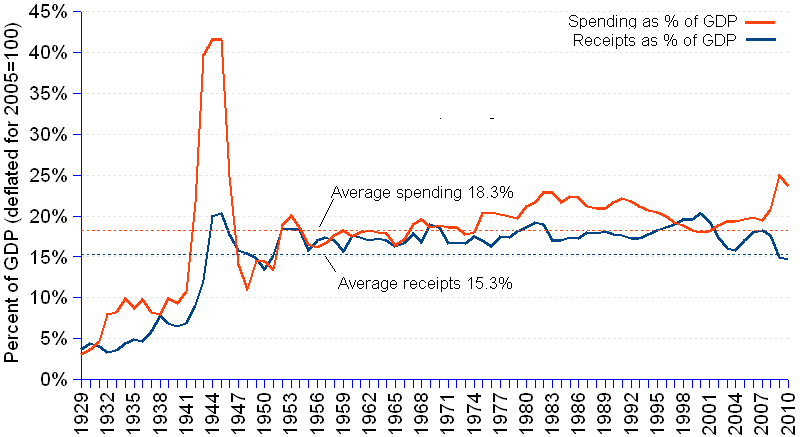
Previously if a company has a million dollars in revenue and spends a million dollars on the salaries of software developers, this is how their taxable income might look:
The new law would instead work like this: Now the company must pay taxes on 800,000 of profit because "R&D salaries," which includes software devs, must be amortized over five years. Obviously the company has no wherewithal to pay, given that they made a million and spent a million. That's the problem.