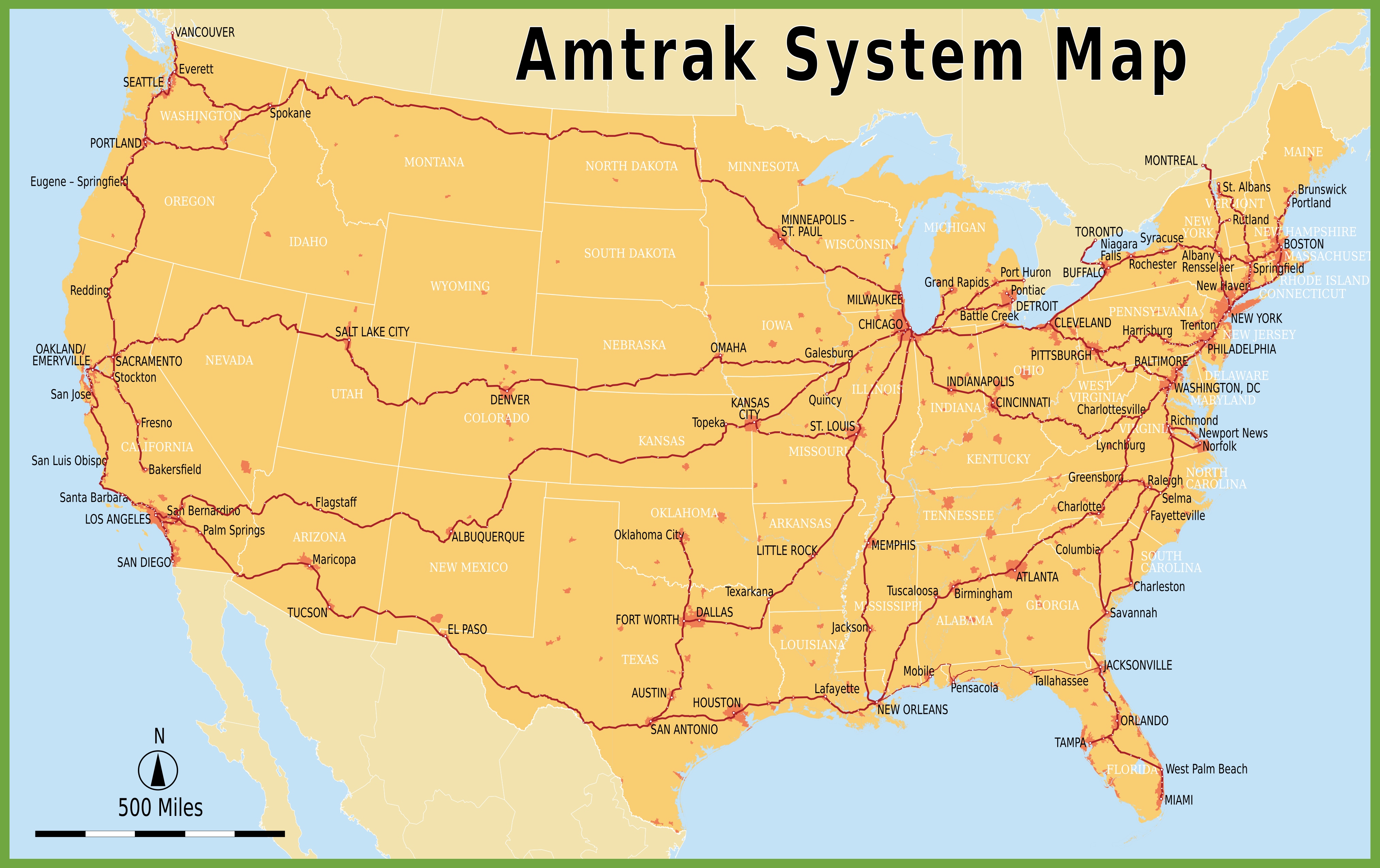
I thought the point of Hyperloop was to head off the upgrading of Californian railway systems? Created and Hyped by Tesla's owner because Tesla needed Americans to stick to buying ever-more-expensive cars.
So, its purpose is done now and it can retire gracefully.
"Musk reportedly told his biographer, Ashlee Vance, that the Hyperloop proposal was motivated by “his hatred for California’s proposed high-speed rail system,” which he felt would be too slow, outdated and expensive. “With any luck, the high-speed rail would be canceled,” Vance wrote."
The two situations are different. The Thai rescue had Elon exhibiting strange personal behavior. I never agreed with it.
When he admitted he built a staged rail company to subvert public high speed rail and encourage more sales of his cars, it strikes directly at the heart of his "mission" and "values" that are so adored by the auto & tech industries.
Yeah this was also the start of lost innocence for me too. He's just a guy, one who made a few superb dents into different industries.. but still just a guy, with massive flaws. I'm actually worried that this person is connected or at the core of so many new industrial technologies.
I'll try to take this as a serious comment, but I'm unsure because it displays a lack of awareness.
The goal of the project is to go where people want to go. The CAHSR project took in a lot of feedback as well as local political involvement to get to its alignment. Because of this process, it hits many major population centers and destinations throughout the state. It eventually will connect all three major metro areas (SD, LA, SF) as well as the capital city (Sacramento). Once complete the HSR will be the fastest door-to-door mode of inter-city transit for many of these destinations.
> It eventually will connect all three major metro areas (SD, LA, SF) as well as the capital city (Sacramento).
There are no concrete plans to do anything related to Phase 2 since the active scope was narrowed, so the SD and Sacramento connections are really wishful thinking at this point; the Authority still says that planning is happening on Phase 2, but lists no Phase 2 related progress (even planning) in their annual reports and similarly has no Phase 2 related progress goals in those reports.
The scuttlebutt was related to the Californian high speed rail project. Would that really take a significant number of cars off the road? And what was the expected completion date? My gut says that it would have an inconsequential impact to Tesla, but I'd be interested if people have numbers that make this theory hold water.
The theory I am talking about is Musk's motivations was for Tesla to sell cars.
I think he was pretty vocal about the high speed rail project not being great, and it not a great way to spend tax payers dollars. Can you point to where he said he wanted it cancelled to sell more cars?
And my question stands. How many cars will be taken off the roads when the high speed rail is complete? Even better, would be to share the numbers with timeline of each phase.
From what I read, the first phase of the high speed rail was not due to open until 2030, and be just 275 km. It does not sound like an existential threat to Tesla.
I know musk is a divisive character, and is much derided in HN, but it seems to me a lot of the stuff on the internet and press that people attribute to him don't stand up to much scrutiny. It would be good if we could hold ourselves to a higher standard on HN.
US is now cursed by their own success. Eisenhower jump started the highway to connect all of US as the largest transport infrastructure project. We have been riding the success of that for a massive economy. We are on the plateauing side of that S curve.
cursed because we spent a ton of money and got into debt with trillions spent for wars without much to show.
Now we don’t have to money, nor the will to invest in the next S curve infrastructure project.
Meanwhile China is pumping out infrastructure at speed of thought.
Why do people say 'we don't have the money' for stuff like infrastructure? We never have a problem finding the 'trillions of dollars for wars'. It seems there is only ever a problem coming up with funds these days when it is to invest in things that help our own citizens (outside of just throwing money at them).
You're right. It's not about how much money is available. It's always about the choices of where they spend it and those choices rarely benefit the citizens, somewhat ironically.
It’s not even just about choices, it’s about consensus and we’ve forgotten how to see a win from a partial loss. We no longer know compromise at a federal level
I don't think it is so much about win/partial loss but considering large views or long term thinking/strategizing. Especially true in politics because we've developed a system where a representative is only concerned about the timeframe of an election cycle, rather than concerned with what they can do for the people. And we hold them accountable by that metric. So any project that is longer than an election cycle can end up being a game of hot potato where the last one holding it loses. In reality there are several members to blame. It's like how people judge a president based on the economy yet often policies they make don't actually have large effects until years later (definitely some are shorter term, but also remember that effects compound and set a stage). World is too complicated and we're too dumb. We can be not as dumb, but that's not quite easy because complexity is de facto hard.
Not just federal. Federal is where things are most obviously broken, but the same is going on all the way down to the bottom, just slower. I live in a town of ~8k and local politics (over local issues!) is insanely partisan in a way it wasn't even 10 years ago.
And we have forgotten the rational can-do optimistic spirit of problem solving via hard work, (the ideal of) objective thinking, and the hunger for adopting ideas from anywhere.
A lot of this is the result of power centralization in our social and political sphere's. Winner take all dynamics are so immediately and decisively rewarding, that long term, collaborative and independent thinking have become self-defeating (for the political and socially powerful).
Technology can solve many problems. Unfortunately, that can include shifting the price of growing problems into the future and onto the powerless. Enshittification of the whole planet and human condition.
It isn't technology's fault, and if/when society gets shocked into organizing better, we are going to need every technological edge we have accumulated to turn things around.
It's easier to steal pentagon contract money than money issued for highways or train tracks therefore military contracting has a higher profit margin therefore that's what the lobbyists advocate for.
Why even mention wars? We have the money for Hyperloops, Solar Freaking Roadways, Boring Company, and so much more... you know... terrible ideas that clearly won't work, don't even pass a sniff test, but we throw millions or sometimes billions at. I'm totally okay with pushing the bounds of what we can do as humans, and even encourage it. But running on hype is not a sustainable system and arguably fraudulent (I believe it is). The Bloomberg article sure makes Hyperloop look like it is...
I different version of hype applies in a different way. With the systems destroying themselves through compounding "compromises" to get political allies. It's a Vox video, so high level but not a bad intro[0]. Tldr: easy to derail (pun intended) any political project, and the bigger the project the easier it is to derail.
If the government sent out a hit team to forcefully rob every single last penny of net worth every US billionaire has, what impact would that income have on the national debt? I'm pretty sure it'd be extremely negligible.
The so-called Modern Monetary Theory (MMT) credibly posits that because the U.S. borrows in its own currency (dollars), it can simply "print money" as needed — as long as the U.S. economy has sufficient unused productive capacity to absorb the resulting increase in demand. [0]
? American debt is only due, if they abandon the world, which pays for this debt by valuing american security and insurances of free trade high, by using the dollar to trade and as reserve currency.
The reality is that the highway project has gone to far. It has been institutionalized with a gigantic lobby behind it. The highway are done, and have been for decades.
And even before that a huge numbers of highway built made no fucking sense and were a negative for the economy. And state DoT are literally just highway building departments with a fetish for destroying cities.
You are not riding the plate of the S curve, continued investment in that nonsense is an active negative.
> Now we don’t have to money, nor the will to invest in the next S curve infrastructure project.
How about this. Stop spendign such an mind blowing amount of money on highways and other roads, and instead invested in financially smart things like walking, bike, buses and trains.
I'm sorry, but rail is the lowest form carbon footprint you can find, if you exclude biking and walking.
Also, boarding a train is so much more comfortable and convenient than boarding a plane (no security check, at least in Europe, wide seats, no emergency tutorial, ...). Also the train drops me right in the city center.
I would argue that up to 500 km of distance, high speed train is the best option, then it becomes debatable.
This study [1] cites a 80 to 280 tCO2 per km of new high speed track laid (it includes bridges, tunnels, ...). Lets lay 700km of new high speed tracks (Orlando to Atlanta). So 700km of high speed track is 56'000 tCO2 to 196'000 tCO2.
Orlando to Atlanta will have sold more than airplane 310'000 seats in December 2023. At 250g per km per passenger, we get to 54'250 tCO2 emitted on this route alone in December. You can see that laying 700km of high-speed tracks that will last more than 30 years before renovation will emit as much as one to four months of flight emissions on the busiest US airplane route.
You can argue about the specifics of this back of the envelope calculation, but flying emit orders of magnitude more tCO2 than any form of transport (on short haul) that even building a whole new high-speed rail route is worth it after a few years of exploitation. Obviously you are not going to convert 100% of passengers to rail, especially in the beginning with spotty transport coverage, but focusing on busy airplane routes (< 1000km) and building high-speed rail is worth it in the medium-long term.
Thanks for referencing some data. Unfortunately, on page 10 it looks like they are specifically excluding the impact of constructing rail lines ("construction infrastructure").
The high speed rail line from LA to San Francisco (~380 miles) was estimated to cost $128 billion. The Orlando to Atlanta route is longer (~440 miles), but lets pretend it could be built for the same cost.
A one-way plane ticket from Orlando to Atlanta is about $100. For $128 billion you could buy 1.28 billion plane tickets. It looks like ~3 million people current fly between Orlando and Atlanta each year.
For the cost of building a new high speed rail line, you could fly everyone for the next 426 years. It's not hard to imagine that the fuel expended during construction of the high-speed rail line would be greater than the fuel consumed by all the planes flying between those cities for decades.
Sorry but you misread the report. They are saying that typical eco-calculator usually do not take into account the emissions from construction and maintenance. You can see on the document that on table 2, emissions of construction is taken into account. It is the point of the report. So my point about carbon emission stands. You can build miles of high-speed rail and offset the emissions caused by construction compared to the same route in airplane in a few months.
Also, the California is the most expensive high speed rail project in the world. The US simply does not have the expertise anymore to build effienctly big infrastructure project. In comparison, Spain is building highspeed rail for 17.7m€ per km (also Spain has a lot of mountains), while the rest of European countries build at 45.5m€ per km. This makes this 700km line more like 12.4 billions € to 31.9 billions €. So 50 to 89 years worth of plane tickets.
I agree, still expensive, but then by the same logic you should stop investing in highway expansion, because they are super expensive and always prove ineffective at reducing congestion. The US has proven in the past they are able to make big projects. Why admit defeat and try to keep the status quo?
The US currently has nothing that would be considered high speed rail by the rest of the world. It could be built here, but it would cost billions and take decades. Hofstadter's law strongly applies to major infrastructure projects in the US. "It always takes longer than you expect, even when you take into account Hofstadter's Law."
> how do planes have "flexible capacity"? how do trains not have flexible capacity?
Planes can be put in service or redistributed to serve a certain route in hours. Extra train engines and train cars cannot be moved nearly as easily.
Exactly the same thing with trains. I live in Switzerland, and they are adapting the capacity of the trains route by route, and to the time of the day.
The train I take every day to work has 12 cars in rush hour, and 4 cars off-peak, sometime 6 cars in the middle of the day, or 10 cars just after rush hour. They put extra trains in rush hour, have trains in standby is case of a breakdown of other trains, and they even introduce special trains dedicated for events (football games, big concerts, sports event). How is this "not flexible" ?
The only valid point is that the US forgot how to efficiently build huge infrastructure projects. But it is not an impossible thing to solve. Sent some experts to France, Spain and ask them how to manage high-speed project within reasonable costs. France is building the Grand Paris Express (a lot of tunneling, more than 200km of tracks) for a reasonable cost, and is now reusing tunnel boring machines to build another project in Toulouse.
It's not a technical issue with the costs in US; it's a political issue. On one hand, any construction project gets mired in massive amounts of red tape even when things go well. And then you have all the people who see public transit and similar projects as a threat to their neighborhood's "character" (i.e. who gets to live there), and who have mastered the art of using said red tape for their advantage.
I think we should accept that, at least in the case of the US, most future transit infrastructure will be built on existing roads. Every other options is an order of magnitude more expensive. Plus, we have so many roads! If we didn't use them it the most inefficient way possible - cramming them full of giants cars for single people who also happen to be terrible pilots - we could get a ton of bandwidth out of them. And they already go literally everywhere a person normally wants to go.
Dense urban areas are obviously different, but most of the US was purpose-built for cars and roads.
I’ve slowly lost my innocence when it comes to public transportation in the US. At this point I can see that 95% of the country is absolutely locked into low-density single occupancy transportation at least till we invent sky cars. We have trillions in sunk cost that covers nearly every road, every home and every business in America. We will never, ever be Europe.
Yes, and we have generations of people trained to think that walking further than a hundred feet is an extreme workout to be avoided and that transit systems are full of criminals. It seems like that culture is headed for a cliff, however, as the cost of cars continues to increase (the average sale last year was a year’s median pay!), budgets for road infrastructure become tighter, and climate change becomes harder to deny. It feels like we’re headed for a messy upset when all of the conflicts come to a head.
> we have generations of people trained to think that … transit systems are full of criminals
Are they not?
The BART Police Department's reports for 2022 show the following numbers for Part 1 UCR Crimes:
Homicide: 3
Rape: 4
Robbery: 156
Aggravated Assault: 81
Burglary (Structural): 17
Larceny & Auto Burglary: 783
Auto Theft: 136
Arson: 10
Property Crime Subtotal: 946
Total: 1,190
Just because one transit system isn't policed, doesn't mean all of them are. Transit, by itself, is not "full of criminals" and I'm not sure the one you gave stats for is either (or even correct -- how do you commit "auto theft" on a train lol)?
Anyway, assuming there are hundreds of train cars and thousands of passengers a day, the chance of getting robbed on any one of them, using your stats, is less than 0.001%. Seems pretty safe to me.
They literally do take their car with them when they ride. Lots of BART stations have huge parking decks because they service areas that are not walkable or dense so you “Park & Ride” to get into the city.
Sure, now do the roads outside of the BART system. There have been thousands of car thefts, carjackings, robberies, etc. Crime isn’t a transit phenomenon.
Per how many people transported and how does that compare with similarly dense and similarly geographically large systems? Paris’ RATP and NY’s MTA likely put up similar numbers. That doesn’t mean that it’s full of criminals when the likelihood that you personally will experience an issue is low.
I live in a place where sidewalks are everywhere but driving is just much more convenient. I'm lucky that there's a store within 1 mile. If I got a model 3 the payment would replace my current gas expenditure completely.
The people of Singapore pay a minimum of 100K for the privilege of owning a bottom tier car and the demand for cars there is overwhelming and insatiable, despite the world class and extremely clean mass transit systems.
The reality is that cars are freedom and still superior from a continence and comfort standpoint. Americans are insanely privileged to have cheap, powerful cars.
For the last 15 years I've lived in various places around the world, and for all of them a private car is the most frustrating, least enabling method of transport available. Finding parking is a nightmare, traffic is a nightmare, having to concentrate on the idiots around me is a nightmare, not being able to drink when I go out is a nightmare, dealing with the mechanical problems of the vehicle itself is a nightmare, dealing with the bureaucracy of owning a car is a nightmare. This isn't what freedom looks like.
Most freeing? Riding a motorbike in Phnom Penh. Berlin's 5 different public transport systems. Walking everywhere in Bristol (UK). Mexico City's excellent underground.
I have a car and a bike in the Netherlands. Most everyone I know has both. Both are nice to have at different times, and I've never experienced any of the nightmares GP is describing.
I was curious so I just checked, and the number of cars is just shy of the number of people of driving age, even in the bicycle paradise of the Netherlands.
Sure but you cant bike and drive the car at the same time right? So they own a car and choose to bike. Imho this is even bigger win than people who have to bike because they cant afford a car.
Lots of the peoples car needs would probably be covered by some form of car sharing but this is something car manufacturers hate and it has been always quite expensive. Maybe that will change.
New driver licenses are rapidly dropping in europe. Lets see whats gonna happen but i think Netherlands/Flanders are for sure important pioneers to get inspired from.
I'm not following how that makes the nightmares from GP that I was replying to true, or are you making a different point? I didn't mean to imply that riding a bike was useless or anti-fun if that's how it came across.
It's possible I was looking at motor vehicles rather than specifically cars. Even six out of ten adults having a personal car would be a statstic I think that would surprise people who think everyone here only rides bikes.
This is true, and I think it’s driving a lot of generational backlash because a lot of younger people are realizing they may never be able to afford to have a commute under an hour, or paid well enough to ignore the mounting costs of that lifestyle, especially as a lot of the infrastructure costs are going up sharply to deal with maintenance.
I think those nightmares depend a bit on how many people own a car.
> I was curious so I just checked, and the number of cars is just shy of the number of people of driving age, even in the bicycle paradise of the Netherlands.
This might sound like a high amount of ownership, but if you compare it to some other countries then it’s not that bad (or impressive if that’s how you look at it).
The Netherlands has 588 cars per 100k inhabitants v. 908 in the US as an example[0].
If you go down the rabbit hole and look at the sources for these numbers, you’ll find that in the US only 8% of households don’t own a car[1] v. 26% of households in the Netherlands[2].
37.1% has two cars in the US and 21.9% has three or more in the US[1] v. 21% and 6% respectively in the Netherlands[2]
I think it’s safe to say that there’s less cars on the road in the Netherlands and thus less of that nightmare scenario that is described in GP.
That said, plenty of drivers in the Netherlands (not having the frame of reference of more busy countries) consider the Netherlands having “nightmares” for drivers. In particular when it comes to parking, where the main complaint is the price of parking and the lack of parking close to a destination.
Personally I don’t consider it a nightmare but a blessing that a lot of Dutch downtown areas force parking on the outer edge, leaving the shopping areas as pedestrian only areas. But that doesn’t mean that other people with other interests don’t consider it a nightmare.
Whenever, in the very rare instance, a city or town here in the US tries to marginally move towards such a situation, people start dusting off their pitchforks.
Just the other day I saw someone losing their shit on Threads because someone suggested that it would combat sedentary lifestyle somewhat if you’d have to walk 10 minutes from where you’d park every once in a while.
I believe you, since you seem to be fixated to using cars for the cities. People living outside of cities have none of those problems. Cars are truly one of the freedom most enabling inventions in the history of the mankind.
> The reality is that cars are freedom and still superior from a continence and comfort standpoint.
If you have them when other people don't, yes. The problem is that by the time this is no longer true, you likely have a large sunk cost fallacy and political leaders firmly committed to the model and will struggle to realize that all of the time in traffic, countless deaths, and lowered quality of life for everyone around are in fact not actually inevitable.
Cars are freedom, I kinda agree. But you picked the worst place for your comparison. A small, packed island where if everyone had a car, there won’t be enough parking.
Another thing: you can have both (ie: Europe). You use public transit to get to places and you use your car when you need space for luggage or taking the family.
You can do private business out of your house for food at least in California. Or you can just ignore whatever podunk laws they’re supposed to enforce because in the PNW, the cops are too lazy to enforce anti heroin laws let alone anti small business laws
The Netherlands had a very similar problem and made very simple and inexpensive changes to roadway planning.
For one thing, I think a lot of American suburbs could be way more bike friendly if people just had a safe path to ride in. We are talking a half a lane worth of pavement.
Another thing is that this isn’t all or nothing. Still owning and perhaps needing a car but reducing the number of trips per week is a win.
Look at pictures of European countries that used to use their central squares as parking lots. It can be done.
That's not half the battle. Undoing the zoning is 90% of the battle.
Cycle paths can be added at a step by step basis and keeping some gaps isn't an issue and if some paths aren't used much initially there isn't a big problem. Also sometime a single line painted on the road is enough for a start.
If businesses settle in dezoned area they need to attract an audience quickly, but the will be less attractive than the hyperstore or mall for car drivers and depend on a bunch of other businesses in walkable distance. Financing the period till it works can be tough and will cycle through a few businesses till a working mixture is established.
And even then: In the car centric land usage, distances are too far quickly for quickly walking over to the bakery for fetching bread for breakfast, 15 minutes as a guidance for reaching everyday shops, doctor offices, a bar, ... density has to be increased. But people won't give up their yards.
Legalize biking on the sidewalk nationwide. I don’t want to bike on the road for any reason. Bikers have far far lower chances of hurting pedestrians than cars do of bikers.
That’s a cultural and not a technical problem. My experience is limited, but it is that, when motorists are idiots, bikers are idiots too. Yes, sure, less chance of getting killed by a bicycle (though serious risk of injury if you’re and old-enough pedestrian).
My point is: if you live in a place where a lot of drivers behave like selfish idiots to other drivers, bikers, and pedestrians, then a lot of bikers will behave like selfish idiots too.
I don’t have a solution, but I just wanted to add the data point because I hate most bikers with about the same intensity I hate most drivers. As a pedestrian, both groups ignore me and put me at risk every single f-word day.
Maybe not in urban places, but it absolutely makes no sense that it's not legal in my rural area to bike down (some) trails/sidewalks that run along roads. Usually if you bike down them it's rare to see another person even on them, and and motorists surely aren't on the lookout for bikers like they should be/are in some cities.
They even put a bike lane in on the road at my parent's house. Again, there's a perfectly usable trail/sidewalk right alongside the road that's far, far from busy, and the bike lane is also used for parking. I'm not going to swerve in and out of the road when there's a place that's 100% safe to bike down.
Hell, for that matter - laws be damned, I bike down the left side of the road here. I want to see a car that's not paying attention to me coming, where I'll at least have a chance to react. Again, it's not like a city where you're sometimes in the flow of traffic. The cars are going 40mph when I'm going maybe 15mph?
The problem is the disparity of speed between travelers, same as for a highway. Pedestrians appear suddenly or don't know about your sudden appearance or intended motions, and pain or injury results.
As another bicyclist: yes. That's how we do it here in Tokyo. Almost no one rides on the roads, despite the painted bike lanes that are always ignored by cars and delivery trucks using them as parking spaces.
Another interesting thing about cycling in Tokyo that people from other countries may not be aware of is - bicycle insurance is mandatory. It costs like $2-$3/mo, and insures the medical costs of anyone you run into
As someone who just moved here: this is by far my least favorite part of moving around in the city; and having to dodge bikes on the sidewalks is the worst part of my commute.
Then stop dodging them: pedestrians like you are the worst. Just walk in a straight line where you're going and stop moving around so erratically; let the cyclists go around you.
Anyway, it would be nice if they built some nice, protected bike lanes, but they'd have to remove lanes from the cars to do that.
It reminds me of a mouse I once hit on my bike (not in Tokyo, it was a rural place). The mouse darted into the road, so I tried to go around him. But then he changed direction to avoid me, and so I ran over him. I ended up having to crush his skull to put him out of his misery. If he had just continued in a predictable, straight line, he would have survived.
You should rent one of the Docomo red rental bikes and ride it around some, and then you can see what it's like being one of the cyclists. The last thing you want as a cyclist is pedestrians who make unpredictable movements as you're passing. Also remember, pedestrians here have the absolute right-of-way, and cyclists are pretty much always at fault if there's a collision.
Sidewalks are in fact, more dangerous. Tree roots, unseen level changes, pets, not to mention pedestrians - it's tolerable if you're a kid going 3-7 mph with training wheels but for everyone else hitting on of those obstructions are a decent cycling speed of 12-15mph could cause you to flip.
Not to mention cars won't see you so they will turn into or pull out of driveways, or fail to stop for you as you're trying to cross a road.
That might work in highly urban areas, but suburban USA is notorious for sidewalks that end suddenly, forcing a cyclist to return to the road. And sometimes that involves dropping off a curb and then later having to get the bike back up a curb.
Absolutely not. In Seattle, cyclists already abuse the sidewalks when there are dedicated bike lanes everywhere. And the cyclists on the sidewalks are the worst of the worst who will plow over pedestrians without even pausing. No fucking thanks.
Enforce actual bike lanes and ensure people biking following the laws and rules of the road and we'd be a lot better off. But letting people too dumb to wear helmets* or to understand why they need to be in a bike lane and not on a sidewalk onto the sidewalk with zero consequence? Absolutely not.
* I do not even remotely care about the anti-helmet arguments. I’m sure you’re a cyclist who has done all the research and proof as to why if you’re good and paying attention a helmet is unnecessary or even bad. Fine. Most people on bikes and most people in cars aren’t you. Wear a helmet!
I haven’t owned a car since 2017. I didn’t need one living in NYC and then I bike around my suburb. My wife does have a car which we use for shopping and taking the kids places but I’m trying to hold off on buying a second one. I really wish bike culture was more of a thing; I do see other bikers on the road, but anytime I go anywhere with my bike I’m often the only one that biked there.
My little midwestern town only needed three children to die riding to the park before the village finally put in 1/4 mile of sidewalks to link 3 neighborhoods with the parks and schools a 1/2 mile away
We can’t possibly have transportation infrastructure like Europe until we have similar zoning laws (which would do away with the separation of homes and businesses into distinct areas) and similar population density.
Until we put shops very close to homes, end the huge big-box retailer’s death grip on everyone’s spending habits, and learn to live leaner, European style public transport will never work.
We put shopping centers far away from homes, and we put homes all over the effing place, making public transport effectively impossible to get right for even a small percentage of the population.
I agree with rest of the comment, but I feel that connection between walkability and population density is misunderstood. It's not "we need XXX people/sq. mile in US to have walkability", it's "allowing walkability and building corresponding infrastructure leads to increase in local density in places where people want to live".
You think Europe does not have roads covering everyone?
This is the sunk cost fallacy at it's finest.
Maybe the most offensive thing about public transport to an American is that it cannot really be profitable by itself. Infrastructure rarely is but it is still worth investing in for the downstream effect.
I was in Miami some time ago, around Wynwood. Never really saw anyone walking around, and if we wanted to go anywhere then it basically required ordering an Uber.
The difficult part was getting a sense of direction because there aren't really any obvious landmarks to look out for when wandering through wide-scale suburban sprawl. It's like the availability of GPS has just allowed this kind of sprawl to become even more labyrinthine because nobody needs to bother with street names or directions any more.
When I was in Tokyo in the 1980s, there were no street signs. The taxi drivers just knew where to go. A tip I received was to always carry a brochure of your hotel. Hop in cab, show the driver the brochure, "Hai" and off we went!
There's no street signs here in Tokyo because almost none of the roads have names; only the really huge boulevards do, and most people probably don't even know those names.
I'm not sure how it was in the 80s, but these days people just use Google Maps to navigate to wherever they're going.
But it still might be worthwhile to find policies that at least help to steer things in the right direction without being failures themselves. Easier said than done, obviously.
Sky cars won't happen in this lifetime due to a few factors, not least of which is inefficiency in overcoming gravity at a speed sufficient to maintain flight in air as dense as ours in here on Earth. The other factors are obviously we'd need a whole lot more airports or some kind of safe VTOL aircraft, and when it comes to safe, just look at how people currently operate motor vehicles in the US...not gonna happen. Tons of regulatory hurdles too, not to mention things like parking.
The solution to this problem as has been shown by most other civilized countries on this planet is trains, yet in the land of rugged individualism and capitalism, it's somehow not viable.
All that space and variety makes it even more baffling that apparently it's simply impossible to build even one decent city anywhere in the US that didn't have one in 1900, much less a proper conurbation like those in the Blue Banana.
You say that every other method of travel is more expensive…but that doesn’t really pass the sniff test, does it?
The Big Dig in Boston adjusted for inflation cost more than New York City’s “world’s most expensive stretch of subway.” The California high speed rail project, also notoriously expensive, is in the same ballpark.
We just assume trains cost more money because we put the blindfolds on for highways. Voters salivate over highway expansions because they loathe being stuck in traffic, while the reality is that this style of building induces demand while more transit options make driving better.
I often think about how thousands of American businesses pay for short-hop commercial flights between destinations like New York and Pittsburgh where a proper high speed train could cover that distance in about 2 hours including stops. How much money are we paying employees to show up at the airport 90 minutes early and put their laptops away for takeoff and landing when they could spend the whole train ride productive?
I know my company will pay for a checked bag as a travel expense. How much money is wasted on putting bags in airplane holds? It must be billions!
Car ownership has huge personal costs (car purchase, operation, depreciation, maintenance), collective costs paid by taxes (maintenance of roads, etc), and societal costs that nobody really pays for (excess deaths from crashes, pollution, opportunity costs).
I’d like to know which method of travel besides cars costs an average of $5,000 per person per year on a personal spending basis before even starting to put tax money toward road maintenance. That number balloons to $10,000 if you buy cars new.
Which country’s train system kills 30,000 people annually? Which train system emits more pollution per passenger mile than a car?
If cars are the cheapest way to get around, explain why the poorest countries have the lowest car ownership. Shouldn’t they all be jumping on cars and highways if it’s so cost efficient? Maybe all those people getting on trains in Mumbai should head down to their local Tri-County Ford dealer!
In the poorest countries the most common substitutes for driving are either just not traveling long distances or busses, not trains. Working train networks are very rare in third world countries. So, yeah, they are jumping on cars and highways, just not cars they own personally.
We can be cynical and say this project is falling behind but it’s embarrassing that the richest country in the world has no such infrastructure plan and no presently operating high speed train that exceeds 150 mph.
You’d think that some of the larger metro areas would be connected with such a service in the world’s wealthiest nation.
America’s largest metro area is in a concentrated urban area that is continuously developed from Massachusetts to Washington DC with no rural area in between. But the best you get there is a train service that sometimes reaches 150 mph and only saves a sliver of time compared to a conventional train.
The second most wealthy nation has more high speed rail miles than the rest of the world combined. You’d think that the wealthiest country would at least be in the top 10 list.
Imo it's matter of political will. They could just redirect money spent on roads& highways to build a good rail infra between major cities for 5 years and ppl would use them. Govs on the other hand prefer to spend money on car infra an subsidize it(pretty minimal costs of owning a car despite of big infra costs, free parking, not accounting for environment damage, etc...
I agree we should build bullet trains in all the medians of the interstate like Brightline West is doing. It's totally hopeless to acquire enough land to do anything otherwise.
The concept of hyper loop was so moronic I suspect the idea of it being a way for musk to hurt the proposal of building a high speed train in California is just a man a posteriori excuse to look less stupid
There is technology for fast rapid mass transit: high-speed rail. Technology was never the issue here. Political will to fund, approve right-of-way, and build it was always the problem, and Musk never even tried to address that part.
When folks suggest a new "changes everything" way to go fast, always remember that we used to run NY to Chicago at 120 MPH on steam power and bolted rails.
You're basically crossing a continental divide on that route and the time is similar to what it was a 100 years ago--which is about 10x what flying takes. (And costs a lot more today than flying.)
Your nice dinner and my nice dinner must be pretty different :P I was of course speaking to rail travel, which yeah, is not much cheaper anymore, and far less time efficient.
Hyperloop would have been built on pylons, theoretically mitigating the impact of a line cutting across farms or cities, which in the case of CAHSR has caused immeasurable political problems.
I suspect the actual technology within the tube was never Musk's initial concern. Similar to his other industrial endeavors, I think the calculus with Hyperloop had more to do with the economics of being able to manufacture pylons and tube segments offsite for quick assembly onsite, leveraging factory production and avoiding as much as possible site-specific costs such as land grading. And presumably he had in mind repurposing SpaceX technology for welding rocket bodies. Given a cost-effective way to build and put these tubes into place, and some ballpark figures on their characteristics--e.g. how much of a pressure difference they could reliably keep without inflating production costs--figuring out how to actually use them was just an engineering problem, which he then took a first crack at to satisfy himself the overall concept might be feasible.
It’s a very expensive and very fragile piece of infrastructure that would be hard to maintain in the best of circumstances. It would be easily sabotaged by those seeking to do harm which would make it even more egregiously expensive to defend.
High speed rail is often built along viaducts too - and it's expensive. There's no way it's cheaper to build a vacuum chamber on pylons than some rails...
In a country with long distances, a well-developed interstate highway system, and a well-developed air transport system. There is a decent rail system in the Northeast and between some other city pairs. But there isn't and shouldn't be the political will to develop rail transport options that don't outcompete those other options especially with electric/autonomous driving becoming an increasing option over the coming decades.
Why would electric car improve our traffic situation? They're just more efficient than ICE cars. Maybe it will lead to smaller vehicles, but we could have used motorcycles instead.
So you have self driving cars, which will probably improve traffic flow, but it's fundamentally limited by geometry. If people takes more car trips, this will reverse some if not all the benefit of self driving cars.
Traffic issues are mostly intra-city--not inter-city. I'm not sure anyone is really arguing against commuter rail (however bad it is in many cities). But about inter-city rail in many locations.
I live in the Northeast, what "decent rail system" are you talking about?
Acela takes 3h44m from Boston to New York. Not much faster than the scheduled buses (4h15m) and comparable to driving the distance in your own car (3h55m if you stick to the speed limits)
I'd much rather take rail relative to the alternatives even if it takes longer and maybe costs more (especially leaving aside parking). And many others do as well even if it would be faster to drive.
And generally Manhattan is pretty walkable once you're there.
SNCF prices vary a lot of when you book. You can see [1] that prices in the next week vary from 29 to 85 euros (I think you can get even cheaper booking further in advance)
You're missing the fine print. It's like $200 for a ticket if you want to take it at any reasonably competitive time, like a Friday at 5pm. It's basically a system for the 1% of wealthy super commuters.
Yeah, I feel like nobody talks about the price of Amtrak enough. For some reason the conversation is almost always on its speed or that we don't have enough lines.
Those things are true, but like, jeez, the price. I for one don't even mind Amtrak's slow speed on its own, but not when it's more expensive than faster options!
There is a world where we dig tunnels under federal highways, and stick freight trucks down there. They'd run on a monorail, at 120+ mph. Surface vehicles would be dramatically limited in terms of height, width, and length. Maybe people buses could go down there?
In my imagination these tunnels are, like, 200' down. Like mole people.
That sounds like railroads but worse. What's the advantage? Tunneling is incredibly expensive to do, yet you're proposing it in a situation where it'd need enough coverage so as to ban large freight transport over roads.
I’m not arguing with you here but it would be interesting to know what about tunnelling is fundamentally expensive.
Things I can think of: it is slow, so you burn through a lot of wages. To compare with road building the only major road I can think of, built in my lifetime, was the M40. It is 90 miles long and took 4 years to build but I don’t know what the cost was. The channel tunnel is much smaller than a freeway — two train tunnels and an escape tunnel in between. It is 30 miles long, took 6 years to build, for £9bn at the time.
Tunnelling also must require a lot of energy. What it probably doesn’t lean heavily into, in terms of cost, is either compulsory purchasing of the majority of the route or the political consultation and planning process. Those were both a huge deal when building a motorway through the Oxfordshire countryside.
You could calculate the cost to tunnel under one linear mile at 40 ft diameter and then realize that whatever number you got, it is the cheap part because you haven’t reinforced, drained, ventilated, or surfaced the tunnel.
This doesn’t require a discussion to figure out. You just have to mentally walk through the process and do some back of the envelope math.
It's even easier than walking through that. Just Google the costs per mile of a typical subway line extension. There's a reason subterranean rails only makes when land costs are at a premium.
Keep in mind it also has to navigate its way around what’s under London which is a lot more complex than most places, considering it’s full of tunnels, Victorian sewers and mass burial pits.
Less issues if there’s little down there to begin with. Although personally I don’t see why America can’t just build a train like a normal country.
Indeed, if there are administrative overheads of constructing in built up areas then it would be important to compare with a major highway building project also done in or near a built up area.
I’m still left wondering though, in the open countryside, what the complexity (and cost) comparison is between laying down a mile of freeway and boring out a mile of tunnel. It feels like tunnelling is hard and complicated, but so too is making millions of magic coloured tiles that are all connected to each other so we can see each others cats and, very rarely, make phone calls.
The most expensive parts of tunnels are where you come to the surface. The Channel Tunnel is cheap in that regards because there is countryside on either end and no exits in the middle.
Designing a high capacity train station or highway exit in the middle of a city is quite expensive.
What? The chunnel cost £26 billion in (2023 equivalent), and is 31 miles long. That's nearly a billion a mile. This is by no means cheap (yes yes cheap is a comparative term), tunnelling is absurdly expensive and not realistic.
It's impossible to make the case for thousands of miles of underground tunnels that will add no benefit (what happens when something goes wrong? you can't simply overtake when something inevitably goes wrong (three train derailments per day in the US), it's underground so it's hard to access / fix problems etc etc.
It's a foolish, expensive idea, when the US struggles to take care of it's own railway systems.
Also as a practical matter, a lot of systems stop running to discourage traveling; the underground may be safe but you still have to travel on the surface to your final destination
Subways work well, but I have a hard time seeing people travel long distances such as between metro areas knowing their entire journey would be underground.
Maybe people would get used to it. I don’t know.
I was only thinking of freight really since it doesn’t matter.
There are two areas where such tunnels make sense. You are either going underwater or you are going through mountain. That is you need to it to go through an obstacle.
For rest, over ground or above ground is preferred.
The more I see how shitty developers are about recognizing prior art the more I realize why so many planners are shitty about recognizing prior art
Being intelligent yet humble isn't mutually exclusive, but I see a lot of elitism in that 'oh I have this concept which must be totally novel and I'm gonna implement it now' with engineering at large before we all start laughing at their inevitable failures from things they could have learned in the past. Crypto is cool, even cryptocurrency. 99.9% of people in the space though have no idea what they're doing with it. I still think it could be useful for voting and/or DNS for distributed consensus, the cryptocurrency aspect could be improved and already is a better backend imo than our batched out wire transfers with traditional banking (but it lags well behind credit cards or cash for point of sale transactions), and hell merkel trees are supremely useful already for supply chain or ex version control, but the hype and path of crypto currencies is an embarrassment in light of history.
Recent examples:
- mastodon and the fediverse in relation to the threads backlash
- cryptocurrency markets and the desire for regulation for when things go wrong (someone stole my coinz! My smart contract was exploited! My exchange was hacked! Fraud!)... Like it was speed running what the Netherlands+UK+us faced over 400 years in a period of 4 years
- any libertarian when they start to run their own government (sorry grandpa)
Which, in the US, typically have been heavily monopolized and poorly regulated and existing regulations poorly enforced. The history here is pretty extensive, actually, and often forgotten, because rail has significantly lost it's power.
So, we keep trying to make better roads, it frees up space for individual travel, it prioritizes commerce, and roads seem better fitted to a Democratic society than what rail ends up being here.
Because a controversial centibillionaire didn't do the math on 0 atm tube transportation and proclaimed it to be so. Also, people hate people like Thunderf00t who tear down dumb ideas that people desperately want to believe in because feelings and tribal toxic positivity > logic.
I thought of this idea when I was 14 and immediately dismissed it- long before this guy came along and claimed it was such a "great idea." Why did I dismiss it?
Terrorism. In the best case, all you'd need to do is punch a hole in the side of the tubes, and any train would hit a wall of air at supersonic speeds. In the worst case, it would derail catastrophically when it hit my hole if it were big enough.
"Centi-" as a prefix can mean 100, though metric use is more common.
For example, "centipede" nominally means 100 feet, though https://en.wikipedia.org/wiki/Centipede says "Despite the name, no centipede has exactly 100 pairs of legs; number of legs ranges from 15 pairs to 191 pairs, always an odd number."
Centibillionaire is the obvious extension of centimillionaire, and "centimillionaire" has been around for a long time. https://archive.org/details/per_chicago-daily-tribune_the-ch... shows a use in 1883, explicitly referencing $100,000,000 of Vanderbilt capital.
(A Google Books search finds two other uses of centimillionaire in the 1800s.)
Much like highways and trains, the tracks are the easy part. The hard part is in routing and termination - think interchanges, onramps, and offramps. Being underground compounds the routing and termination problem dramatically.
I think it also massively complicates the failure modes. Freight trains pretty frequently lose cargo and or derail. That's probably way more annoying to deal with if it's in a really long tunnel.
I like the idea but why underground? Why not above it so they can be easier serviced and managed. Also it makes repairs in case of incidents lots easier. Also we could stick multiple trucks together to safe space and make then run at a more similar speed. We could also remove the need for each container to have its own pulling engine, lets put a strong one at the front.
I just invented trains again didnt I? Whatever you do, you always end up with trains
Right, they can even do this for within city delivery. Imagine each home having a tube box, like a mailbox, that is vertically connected to the network of tubes underground. Small electric vehicles running through the tubes and carrying parcel from warehouse hubs to homes and even vice versa. Amazon Instant Delivery!
A similar sentiment to other commenters in this thread... Why re-invent something incredibly resource-consuming like building specialized tube boxes?
If I were to invest into something today it would be medium size (about a tall van size) autonomous containers that can drive at night within city limits and drop off small reusable containers at delivery points such as apartment buildings. Case in point: Luxer One is a fairly common setup in SF today, the next step would be to stop delivering individual packages and, instead, deliver daily boxes for the whole building.
Then the first time one of those little shuttles gets stuck in the tubes you’re gonna have to start digging things up. Not to mention the bad actors that have a pipeline to deliver all kinds of dangerous things right into people’s homes or you know just mess up the pipe system completely. It’s a terrible idea. Why not just have functional drone delivery, it just makes way more sense.
funny that one of the better f u t u r e ideas in this thread got heavily downvoted. This is probably one of the more efficient ways to automate package delivery, up to a small-ish size, and requiring a pretty high density. If NY wasn't a clusterfuck when it comes to getting projects built, they might actually have the density to justify the maintenance costs.
> Small electric vehicles
why not just use pneumatics? It's a proven technology used in sufficiently large facilities.
Why go underground (expensive 3rd dimension down) when we have the whole 3rd dimension up almost unused? The freight can be trucked by large Zeppelins for example (and electric at that with the most of the energy generated by the solar panels covering the upper surface of the Zeppelin https://news.ycombinator.com/item?id=38017937). The issues are pure engineering ones. These freight Zeppelins can be fully automated, flying around any densely populated places.
Design the Zeppelin for literal tons of ballast, trade out sandbags/dirtbags for product or waste on docking, andaybe add an aerodynamic shield if you don't care about speed as much
We already sacrifice significant speed for boats, but I grant they're several orders of magnitude better at balancing buoyancy with cargo given they flot in the water rather than atmosphere
TODIL cargo ships are slightly cheaper to operate than good trains.
I still haven't seen the math to prove ground effect aircraft are less efficient than cargo ships, but I suppose it's true or it would've been done already.
If the US rail network wasn't in such a state of disrepair and freight trains weren't miles long to cut labor costs, you wouldn't even need to dig tunnels for them. That also saves the cost of digging those tunnels and actually making them safe (i.e. having service tunnels, ventilation, fire escapes, fire suppression systems, etc etc). And of course with tunnels you'd want rail anyway because you don't want to be stuck trying to extinguish a battery fire in a tunnel 200' under the city.
It is not in excellent shape. It is riding the coattails of investments made a century ago, optimizing profits through consolidation, relentless squeezing of costs, and minimal investment in growth. Freight rail companies have constantly reduced routes and cargo types while increasing latency, discarding just about everything in order to focus on low-cost bulk transportation of extremely high-tonnage regular loads like coal and grain, while becoming more and more uncompetitive and impractical for transportation of flexible or timely loads like containers, refrigerated products, and manufactured goods. The freight trains have meanwhile gotten longer and slower, and overgrown the rails that they run on. American freight rail is eating its seed corn without investing in the long term. It remains efficient at transporting the bulk goods that it is currently handling, but it's far below what freight rail's potential should be, or perhaps even what it once was. Trucking has taken up the difference, but that's not because trucks are better-suited to such jobs. It's because the highway investments are paid for by the government, and railway investments are not.
At the same time the infrastructure and their rolling stock is in horrible shape and in desperate need of upgrades and basic maintenance. Anybody who has ever taken an Amtrak knows all to well the hour long delays experienced because of a broken down freight train holding up the tracks further up. And those are on the shared tracks which are supposedly better maintained, I can only imagine how things are on the rest of the system.
> The US freight rail network is in excellent shape.
The German rail network is in shambles - but compared to how some American freight rail looks like, even that is more like Japan's excellent railways... I've seen far too many examples like [1] for my liking on youtube. This kind of shit would actually land you jail time here if you as a responsible person would let a train run there. Or this legit, on-camera derailment [2] - no way the train would be allowed to just continue to move on, it would get a full-blown investigation and those responsible for the dereliction probably a criminal trial for endangering rail traffic [3].
The constant derailment is because the operators are chasing profit above safety. Make the trains as long as possible, run them as fast as possible. At some point derailment is inevitable, if you operate the trains that way.
You have to understand how profits in the rail sector work.
Making the system move faster translates directly to additional capacity. More capacity translates to more revenue. Think about it this way—if you increase the speed that a train moves by 10%, then you can make 10% more trips with the same system, in the same amount of time. You can keep doing this until profit you get from the additional capacity results is wiped out by the losses caused by accidents.
The largest rail freight company in the US has operating revenue of something like $25 billion, with margins around 50%. The recent derailment in Ohio cost an estimated $1 billion. By that math, you could increase the speed until every 4% speed increase would result in 1 derailment per year of that scale, or some combination of smaller derailments.
There are about 3 derailments per day in the US. (Note that this is a much lower figure than it was 20 or 50 years ago.)
Yeah and I'm sure they are paying for all the police, firefighter, cleanup and all the other issues caused. And they don't have to really pay for delay on Amtrak lines either.
They are systematically devaluing vital infrastructure to increase short term profit and have done the bare minimum of investment. Systematically devaluing vital infrastructure in the country.
For the US not to treat the railroads as a strategic infrastructure is borderline insane.
You would want put in pure electric rail, since you don’t want to ventilate it to handle diesel fumes from the hybrid electric diesel turbine engines so common in the USA. Since the USA’s rail system is barely electrified at all, it would be a huge undertaking.
If you don't want to ventilate, it would likely need to be non-contact electric rail, unless you want the tunnels to have extremely high concentrations of ozone. The arcs from electric contact catenaries produce ozone, which is fine outdoors because of immediate dissipation and short half-life. Put it in a tunnel and you either have to invest in ventilation (what most subway systems do), or mitigation (via contactless power delivery, likely induction).
Interestingly enough, even if you don’t have any arcing you still need to ventilate because there’s nowhere for heat to go, and eventually running enough trains over many years heats up the ground.
Yes, and that tunnel has massive ventilation systems, not just for emergencies like fires too. Fun trivia: the tunnel is so deep that without ventilation the temperature in it would be 40 centigrade.
It does, but the ventilation is still not designed for diesels. I guess we are just discussing boring, in that case, electric something is required, maybe battery would work out better than overhead or below lines. Or maybe the only way to do this right without any ventilation is via supercooled magnets or air pressure.
As I said earlier though, the problem with batteries is they're a PITA to extinguish if they catch fire and you don't want to have that problem deep underground unless you plan to flood entire parts of the tunnel (which brings its own problems not even considering cleanup itself).
As any emergency worker will tell you, the problem with batteries compared to ICE engines is that if the battery is on fire it doesn't just stop once you extinguish it. You need to keep at it until it has cooled down sufficiently to prevent spontaneous reignition and that takes a while. Plus the entire time it burns it generates large amounts of toxic fumes.
Compare that to an electric line that just needs to transmit electricity and just stops if you shut it off. Yeah, ozone accumulation is a problem but so is heat so you'll need some venting anyway (plus you probably want the air in the tunnels to be breathable because we're humans after all).
If they did the whole vacuum tube thing, you’d want to sealed anyways, and maybe propel it using maglev, although I’m not sure what the heat properties are of that. I’m guessing they have to expend energy to keep the magnets cool anyways.
Contrarian take, but tons of truck traffic on interstate highways makes driving far more fun (as long as there isn't road maintenance or undue stoppage).
I'm actually looking forward to future me being able to ride my motorcycle around a freight-train's worth of semi-automated cargo-haulers on interstates that are mostly devoid of vacationing families.
An absolute gem of a movie. Didn't see it until I had kids and it was one of the few movies that I didn't get tired of rewatching again and again with them.
With all this expensive AF gear it's humbling to know that a single tire can still end me quick enough I wouldn't even know it happened.... In the best case.
Only in Wyoming where, unlike Texas, truckers have the sense to stay to the right. Also, there is de facto no speed limit there because there are only a handful of WSTs. I suggest avoiding Wyoming <-> Colorado unless you have nose plugs or no sense of smell.
Driving across I-80 we'd always count at least a couple of semi's blown over. Not to mention sudden blizzards, snow blowing sideways, or super dense fog.
Once while I living in eastern Wyoming we had an "80 car" pileup, probably more like 60 cars but one tank truck caught fire:
I suggested this to my US Representative, but I'm pretty sure he's a Lich, so it didn't go anywhere. I think the tunnel thing might be more his style: dungeony.
The Downtown transit tunnel (better known as the Bus tunnel). It was built for both buses and light rail, however it only hosted buses for the two decades of operation. Shared buses and trains only lasted for 10 years. A couple of years ago the buses were kicked out of the tunnel and it only services light rail now.
To my knowledge it has never serviced freight, only transit.
I aim to keep calling it the Bus tunnel—even though the transit authorities are keen on changing it—and I hope fellow Seattlites keep the name alive just for the pure quirkiness of the concept.
> I aim to keep calling it the Bus tunnel—even though the transit authorities are keen on changing it—and I hope fellow Seattlites keep the name alive just for the pure quirkiness of the concept.
Go through the Bus tunnel and Ride the SLUT.[1]
[1] South Lake Union Transit. I presume all the paraphernalia around 'ride the slut' is semi-official at best.
He did it to divert investment into high speed trains, which have the potential to significantly reduce the number of Teslas he could hope to sell.
He successfully made investors waste hundreds of millions into these hyperloop startups, which are like real life parody of high-tech scam startups.
On the other hand, one must be quite illiterate scientifically to buy into Musks grand sci-fi projects. Should only work on 5 years old. But you don’t have to believe, you just have to pretend and take these easy millions from rich but dumb VCs.
He has the street cred to do that though. He took money to build SpaceX, and then delivered a system that can send astronauts to orbit. Unlike Jeff Bezos, Virgin Galactic or any of these other vaporware companies that promise a lot and then don't deliver.
Phase 1 of the Californian high speed rail is/was not planned to open until 2030, and is just a 275 km long. Does that really sound like something that will slow the sales of Teslas?
Why risk your reputation on something high-risk or likely impossible if you can crowdsource others to waste their time and money to verify its continued infeasibility for you?
> Why risk your reputation on something high-risk or likely impossible
You mean like the world's first reusable rocket, the only private company to sent astronauts to the ISS, the world's biggest rocket, or mass producing EVs?
Yeah, you're right, it's good he stuck to the easy stuff!
Hahaha. There are many viable businesses productive people can generate, many times more than they can delve into. As such, there is never an absence of ideas, it's almost always a lack of concentrated, deliberate execution in a category that can iterate into a viable, sustainable business. I think it's also possible to posit sketchy ideas that haven't worked before and bribe or cajole people into trying them.
Elon Musk said from the outset that he was not gonna build it, he thought the idea was good and published a whitepaper on it which basically started the conversation.
He also talks about a supersonic electrical passenger jet from time to time, but he says he don't have the time to do that either.
The tech is fine, right? It's the long game you have to play with regulators and state and local officials to get right of way to build the tracks or tubes in the first place. Under current regulations, it would take a decade of intense focus and politickin' to probably achieve a minimal viable example.
No, the tech is not fine. There are really serious, showstopper issues with it. Issues that were known way back in the early 1900s and there is still no feasible way to overcome them.
Yes they're so obvious that you can comment without mentioning them.
Look there are mag lev trains in Japan that run on superconductors. By all means you can put that tech in a tube and call it a hyperloop. Absolutely feasible.
The tech is actually not fine. The initial idea was that it would be a near vacume and that the sled would use air cushion to levitate. And that simply doesn't actually work.
That is why all of the companies doing it switched to maglev. And we know the issues with maglev.
Nobody doubts maglev works (there is also a maglev in China and Germany also had a test track since the 80s). There are a lot of things that technically work, but are not economical. The math just doesn't add up to build this in any way that is economically reasonable.
It doesn't sound like anyone demonstrated the technology as originally described. Trains in tunnels are possible, of course, but probably not the super high speed, air cushioned thing that was envisioned.
The white paper at the very least wasn't. It contradicts itself in multiple places and it seems the author has some misunderstandings around basic physics.
Nothing in the idea of a hyperloop precludes the use of a maglev propulsion system. The partial vacuum wouldn't even be necessary but might help with efficiency. Partial vacuums are just air pumps.
The author can't seem to make up their mind about the use of a vacuum. In one section where they do propose using one they also suggest sticking a giant turbine on the end of the car.
Maglevs are great. Why not build one of those instead?
I've always thought that his ideas like the boring company and the hyperloop make a lot more sense when you remember that he spends a lot of time wondering how someone should build a moon base or Mars base
If you don't have an atmosphere, the near vacuum conditions are free
You need robots to dig tunnels if you want sizeable bases. Figuring that out on earth just gives you a headstart.
What should transit look like on the moon? On Mars? Can you use those tunnels? What will be different with lower gravity?
This is the most charitable interpretation I can make, fwiw
If there's been innovation on the fundamental problem, sure. We haven't really improved vacuum pumps that much, nor can we really fix the whole "one high-caliber bullet could implode the entire tunnel" problem yet.
I hear the "catastrophic implosion" argument a lot but it doesn't sound right to me. I never shot at a vacuum chamber but my guess is that it will just create a leak, which is bad, will probably stop traffic for a while before it is repaired and the vacuum reestablished, but nothing catastrophic.
A bomb would be a serious threat, the shockwave from both the explosion and rapid decompression, but I believe it can be mitagated. Bombs are bad for pretty much everything anyways.
The other problem is if the walls don't break but the pipe crumples. But this is more likely to have a self-sealing effect, and with enough overbuilding, it shouldn't cause a chain reaction.
I don't believe in hyperloop, but I think catastrophic implosions are rather low in the list of reasons why it won't happen. It doesn't even make it at the top of safety related reasons.
I am fine with the downvotes but if that because I am wrong, please tell me how.
I have yet to see a convincing simulation of how a would be hyperloop would behave of one were to poke a hole in it. And by convincing situations, I mean one with an appropriate model, that is a very long tube engineered to hold a vacuum.
An then you can downvote this post too, a good explanation is well worth a few karma points :)
Have you actually read the bluepaper on it? Its really quite a different system.
I think the idea was wrong and wouldn't actually work. But the assertion that its simply exactly the same isn't the case.
That said, even if an idea is old, that doesn't mean a new take isn't warranted. They considered rocket re-usability in the 1960 and tried in the 1970. EV are 100+ years old.
There's no reason for it to advance - we have good alternatives, and there's no benefit that this kind of system brings that is worth the massive extra cost (which mostly can't be solved - it's the massive amount of material required for the vacuum chamber and the massive amount of energy required to pump down and maintain the pressure. High-speed rail would be extremely cheap in comparison).
Apples and oranges false equivocation of vastly different engineering problems. The problem with vacuum trains is they aren't workable with current materials, are impractical, and are too damn expensive. https://youtu.be/RNFesa01llk
Thunderf00t has made a brand on putting out anti-Musk videos of generally terrible accuracy; he is probably not someone you should be sourcing. He is just as harsh about SpaceX and has been for a long, long time. He's just as harsh on Tesla. I know of thorough debunks of his factual claims in the space sector, eg. ‘Phil Mason Does Not Understand Space’, and I've watched some of the SpaceX videos and think that undersells how bad they are.
Of course, reversed stupidity is not intelligence, this isn't evidence that hyperloop is good, just a suggestion to choose a better source for your arguments.
I didn't watch the entire 28 minute video, but I did watch the first part and the creator has a misconception that you share. It's key to understand that the Hyperloop concept uses low pressure (around 100 Pa), not a vacuum.
For all practical purposes, there's no meaningful difference between a full vacuum and a partial vacuum in this context. For example, the energy stored in the vacuum is nearly the same, so in case of explosive decompression, the partial vacuum will do 99% as much damage as a full vacuum.
To anyone who works with vacuum systems, there is no "full vacuum", it's always some level of partial vacuum. The challenges are very similar, just the incredible amount of energy that would be required to pump down and maintain that partial vacuum such a huge volume would be slightly less massive.
I don't think energy for air pumps is anywhere near the biggest problem for Hyperloop. There are other far hairier engineering challenges. That said, the efficiency of pumps is not at all linear with air pressure - 100 Pa is significantly better than near vacuum.
The other misconception here is the assumption that the entire length needs to be maintained at 100 Pa. This is not necessary. Having a pressure gradient is fine because it isn't going fast near the terminals anyway.
Because the arrogance of modern Silicon Valley thinking is that "We are better, in every possible way, than older engineers, because we know code." And Elon Musk seems very, very prone to this sort of thinking (or, at least, his companies do, and I think it comes from him).
One example of many is the weird conversations he was having about sonic velocity robots and "lights out dreadnaught" sort of auto factories, which just about every other automaker has been trying on and off since the 80s, and has worked out that it doesn't work. So Tesla's modern lines, after quite a bit of fooling around with that sort of rubbish, look just like everyone else's lines, because as soon as you have humans in the loop for the things robots can't do well, you may as well run the line at human speeds.
I don’t personally agree with a lot of what Musk says or does, but I do commend him for his propensity towards (literal and figurative) moonshots in the name of innovation. This is a refreshing take when most startups have a goal to exit in X number of years and the previously agile, lean, and innovative company becomes beholden to showing quarterly returns the moment they have the capital available to them to drive something truly innovative.
Musk succeeded where his companies tried to disrupt extremely moribund or set in their ways industries.
SpaceX disrupted the space launch industry, which had not advanced at all since the 1970s. SpaceX really just picked up and ran with the idea of vertical landing reusable rockets, which was not new. Werner von Braun was exploring it for Saturn V back in the 60s, and Lockheed finally did it at prototype scale with the DC-X in the 90s: https://www.youtube.com/watch?v=wv9n9Casp1o (You can see at the end that the DC-X even does the same "hover slam" maneuver as Falcon 9 to land with maximum propellant efficiency.)
Tesla was similar. Auto manufacture itself isn't moribund, but old school auto makers always hated EVs and resisted doing anything serious with them. Tesla's rise was a classic exploitation of the innovators' dilemma by calling them on this and forcing their hand. Now that some are embracing EVs, Tesla is facing increasingly stiff competition but has at least carved out a brand.
Musk has not been particularly successful competing in less moribund industries. The Boring Company is kind of a flop. Neuralink seems questionable so far, to say the least. The Hyperloop, even if it worked, wouldn't be competitive at all with high speed rail on cost. It'd be faster and in theory more energy efficient but nowhere near enough to compensate for the added capital cost or complexity.
Now if Musk had created, say, a rail transport division of Tesla he could have absolutely disrupted rail transport which is another fairly sluggish moribund industry. Imagine modern unmanned trains (FSD on rails is WAY easier than on roads) with batteries to allow them to span un-powered sections of track and recharge on sections with third rail or overhead catenary wires. But that would have been a threat to the car market. Innovators' dilemma anyone?
My point is that Musk isn't superman... he just picked industries that were ripe for disruption and built teams that executed well enough to succeed.
Of his companies SpaceX is by far the most impressive in its own right. What Tesla did could have been done much much better by a "legacy" car maker if they'd been willing to disrupt their ICE business. Nissan actually beat Tesla to market with an affordable mass market electric (the Leaf) but didn't put as much heart into it. The result was okay but not nearly as cool as what Tesla did, especially in Tesla's glory days. (I own a Leaf and have no complaints, but it's not sexy.)
They've got a somewhat unreliable EV platform (the battery and drivetrain are fine, the rest of the car is fiddly at best), and have been instrumental in driving the auto industry away from "interfaces that work while driving" to "interfaces that assume self driving will happen any year now" in the past decade (I cannot stand touch screens while driving - they're an awful, awful interface for anything involving cars or airplanes).
And it's fine to not trust prevailing wisdom, but when you don't even bother trying to learn from them because "they're dumb dinosaur companies that don't even know code" (which has utterly nothing to do with reality), re-learning the same lessons yourself isn't some amazing foresight. It's simply a stupid waste of resources.
Yeah, and because of that, today we have mainstream electric cars, an Earth blanketed with Internet from space, and the cheapest spacelift cost ever achieved.
Any one of these would have cemented him as a premier industrialist.
In the end, there's legions of Internet commenters who complain about Elon Musk in between complaining about their bosses or complain about Google and Facebook or what have you. And then there's this guy doing things successfully.
The Silicon Valley attitude that I love is that when someone tells you "that's not going to work", you just go ahead and do it if you have conviction. After all, you're only sacrificing your own self.
Musk was not instrumental in mainstream EVs. He was on the early wave of it, yes, but other companies had EVs out at the same time or before, and the price drop in lithium was obvious to everyone who was paying attention at the time. It would have happened one way or another.
Yes, we've ruined astronomy with a ton of LEO satellites, but we've got some internet in exchange (I'm rural, I have it, I'm quite honestly not impressed with what it delivers for how much I pay, and how inconsistent it is - on some days, it's quite good, on other days it's more or less dialup grade).
And we'll see how that lift capacity works. Everyone will continue insisting that Kessler Syndrome Won't Possibly Happen until about a year after it's happened, at which point, welp. It was fun while it lasted!
I've done computer security a bit too long, I think.
This is exactly why the stated goal of Tesla is to accelerate the advent of electric cars - in other words, make it happen a lot sooner than it otherwise would have.
I personally think making internet available to people who don't have it is far more important than people who do have home internet complaining about their view of the stars during their camping trip.
China and others have done far, far more to contribute to space junk than SpaceX has.
Who? And how did they mainstream EVs more than Tesla? Fisker was in the market early, but didn’t mainstream EVs. GM was in way early, but probably held the market back.
Honestly, Musk’s innovation with Tesla has nothing to do with the damn cars. He made sure they build a supercharging network to answer the main complaint. That worked.
That was important, maybe the most important. But bringing down the price was also key to mainstreaming, also making attractive cars. Eco cars tended be in the ugly for a cause style, like the Prius.
> but other companies had EVs out at the same time or before
Making EV mainstream is about more then a big company throwing a few batteries into an existing car platform. It was about shifting perceptions, starting a public conversation and making people actual demand EVs. And making EV profitable.
> and the price drop in lithium was obvious to everyone who was paying attention at the time.
Ah that's why Tesla is such a small an insignificant company now, because everybody else knew everything. Brilliant logic.
> It would have happened one way or another.
That is literally what Musk has said for 20 years. Its gone happen anyway, Tesla is about making it happen faster. And his building of the Roaster, Model S were clearly huge steps. Building the Gigafactory Nevada was a huge signal, and lead to a huge amount of investment all threw the supply chains, and lots of companies thinking bigger. The biggest European battery maker is people who helped build Giga Nevada and then went and started a new battery company in Europe.
The Model 3 reaching profitability was a absolutely huge signal in the automotive industry. Tesla building it with 20%+ margin was a literal bomb in the industry. Until that point it was almost universally believed that high volume EV were just not gone be possible. After that pretty much all car companies accelerated their EV strategies.
> Yes, we've ruined astronomy
How this nonsense claim gets repeated over and over again is just beyond me. Anybody who still argues this is just willfully ignorant at this point.
> I'm quite honestly not impressed with what it delivers
And more then 2 million people disagree with you and that number is growing.
> Everyone will continue insisting that Kessler Syndrome
The inherent permission in your worldview is just sad and depressing. Everything bad must happen even when most experts agree it wont happen.
Tesla absolutely was and still is. They dominate the market.
> on other days it's more or less dialup grade
You’ve either got bad hardware or you’ve never used dialup. Even in congestion on the RV product (lower priority than residential) I’ve only seen down to 20mbps. That’s 400x dialup.
> I'm quite honestly not impressed with what it delivers for how much I pay
Please cancel! I could use the capacity when I’m out in the boondocks.
> Everyone will continue insisting that Kessler Syndrome Won't Possibly Happen until about a year after it's happened, at which point, welp. It was fun while it lasted!
LEO natural decay means a royal fuckup locks out <10 years.
If you have any actual meaningful analysis to add on why these constellations are Kessler risks, please notify the space force! Everyone involved seems to think it’s not a problem so you should probably correct them.
I mean, I'll admit I've watched the tech industry promise the moon and deliver a user-surveilling mud pie a few too many times to particularly care for their hype anymore.
It's 2023. I'd like to buy a car, TV, phone, or computer that isn't, by default, "slurping as much behavioral data as it thinks it can possibly get away with, routed out whatever connection it can find, to be sold to others who want to influence my thinking." It's hard to find.
Well, more from the social media process that selects for whatever interpretation of evidence best matches the narrative they want, rather than the narrative that best matches the sum of evidence. The biography did not in fact say he did this, or even argue for it, or even evidence it. It was just the easiest source to interpret that way, and the sources where Musk said* “it doesn't have to be hyperloop, we should just do anything that is even incrementally ahead of what China and Japan are doing, rather than something that's the worst in the world” get ignored, because the actual truth is rarely viral.
*paraphrasing from memory from the last time I had this argument and found an interview from the time
Not even trying to hide his disgusting business tactics. Casually, openly admitting it was to waste hundred of millions of investments. And people are still going to defend him because, rockets, and cars from the future, and success! He’s like trump, he knows people will follow regardless of what he does.
What I never understood about that fiasco is that after it was decided to just throw some Teslas in a tunnel, why weren't they fully self driving? Isn't a one way tunnel without traffic or real world conditions like weather a perfect place to use it?
Hyperloop and Boring Co are separate. Hyperloop was proposal for super-high-speed capsule in vacuum tube. Boring makes tunnels and they make "transit" tunnels. They want to make autonomous pods but so far they have only done Teslas.
To make more confusing, Boring calls its cars in tunnels product Loop.
I was in the Tesla loop last month in Vegas. The drivers said Nevada won't let them run driverless yet, but they're working on the permits to get there.
They also just announced the massive expansion to include the whole strip
As I recall Musk stated publicly that the only reason he pushed Hyperloop was to derail the California High Speed Rail initiative. In that regard it was somewhat successful.
[1] “He admitted to his biographer that the reason the Hyperloop was announced—even though he had no intention of pursuing it—was to try to disrupt the California high-speed rail project” -- https://gizmodo.com/silicon-valleys-transportation-failures-...
That might have been his intent but it appears California didn't need the help in failing to produce high speed rail in a timely manner at anywhere near the estimated cost.
The high speed rail authority is not only tasked with building and operating the final high speed rail route but also has had to deal with land use politics of dozens of jurisdictions along the alignment. HSR has no at-grade crossings which means everywhere along the route that it crosses a road there needs to be an overpass or underpass. In the central valley where most construction has been happening that's at least one every mile for about 150 miles. They also had had to do multi-year environmental impact studies (because California law requires it for any major change from the status quo) which have to be incredibly thorough because people can just appeal any part of the project for any arbitrary "environmental" reasons such as "the overhead wires alter my view of [something, usually nothing]" if they can claim that it wasn't considered in the study.
Can we build it? Yes. The issue is mostly that we have so much process that delays building and scope creep for what does get built.
To "disrupt" it in that context was meant in the startup vocabulary, it means to improve some existing thing. The high speed rail project in CA is a testament to the dysfunctionality of that state when it comes to building infrastructure.
That's literally just hearsay in a tweet thread. The high speed rail project was never cancelled and certainly not because of any hypothetical hyperloops. Very convenient scape goat for California's terrible government though. Hyperloop was a brief headline generating concept. If that's enough to derail a $70 billion dollar project then the project was always doomed.
My God as if ideating on alternatives is enough to kill a project! What world is this? have you ever built anything?
California's "high speed" rail was still going to take 5 or 6 hours for the SF to LA route. No better than driving! Musk was correct to propose something different.
It's been 15 years since that project was proposed and we're no closer to a true high speed rail between those two cities!
I read through a bit of that thread+screenshots, and from what I can gather Paris never actually interacted with Elon, and is basing his retelling on an uncharitable interpretation of someone else’s account.
This is a weird case of Musk being right, in a way. Before the hyperloop paper he was asked about "maglev in an evacuated tube" and he said the economics of that didn't make sense. The hyperloop paper proposed an air-bearing for levitation rather than magnetics, and presumably that doesn't work either; I'm not a mech-e, but I'd imagine the tolerances for an air-bearing are too tight for a tube that is attached to (moving) earth.
How is this an example of him being right? He neither proved that his idea worked, nor did he prove that maglev didn't work.
Obviously he has gotten some things right, which is a good thing. But Musk has an extraordinary track record of being wrong about a lot of things. That, by itself, is not a problem - you lose, you learn, you fix, you win. The problem is that Musk aggressively attacks public policy with his aggressive wrongness:
- Don't invest in surface public transit, we're so close to full self-driving cars and then traffic will be solved!
- Don't invest in subway systems, we're gonna build better tunnels for self driving cars!
- Don't invest in high speed rail, we could build a hyperloop for much lower cost and it would be 3x faster!
- Don't dive in there to save those kids dying in the flooded tunnel, that's dangerous! Trust me, I'm gonna build a submarine that can get them out!
As far as I'm concerned, Musk can be wrong all he wants, but stop fucking with the world's decisions if you're gonna insist on being wrong all the time.
I think this is evidence of him being (narrowly) right. I'm guessing his idea doesn't work either because I think zero people involved in projects named "Hyperloop" have come forward with a prototype.
I mentioned it in the first place because him being right about something like this is peculiar, not because it's typical.
It was supposed to be an air-bearing; there would be some sort of fan that would take air from the front of the car, and move it to the back of the car, diverting some fraction to the bottom of the car for it to slide over (think like an air-hockey table).
I work quite a bit with air bearings. There is an inverse relationship with pressure requirements and tolerances. If you want low pressures, you need high tolerances...if you want low tolerances, you need high pressures. There was some fundamental math that could have refuted this idea from the very beginning, but Musk spoke before he calculated.
The original Hyperloop paper had a lot of gaps. How does the thing move in low speed until it's fast enough to have aerodynamic lift? Does it use wheels? I don't think the paper talked about it.
You do need a good business model and a solid technical foundation. Hyperloop needs a lot of technical work still. Arguably this was also true of SpaceX in the early days, but Elon (and the team he assembled) could execute before running out of runway.
I still think Hyperloop is worth working on, but it needs a lot of funding. The Boring Company will get to it eventually, because something like Hyperloop is required for the Mars colony.
It's not worth working on - the problems with it are insurmountable at any reasonable cost and verifying that could have been worked out just with engineering analysis and simulations...
It's a fun, futuristic idea, but just falls down when you start to think about the problems. Sure, they could be solved if we were willing to spend hundreds of times as much per kilometer as we do for high-speed rail (which is already really expensive), but that's not practical in the real world.
In countries with functioning permitting systems, HSR planning and construction works well. Famously, SNCF said Morocco is less dysfunctional than California.
In the USA, with NEPA - and especially California which also has CEQA - the permitting for any kind of project is super expensive. A lot of design decisions in the Hyperloop paper are for avoiding CEQA constraints.
What mars colony. We're not even within striking distance of a manned trip. Whatever we do after that is so far out I don't think anyone can responsibly assert what it will require.
The upper reaches of Venus' atmosphere is the most accessible and Earth-like environment in the Solar System. That would be the obvious first step.
And for second steps you'd probably want someplace that is more useful in resources, like some of Jupiter's moons. Mars is probably the last place you'd want to go.
"Most accessible" is still very much a concept than concrete. We don't know how to build a free-floating colony, and Mars has far more water than Venus.
Then again, we don't know how to build a colony on Mars any better than we can build a colony on an oil rig platform in the ocean, or build a colony in LEO. Even our colonies on Antarctica - Esperanza Base and Villa Las Estrellas - aren't able to grow their own food.
In any case, Mars is a better colonization target than both Mercury and Io.
Resource extraction does not require colonization. We have robots.
You think that a floating base in the upper reaches of the Venusian atmosphere is a good first step? No being able to make trips to the surface would limit human involvement to the floating base, so scientific exploration would be very limited. The complexity makes it much more challenging to become self sufficient.
How would you propose making a return trip? Or is it a one way mission?
As for Jupiter's moons. They are so much further away than Mars, are all much lower in gravity, and much colder temperatures than mars.
Our own moon and mars are much better candidates for humans to visit, and attempt permanent bases and perhaps colonies.
The moon. It's closer, it has pre-made internal cavities, it's far easier to evacuate if something goes wrong (a catapult and a few days travel vs a rocket and months of travel).
Also, we can actually get there. This Mars colony is in the realm of fantasy, when we don't have a means of getting astronauts there without dying of cosmic-ray cancer on the way. In contrast we've put a man on the moon. Multiple men. We know we can do it, which decreases the necessary scope dramatically.
I don't see a good reason to set up a colony in the first place, but the least-bad option is very clearly the moon.
You'll be pleased to know there are plans underway to setup a permanent moon base. I agree the moon has a lot going for it, but I think you have your finger on the scales when comparing the two.
> a catapult and a few days travel
We don't have catapult technology that would work on the moon without solving significant technological challenges. I don't think engineering challenges should hold us back (it's half the fun of these missions), but you cannot use "we don't have the tech" as an argument against mars, and handwave it away for the moon.
> The moon. It's closer, it has pre-made internal cavities,
Mars has lavatubes as well.
> we don't have a means of getting astronauts there without dying of cosmic-ray cancer on the way
People will not die of cancer of cancer in the way. It is likely there is an increased risk to developing cancer, it's not crazy. Some estimates put it at a 20% increase. Hardly a death sentence your post makes it out to be.
> Also, we can actually get there.
Energetically, Mars is not that much further away from us than the moon. It has a thin atmosphere that allows for aerobreaking, and is a useful resource once landed.
> In contrast we've put a man on the moon.
We've put a lot of robots on Mars as well. We've actually got more recent experience landing things on Mars than on the moon, especially large things.
No one is talking about landing humans on Mars without first refining a lot of technology, without being able to reliably land craft with literally tonnes of equipment.
Personally, I'm excited about both prospects, and I'm excited that SpaceX is finally developing the reusable heavy lift capability that we should have had years ago, but for whatever reason people stopped persuing.
The Mars atmosphere is not conducive to aero-braking. In fact, it is the worst of both worlds: thick enough that you cannot use thrusters without them getting destroyed by air friction, and thin enough that at the end of a parachute descent you still have to rely on either thrusters, or have your landing vehicle turn itself into a literal bouncy castle.
It's no wonder NASA came up with the absolute craziest solution -- a wicked fast heat shield burn descent, followed by a wicked fast parachute descent, followed by an absurdly complicated and risky 'sky crane' procedure to shave off the rest of the velocity using thrusters.
A thin atmosphere provides an additional option over the alternative of zero atmosphere. Zero atmosphere means you rely entirely on propulsion to slow your arrival, which is inherently expensive. I can agree that a thicker atmosphere would be easier, but a thin atmosphere is better than none.
> absurdly complicated and risky 'sky crane'
The skycrane was entirely related to not wanting to stir up huge dust plumes around the lander.
How do you look around at the legacy of colonialism on earth and be like "yes more of that please?"
There's an incredible amount of scientific understanding to be achieved over the next few decades using unmanned probes in the solar system including mars. After that we'll see. We are barely capable of manned spaceflight at all, don't even have a proof of concept of a self-contained ecosystem that can be isolated for years at a time. We are simply not politically and scientifically sophisticated enough to attempt this on the scale of decades. Leave it for the future.
> How do you look around at the legacy of colonialism on earth and be like "yes more of that please?"
Are you talking about human race, spreading out from our cradle in Africa thousands of years ago? Or more recent colonization? Or more recent examples of one group of people subjugating another pre-existing habitat of a land?
Because you know there are not people or animals on Mars right?
> The Boring Company will get to it eventually, because something like Hyperloop is required for the Mars colony
What does The Boring Company have to do with Hyperloop?
I am not an expert, but seems like building a Maglev track on Mars with its low-pressure atmosphere would be far easier than on Earth. Taking into consideration how far we are from the first manned flight to Mars, this sounds more like wishful thinking than a serious proposition.
The estimated cost of the Merced to Bakersfield segment (the only one currently being built, and two locations between which no one outside of a Merle Haggard song has ever wanted to go) has ballooned to $33 billion, more than the initial projected cost for the entire system. The full system is now projected to cost $128 billion, nearly 4x what it was supposed to cost.
I'm from Europe originally, and visit often. And now in California.
You could make Highspeed rail FREE and I'm not sure I would take it. I might. Maybe.
As soon as it costs what gas costs to get to LA from SF ($100 round trip max, so usually $50-33 a person), there is NOOOO way I am ever taking it. Heck, I still need a way to get around once I get there.. so how would the train ever really work for anyone? Now I'm renting a car or taking Uber? Why wouldn't I just take my own car I like. And take more items without lugging them on a train. Without traveling to the train. Without paying parking at the station. Who is this train for?
Do you really think that when a Honda Civic reaches 200k miles, $150k were spent on it?
And that includes overall age depreciation which I wouldn't count, because most people that consider taking high speed rail would have a car anyway that's already depreciating.
Saying that something is an average cost does not mean everything costs that much.
For example, at https://news.ycombinator.com/item?id=38234972 you said you have a 2001 Chevy Silverado short bed regular cab 4x4 truck. That's going to have higher fuel costs than a Honda Civic.
Even if you leave out depreciation - and low-mileage vehicles have a higher resale value than high-mileage ones so I don't think you can do that - you've still got to include maintenance and insurance, both of which depend on miles traveled.
Most people don't run their cars up to 200K. I certainly haven't, and have no idea what work needs to be done to get it there.
For a used 2018 Honda Civic LX 4D with MSRP $20,700.00 driven 10K/year, AAA's online calculator, available from that page, estimates:
     Total Driving Cost
     Per Year        $9,050.20
     Per Mile        $0.91
     5-year Total    $45,251.00

     Costs Breakdown

                  Cost per year  5-year Total
    Fuel            $1,649.60     $8,248.00
    MaintRepair     $2,212.20     $11,061.00
    Depreciation    $2,115.60     $10,578.00
    Insurance       $1,890.00     $9,450.00
    Fees & Taxes      $546.20     $2,731.00
    Finance Charges   $636.60     $3,183.00
At 200K, that's 20 years, or well over $150K; closer to $200K.
You can also see how they estimate MaintRepair will cost more than fuel, highlighting how fuel cost isn't the only important thing to think about.
This is supposed to be a forum where people think a little...
You extrapolated depreciation due to age on a new car (which isn't anywhere near the same later), full coverage insurance that seems grossly over priced anyway (that people change to lower coverage as a car becomes worth less), taxes and fees that are not as high by the time a car is older, and you added $12000 of finance charges on a $20000 car.
It does not cost $9k a year to drive a used Honda Civic.
Also, I don't take my Silverado to LA unless I want to for fun. I usually take my Chevy Volt. I'm never taking a train unless maybe I'm going down there to buy a vehicle and drive or ride it back.
As I wrote, I have no idea what expenses are needed to get a car to 200K miles, and it hardly matters for this discussion, does it?, as very few people do that.
The point of showing the breakdown was to highlight that maintenance for the car you showed was more than the fuel cost, which is why your original estimate, based only on fuel cost, did not reflect the true price of driving a car that distance.
I do know that it's unwise to consider only gas money as the cost to get somewhere. There's a reason GSA mileage reimbursement is $0.67/mile and California's is $0.625 /mile.
You show your math for why your numbers are correct.
And remember, you can't look at the cost for a car which reached 200K miles and assume that's the normal cost, because it excludes all Hondas which were scrapped before then, eg, because any damage or repairs needed were not economically worthwhile.
> I usually take my Chevy Volt.
You have at least two cars, neither of which is a Honda Civic? Did you pick a Civic because you knew it was an outlier of some sort?
You have plenty of money - enough to afford at least two cars. Of course a free high-speed rail trip would do little to change your mind; you aren't affected by costs in the several hundred dollar range.
Yes, that's why cherry-picking a Honda Civic reaching 200K miles is an outlier which does not provide insight on the average vehicle operating cost per mile.
It's also bad math to say the only cost to driving 383 miles is the fuel.
If you would believe talldatethrow's math, you should get a job driving your car for a CA state job. You would get reimbursed $0.625 /mile for something which costs you no more than $100/383 miles = $0.26/mile.
The extra $0.37/mile at 30 mph is an extra $10/hour of income.
I don't think the government is really that generous, do you?
1, I used a Honda Civic because its a great car. If you choose to run this experiment with a NICER car, you've already proven that you are ok paying a premium for luxury or 'premium' experience. Thus, you're clearly ok spending extra for a nicer experience of being in your nice car and not having to park, wait, ride, rent car, return car, wait, etc.
And I assure you, I know many people that get paid miles for using their personal car for work, and flat out consider it a source of income because of how favorably it is paid out.
Exactly. I'm from the central valley, where the less money you have the more kids you have and the happier and more fulfilled you and your kids seem.
My GF teaches in a popular silicon valley suburb where the average parent makes $300k+ and the kids are either insane, depressed, autistic, sociopaths, or 4 years behind on their reading and math levels.
This is insane. There is no way that Civic drivers are spending 2.2k USD per year on maintenance! This dumb tool has no idea how insanely low are maintenance costs for a Civic. Please: Civic drivers: Share some ridiculous stories of 200K+ miles, but no major repairs. This forum will flooded...
The Reverend Bayes tells us that using the precondition "Honda with 200K+ miles, but no major repairs" will not give the average cost across all cars. What of the Honda owners whose car after 130K miles needed major repairs but decided instead to junk it and buy another car? Why focus on a compact car when so many people have bigger vehicles?
Okay, so AAA's calculator is insane. Got better numbers?
https://caredge.com/honda/maintenance says "Honda maintenance costs an average of $428 per year" but also shows the estimated annual costs exceed $428 after the 4th year, and reaches $1660 after 12 years, saying "Honda models average around $7,827 for maintenance and repair costs during their first 10 years of service." or $782/year, which is 1/3rd that of AAA.
For a 5 year old Civic, it estimates maintenance costs across the next 5 years as 601+752+1057+1178+1291 = $4,879 which is about $976/year or 10 cents per mile.
Is that more reasonable? It still shows that your estimate of max $.26/mile for fuel should be $.36/mile for fuel+maintenance.
And for some reason you don't want to include depreciation, even though mileage certainly affects warranty coverage, insurance coverage, and resale value.
Consider that Edmund's estimates a 2019 Volt Hatchback LT 4dr Hatchback to cost over $2,000 in maintenance and repairs in its 5th year. https://www.edmunds.com/chevrolet/volt/2019/cost-to-own/ (Also $2,000 for 2017 at https://www.edmunds.com/chevrolet/volt/2017/cost-to-own/ .) There's a jump in costs at the 5th year, I'm thinking because it assumes 15,000 miles per year, which means the the limited warranty and powertrain warranty have both run out by the 60,000 miles reached the 4th year.
Did you pay for your Volt in cash or did you finance? Was it new? What model year is it? How long do you plan to keep it? How often do you drive LA to San Francisco vs. your total mileage? How typical is your cost compared to others with the same model car?
All of these affect your true cost of driving beyond simple fuel costs.
Look, I totally get how you might prefer driving one of your cars to go to LA. But if you are going to justify it based on cost rather than personal preference you need to include the full cost, which is more complicated than just the price of fuel.
I have the opposite problem. I'll drive from LA to SF for a conference or to visit friends and I have no place to ditch a car I don't need. Finding parking is miserable and hotels will charge $50-70/night.
Heck, I saw a post last night about getting dropped off at LAX. It was taking hours to get close to the airport so they got out of their car and walked the last mile or two to the airport with their luggage. I just can't imagine the scale of what would need to change to accommodate cars.
If out of pocket cost and having your car are the two things you value, do you never plan on flying? The out of pocket cost is often comparable and even with security, it's faster. It's also nice to be able to not have to focus on the road for hours.
If I am taking a 6h car ride $100 in price isn't a major concern for me. I would pay twice that to be able to sit on my laptop playing a video game, reading a book or just browsing hacker news rather than being forced to stay focused on the road for the whole trip. Sitting on a train with no worries is way nicer than driving, especially if it is faster to boot (which isn't currently the case in the US but is for many more developed rail networks.)
As someone living in the Northeast and having often made train trips of similar length (Philadelphia -> Boston), I don't see how.
If I'm driving and need to stop to use the bathroom, eat something, or so on I'm setting myself back time-wise. Plus I have to stay sitting down the whole time and have to stay focused on the road for hours.
If I take the train, I can get up, stretch my legs, grab some food, and I'll still get there at exactly the same time I would have otherwise. I can watch a movie on the way, or pull out my laptop to work on a side project if I want, or play some video games.
I suppose all this hinges on if you want to have a car when you get to the destination. If not, then sure take the train if flying doesn't work.
But I usually want to have a car. So I'll be driving until it really doesn't make sense for me.
Most people I know spend crazy money for a car, if you compare to how little they could spend. Thus it seems many people are ok shelling out thousands of dollars a year for a cooler or more comfortable car. I have a feeling if high speed rail costs the same as taking their car, they are for sure going to take their car.
Cost is not the only factor. For certain social classes, public transport is seen as fundamentally shameful or dangerous, something better left to poor people.
I mentioned that I'm from Europe. Where trains are not seen at all like this. I use trains in Europe often, as it's a better experience than driving. In America, the driving experience is just fine outside of rush hour traffic in major metro areas. So what is this train saving me from?
I don't agree with you in the main part, but I do see where you're coming from. I'm from Europe, use trains often, and have also driven a fair few trips in the USA. Rush hour Bay Area was about as hellish as I expected (though merely tedious, rather than scary), but other than that it was very pleasant driving. I'd still rather take public transport if it was even two thirds the level of a decent European country – and while that's a fairly big request from where the USA is right now, we are talking about the biggest economy in the world.
So this is a journalist quoting their own tweet which links to an article that quotes them attributing something to Musk’s biographer. Issaacson? The book is out, can’t we just see the actual primary source now?
CA HSR is going to spend $8b to connect 4th and King to the Transbay Terminal. That's 2 miles. At $4b/mi, the problem would be too much attention not too little
CAHSR may or may not do this. Terminating the project at 4th and King makes good and increasing sense, considering how the centroid of the city has shifted over the last 20 years, and the fact that 4th and King is now served by multiple streetcar lines while Salesforce has no connections at all.
With these giant infrastructure projects the question really isn’t the cost, it’s the payback. I’m sure Heathrow will get their $20b in value back relative quickly.
I hate this kind of math because it really doesn't tell you much. What are the fixed costs? What's the maintenance? What are the costs to extend? If this is the cost now, what is the cost for the next phase? How much benefit are we getting out of those 2 miles?
You comment reduced a complex issue to an elementary word problem in math.
Ah, I see. Let me clarify. The amount of spending until it opens is at least $8 billion. It will then cost more through its usable life.
Therefore, you're right. It will cost tens of billions once maintenance is included. As a comparison for how much benefit will be gained, presently 12000 people board transit at the 4th and King station every day.
I suppose it's my fault for having underestimated the total cost of this section of CA HSR. But perhaps you can link some of your analyses that include these various numbers for other projects and then we can put together one such analysis in these comments together.
Minor correction which changes nothing - at least $7.5 billion. Your source says "$729 million of the cost increase is attributed to a request that the federal government credit the costs of a train box at the terminal that has already been built."
> I hate this kind of math because it really doesn't tell you much.
It tells you enough: Europe, more specifically Germany, builds HSR for about 40 million euros a kilometer [1].
This project here is 8 billion dollars for about 3.2km, or about 2.500 million dollars a kilometer - that is three orders of magnitude more expensive than Germany.
I believe 40mill is the average across the network. The 8 billion is for a specific portion in a high CoL area with the majority being land acquisition costs. If you have a dig a new subway station in middle of Frankfurt, for an infrastructure that does not exist today, it would not be the average.
> The 8 billion is for a specific portion in a high CoL area with the majority being land acquisition costs.
This is exactly the kind of thing I was suspecting was by misleading by the original number. "America can't build affordable high-speed rail" suggests that that their is same lacking capability in engineering. "Land costs make building in dense areas unprofitable" is a completely different story.
> "America can't build affordable high-speed rail" suggests that that their is same lacking capability in engineering. "Land costs make building in dense areas unprofitable" is a completely different story.
The reason doesn't matter - the end result does, namedly that America is incapable for a multitude of reasons (lack of political support, NIMBYs, excessive land value, unions ridiculous even to a union-loving European, lack of experience in planning and construction of such projects) to build high-speed rail.
Also, the $8 billion includes building the train station under the Transbay Terminal. Train stations, especially underground ones, are really expensive.
I almost used the example of Stuttgart 21 project which is way over budget (9 billion) and over time (6 year delay). It is bigger scope, with whole new main station and lots of track.
Reminds me of how HN received the original proposal: with as much discussion about the thing that it was supposed to replace as the supposed novel tech
https://news.ycombinator.com/item?id=6201586
Probably deserves as much recognition as the original Dropbox thread, but for different reasons.
High Speed rail attempts have failed everywhere in North America, it has nothing to do with Musk or Hyperloop and everything to do with how incredibly poorly HSR fits into the existing urban fabric of North America. There have been many studies of building a HSR line between Windsor and Quebec City and you just can't make it work.
A few big cities and long distances in between. Sounds like A perfect country for rail. But oh didn't work. Guess distances are big enough air travel makes more sense. Unless the volume is big enough maybe?
Brightline exists and is operational in Florida, you can now ride a high speed train from Miami to Orlando (as long as you're okay with 120mph as high speed). They are still expanding it to Tampa too.
120mph is literally not high speed rail (200kph is the usual threshold), and Brightline only manages that much for the last stretch from Cocoa to Orlando.
A bit off-topic, but still in the general domain of the future of transportation...
Is anyone building autonomous medium size containers today (about van-sized)? Basically a container without a cabin, fairly slow moving, very conservative in terms of traffic, that can drive at night within city limits and drop off reusable smaller containers with packages for entire apartment complexes? This seems to me like a reasonable solution for where we are headed in terms of buying everything online. Many apartment buildings in SF already have Luxer One systems, now we need to start delivering packages in bulk daily (or N-times per week), instead of making individual trips.
Convenience always wins. Reusable containers are not more convenient than disposable paper, therefore it's unlikely to be successful. That and "slow moving, very conservative in terms of traffic" sound like a miserable thing to unleash on the streets, even at night.
Oh, I don't mean reusable containers for individual items, sorry if it wasn't clear. This autonomous vehicle would drop off smaller (than itself) locked reusable metal containers, with all small packages inside.
Instead of this vehicle having to deal with unloading dozens of small packages at each destination. Just a way to optimize delivery further.
> sound like a miserable thing to unleash on the streets, even at night
It's about finding the right balance. At night streets are mostly empty (e.g. 2-5am). What we have now is not optimized at all - hundreds of Amazon trucks moving through the city during the day.
How many places get enough packages to need a box? Is it dropped on the street? Who is going to bring it inside? Who is going to take the packages from the boxto the locker that tenants use? Or if they use the box, how going to keep them from swiping packages?
If you are going to do smaller containers, what makes sense is one that fits a standard pallet. Then it can used for deliveries between businesses. Probably don't need a box but smart dolly. Then can use existing trucks and vans.
Finally, why automate it? The delivery services could send a van with a large box containing packages. Most packages are small so a tote would work. I'm sort of surprised they don't do this already,
That's why I preempt my proposed solution by saying that many apartment buildings already have Luxer One installed. For this type of a setup, optimizing package delivery seems like the next logical step. Buildings like that already have service people who deal with various package-related tasks.
It wouldn't make as much sense to batch deliver to single-family houses, but apartments—and in some cases gated communities—could process a dropped-off container every morning.
When I look into what goes into managing an apartment building, I notice that there are many similar jobs they do regularly. E.g. taking out large containers with trash at a specific time. This could be a similar process: pick up a container, move it to Luxer One, and plug it into the system. With further Luxer One optimization, it would be possible to automate the task of scanning and notifying tenants. So the added job for humans would be just to wheel in the container, plug it into Luxer One and then take the empty container out before the next delivery.
> How many places get enough packages to need a box?
My guess is all apartment buildings (perhaps 50+ apartments).
> Finally, why automate it? The delivery services could send a van with a large box containing packages
Because we are already on this path. Why add even more congestion during the day to accommodate the rapidly expanding delivery industry, when we could batch deliver at night? I agree, that MVP could rely on human-driven vans, but ideally that would also be automated.
I loved the hyperloop concept, but it felt like the company was too early. The real problem that needs to be solved first before this is viable is "cost effective tunnels".
Only once you have those, does adding a vacuum and accelerating make sense. I think Musk believed this as well, which is why he floated the idea of Hyperloop (pun intended) but bankrolled the Boring Company. I think another 10 years of tunneling improvements, and the hyperloop part may make sense to try.
The problem is that there isn't much more we can do to bring down the cost in tunnelling - there has been incentive for many, many decades to get the cost down to the minimum possible, and that's basically what happened. New materials and things might make small improvements going forward, but it's an extremely mature industry.
That's why the Boring Company hasn't made any progress on this grand vision - they seemed to set out by assuming there were easy wins to be had (seemingly not consulting any actual experts in the field), and then there just... weren't... Basically the only thing they have been able to do is to make smaller tunnels that lack any kind of emergency egress - which is kind of important in real mass transit systems where people would rather be able to get out if there was a fire.
The real problem is math. You will always be able to get more throughput with a slowish, long train than a fast, short Hyperloop car. It's latency vs bandwidth.
Just a reminder, Musk came up with the hyperloop as a gimmick as an alternative to rail, and he had no plans to seriously work on it. Just another idea from the idea man (if it isn't clear, this is meant to be derogatory).